
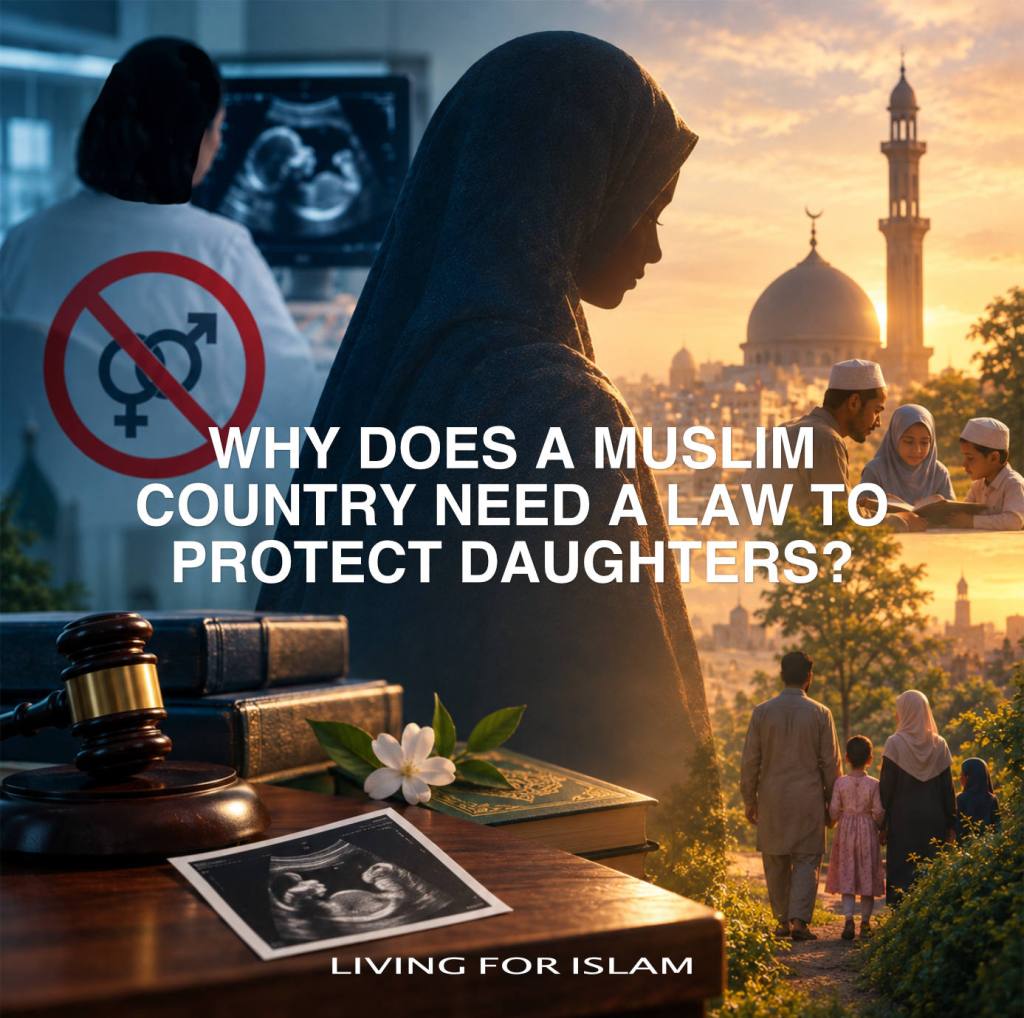
I RECENTLY CAME across something in Bangladesh that surprised me. Doctors and diagnostic centres are prohibited from disclosing the sex of an unborn child for non-medical reasons.
The issue reached the Bangladesh High Court through a public-interest petition filed in 2020. The Directorate General of Health Services subsequently produced a national guideline aimed at preventing son preference and gender-biased sex selection. In February 2024, the High Court directed the authorities to follow the guideline, with the full judgment published in May 2026.
The policy was developed after consultation with the United Nations Population Fund (UNFPA) and other governmental and non-governmental stakeholders.
The reasoning included concerns about discrimination, pressure on pregnant women, and the possibility that knowing the sex of an unborn child could facilitate harm to girls.
Son preference is not unique to Bangladesh. It runs across South Asia and across religious lines, the same underlying attitude has driven sex-selective practices among Hindu communities in India, while dowry economics have shaped it further still. This is, in part, a regional and cultural inheritance rather than something that originates in Islamic teaching.
And yet, as a Muslim, that makes me ask a different question: How does a country that is 91% Muslim reach a point where a secular state has to intervene to protect unborn girls from a preference for sons?
The problem is not knowing whether a child is a boy or a girl. It is the attitude that can make the words “It’s a girl” unwelcome news.
And that is precisely the attitude the Qur’an confronted fourteen centuries ago, in a society that practised this in its most extreme form.
Islam Already Solved This
Allah describes the reaction of the people of jāhiliyyah:
وَإِذَا بُشِّرَ أَحَدُهُم بِٱلْأُنثَىٰ ظَلَّ وَجْهُهُۥ مُسْوَدًّا وَهُوَ كَظِي
And when one of them is given news of a female, his face becomes dark, and he suppresses his grief. (an Nahl 58)
The birth of a girl should have been good news. Instead, the news produced shame and anguish. The next verse describes what could follow:
يَتَوَٰرَىٰ مِنَ ٱلْقَوْمِ مِن سُوٓءِ مَا بُشِّرَ بِهِۦٓ ۚ أَيُمْسِكُهُۥ عَلَىٰ هُونٍ أَمْ يَدُسُّهُۥ فِى ٱلتُّرَابِ ۗ أَلَا سَآءَ مَا يَحْكُمُونَ
He hides himself from the people because of the ill of which he has been informed. Should he keep her in humiliation or bury her in the ground? Surely evil is what they decide.”
(an Nahl 59)
The Qur’an was not simply addressing an act. It was exposing the thinking behind the act. The ultimate expression of that thinking was the killing of infant girls:
وَإِذَا الْمَوْءُودَةُ سُئِلَتْ بِأَيِّ ذَنبٍ قُتِلَتْ
And when the girl who was buried alive is asked, ‘For what sin was she killed?’ (at Takwir 8–9)
For what sin? She had committed none. The problem was never the girl. The problem was a worldview that had decided being born female made her less valuable.
Allah did not just prohibit the act, He dismantled the worldview:
لِّلَّهِ مُلْكُ ٱلسَّمَـٰوَٰتِ وَٱلْأَرْضِ ۚ يَخْلُقُ مَا يَشَآءُ ۚ يَهَبُ لِمَن يَشَآءُ إِنَـٰثًۭا وَيَهَبُ لِمَن يَشَآءُ ٱلذُّكُورَ
To Allah belongs the kingdom of the heavens and the earth. He creates whatever He wills. He grants female children to whom He wills, and He grants male children to whom He wills.” (ash Shuraa 49)
There is something beautiful in the word yahabu. He grants. He bestows. A daughter is not a consolation prize for the son that was wanted. She is a gift, just as a boy is.
And the Prophet ﷺ connected this directly to the Hereafter: “Whoever has a daughter and he does not bury her alive, nor humiliates her, nor prefers his sons over her, he will enter Paradise due to her.” (Sunan Abī Dāwūd)
Notice the breadth. Not simply do not kill your daughter, but do not humiliate her, do not prefer your sons over her. Islam addressed the attitude itself, and within a single generation, it transformed an Arabian society in which a daughter’s birth could darken a father’s face into one in which raising her could be his path to Paradise.
That is not a modest achievement. It is one of the most remarkable social transformations in human history, and it happened through the power of revelation being lived in society.
Culture Is Not the Same as System
Bangladesh today is 91% Muslim. The Qur’an is recited there. The hadith are known there. Islam is present as identity, culture, and inherited practice.
And yet the underlying attitude the Qur’an confronted in seventh-century Arabia remains present enough, fourteen centuries later, that a modern secular court had to step in and manufacture a law to restrain it.
That gap is problematic and needs our attention. Islam being present as culture is not the same as Islam functioning as a system.
When Islam operates mainly as inherited identity, recited, known and respected in the abstract, it can coexist with attitudes it explicitly condemned. The verses are recited at funerals and in Ramadhan, but the household still absorbs son preference from the surrounding culture because nothing is actively transmitting the alternative.
The teaching is known; it is not operative. It sits alongside the culture rather than shaping it.
For Islam’s solution to work as it worked in the first Muslim society, it cannot simply be present in the background. The family, masjid, school, society and governance have to reinforce the same Islamic worldview at the different levels at which a person is formed.
Bangladesh, in this sense, is not a counterexample to Islam’s teaching. It is a demonstration of what happens when that teaching is present but not systematically transmitted.
It shows the gap between knowing Islam’s answer and having the conditions in which that answer can actually shape society.
Law Can Restrain. Islam Can Transform.
This is where the limits of a secular legal response become clear. A secular state can recognise son preference as harmful. It can regulate doctors, prohibit non-medical disclosure, and educate people about equality. All of that may be seen as necessary to prevent harm.
But a secular state cannot provide the thoughts, emotions and motivations that Islam provides . It cannot teach that a daughter is an amanah from Allah, or that the way she is treated will be weighed in the Akhirah. Those ideas are rooted in belief, taqwā and accountability to Allah, which lie outside the framework of a secular legal system.
The law can tell a person what he must not do. Taqwā asks him what he should want to do.
The law regulates behaviour from the outside. Islam transforms the person from within. Bangladesh needed the first because, in practice, it has not had enough of the second. Not because Islam failed to provide an answer, but because the systems needed to create that answer are absent.
The Ultrasound Has Been Regulated. The Heart Has Not.
Muslims should never need to discover through secular law what revelation already taught them.
Islam’s answer was never insufficient. It transformed an entire society within a generation, fourteen centuries ago. What is missing today is not the answer. It is the conditions for that answer to operate as it once did, an integrated whole way of life, rather than Islam sitting quietly beside a secular system shaping the rest of daily life.
If that is true, the question is what each of us is doing to help bring the conditions for that answer back
 Living For Islam