
IMAGINE THE SCENE. Egypt versus Argentina.
A penalty shootout. Millions watching. The Egyptian team stands on the pitch. One kick will decide history.
The impossible happens. Egypt defeat Argentina.
The Arab world erupts. Social media explodes. Flags wave. Streets fill with celebrations. Commentators speak of one of the greatest moments in Egyptian history.
Then imagine something even greater.
Egypt continue their remarkable run. They defeat another opponent. Then another. They reach the final. And they lift the World Cup.
For a few days, perhaps weeks, the world celebrates Egypt.
But then ask a simple question: What exactly changed?
Did Egypt’s economy suddenly transform? Did poverty disappear? Did corruption end? Did the education system become the best in the world? Did justice prevail? Did the relationship between rulers and citizens change? Did Egypt suddenly become one of the world’s leading nations?
Of course not.
People’s emotions would have changed. Pride would swell. Newspapers would celebrate. Politicians might even speak as though the nation itself had been transformed.
But feelings are not reality.
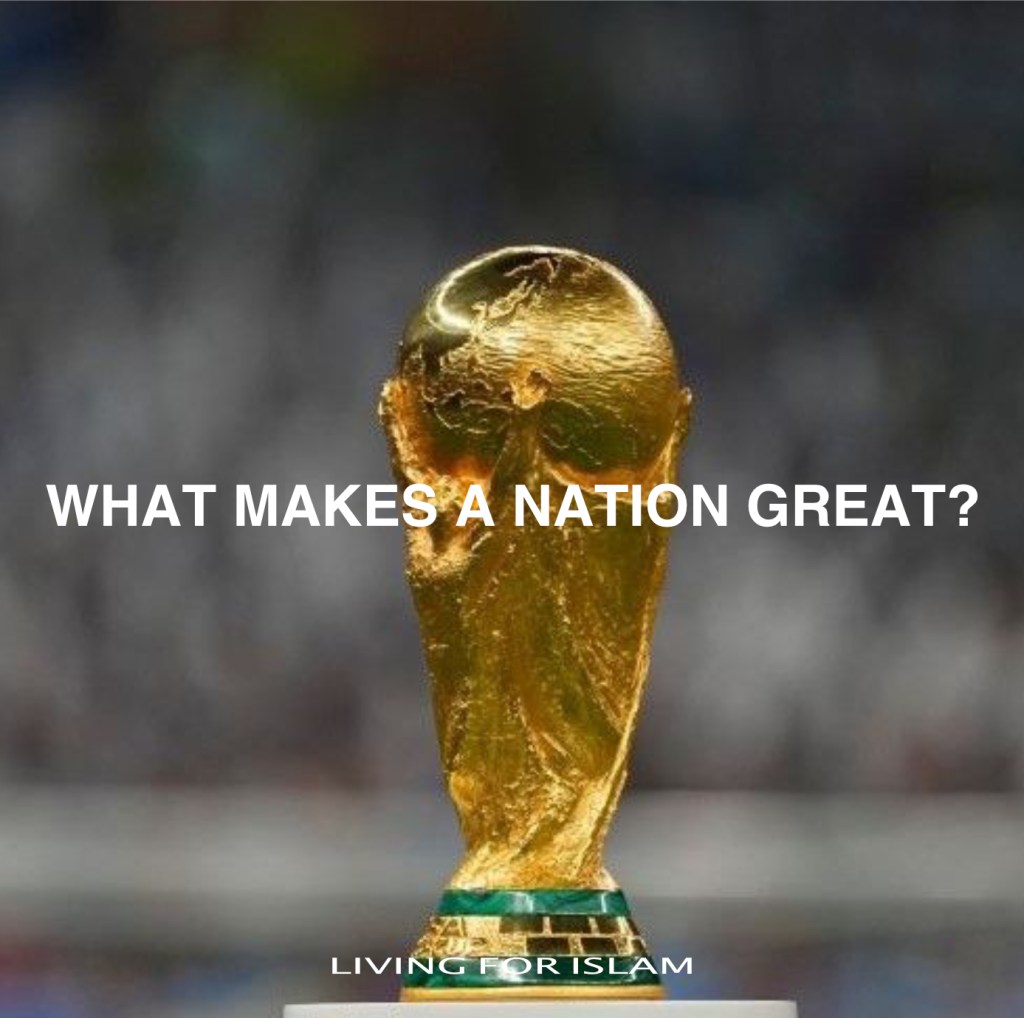
A football trophy cannot give a nation true honour. A sporting victory cannot solve the problems of a people. A team’s success on a football pitch cannot elevate a civilisation.
Yet this is one of the great illusions that nationalism creates.
It convinces people that the achievements of a small group representing a flag somehow become the achievements of everyone living beneath that flag.
The victory belongs to those who trained, sacrificed and played. Everyone else simply watched. Yet nationalism blurs that distinction. It transforms spectators into participants and borrowed glory into personal honour.
The team become symbols of national greatness. Their victory becomes our victory. Their glory becomes our glory.
But is that really where honour comes from?
The Qatar Lesson
In 2022, Qatar hosted the World Cup. The world watched the magnificent stadiums, the infrastructure, the wealth and the organisation.
But did hosting the World Cup make Qatar a great nation? Did the opening ceremony, the final match, or the billions spent on the tournament transform its position in the world?
A country’s greatness is not measured by how many people visit its stadiums. Nor is it measured by how many skyscrapers rise from the desert.
A nation’s worth is measured by the ideas it carries, the justice it establishes, the welfare and security it provides to its people, and the contribution it makes to humanity.
The Flag That Unites and the Flag That Divides
The World Cup once again demonstrated the extraordinary power of nationalism.
Millions stood behind different flags. They celebrated when their nation won and mourned when their nation lost.
There is nothing wrong with enjoying sport. There is nothing wrong with appreciating excellence, discipline and competition. But we should recognise what is happening beneath the surface.
The same tribal instinct that once gathered around the clan now gathers around the nation-state.
Yesterday it was the tribe’s banner. Today it is the national flag.
Yesterday people boasted of the superiority of their tribe. Today nations compete to prove the superiority of their country.
The names have changed. Human nature has not.
Human beings naturally seek belonging. They long to be part of something greater than themselves. Islam did not remove that instinct. It redirected it.
Allah did not abolish tribes and peoples. He gave them their proper place.
يَـٰٓأَيُّهَا ٱلنَّاسُ إِنَّا خَلَقْنَـٰكُم مِّن ذَكَرٍ وَأُنثَىٰ وَجَعَلْنَـٰكُمْ شُعُوبًا وَقَبَآئِلَ لِتَعَارَفُوٓا۟ ۚ إِنَّ أَكْرَمَكُمْ عِندَ ٱللَّهِ أَتْقَىٰكُم
O mankind! We created you from a male and a female and made you into peoples and tribes so that you may know one another. Surely the most honoured of you in the sight of Allah is the one most mindful of Him. (al-Hujurat 13)
Notice that Allah acknowledges peoples and tribes. He does not deny their existence. But neither does He allow them to become the source of honour.
Honour belongs to taqwa, not territory.
The problem begins when identity itself becomes the source of worth. “My nation is great, therefore I am great.” “My country won, therefore I won.” “My people are superior, therefore I am superior.”
This is precisely the mentality Islam came to dismantle.
When Umar ibn al-Khattab (ra) entered Jerusalem, he did not arrive surrounded by the symbols of worldly greatness. He wore a patched cloak. There were no grand displays of wealth or military spectacle.
Yet the world respected, and feared, the Muslims.
Why? Because their honour did not come from buildings, wealth or national prestige.
As Umar (ra) famously said: “Indeed, we were a disgraced people and Allah honoured us with Islam. If we seek honour through anything other than that with which Allah honoured us, Allah will disgrace us.”
The honour of the Muslims came from their aqeeda, their purpose and the civilisation that grew from that belief.
Are you not Entertained?
The drama of football is undeniable. The last-minute goal. The penalty shootout. The tears of defeat. The joy of victory. Millions become emotionally invested.
Perhaps that is the greatest lesson of the World Cup. Not that sport is wrong. But that entertainment has become one of the defining pursuits of modern life.
The question echoes through history, much like the Roman arenas once did: “Are you not entertained?”
Modern economies have become remarkably effective at capturing human attention and turning entertainment into one of the world’s most profitable industries.
People spend hours watching others play while their own lives quietly pass by. They celebrate trophies they never won. They attach their identity to teams they never played for. They experience emotional highs and lows over events that leave the reality of their own lives unchanged. Players become celebrities. Sponsors become richer. Broadcasters compete for billions of viewers. Attention itself has become a commodity.
The Qur’an has a profound word for this phenomenon: lahw, distraction that occupies a person from what truly matters.
Allah says:
اعْلَمُوا أَنَّمَا الْحَيَاةُ الدُّنْيَا لَعِبٌ وَلَهْوٌ
Know that the life of this world is but play and amusement… (al-Hadid 20)
The Qur’an does not condemn recreation. Nor does Islam call us to joyless lives. The Prophet ﷺ encouraged strength, fitness and wholesome recreation.
But recreation was never meant to become the organising principle of life.
Allah reminds us of the purpose for which we were created:
وَمَا خَلَقْتُ ٱلْجِنَّ وَٱلْإِنسَ إِلَّا لِيَعْبُدُونِ
“I did not create jinn and mankind except that they worship Me.” (adh-Dhariyat 56)
The question, then, is not whether we can enjoy football.
The question is whether football, or any other form of entertainment, has become greater than our purpose.
What Lifts a People?
The 2026 World Cup will eventually be forgotten. The goals will fade. The celebrations will end. The trophy will gather dust.
But the ideas that shape civilisations endure long after the final whistle.
The first generation of Muslims did not become leaders because they possessed the strongest armies, the greatest wealth or the tallest buildings. Those things came later.
They first became leaders because revelation transformed how they understood themselves, their purpose and their responsibility before Allah.
Civilisation followed belief, not the other way around. That is why the enduring question is not: “Who lifted the World Cup?”
The greater question is: What lifts a people?
Is it a trophy? A stadium? A flag? A nation?
Or is it the same thing that lifted the first generation of Muslims from obscurity to leadership: a belief that gave them purpose, justice, vision and a way of life?
The answer to that question matters far more than the result of any final.


very thought provoking and inspiring piece of writing
jazakAllah for these words of wisdom
LikeLike