
A QUIET KNOCK on the door. It was late. But Abu Bakr (ra) had been expecting it.
He had long prepared for this moment. Ever since the Prophet ﷺ informed him that Allah had granted permission to emigrate, Abu Bakr (ra) had kept two camels ready. He had waited and hoped that he would be chosen as the Prophet’s ﷺ companion on this momentous journey.
Now the time had come. The two of them slipped out of Makkah before the city stirred.
The Quraysh would find the Prophet’s ﷺ bed occupied by Ali ibn Abi Talib (ra), who had laid down in it knowing exactly what the night held. Outside, armed men waited in the darkness, convinced they had surrounded the house.
They were already too late. The Prophet ﷺ passed through them unseen.
The Quraysh understood that “Laa ilaaha illallah” threatened the foundations of their society, their idols and their authority. For thirteen years they had mocked, persecuted and opposed the Messenger of Allah ﷺ. Now they were determined to stop him before he could establish himself elsewhere.
Instead of heading north towards Madinah, the Prophet ﷺ and Abu Bakr (ra) travelled in the opposite direction, taking refuge in the Cave of Thawr. For three days they remained hidden while search parties spread across every road and pathway.
At one point, the Quraysh stood at the mouth of the cave itself. Abu Bakr (ra) feared. The Prophet ﷺ remained calm.
لَا تَحْزَنْ إِنَّ ٱللَّهَ مَعَنَا
Do not grieve. Indeed, Allah is with us. (at-Tawbah 40)
The searchers turned back.
After three days, they emerged and continued their journey along little-known desert routes with a trusted guide. Even then, danger followed them. Suraqah ibn Malik pursued them, drawn by the bounty the Quraysh had placed upon the Prophet’s ﷺ head. But every attempt to capture him failed. Suraqah eventually realised that Allah was protecting His Messenger ﷺ. He abandoned the pursuit and even concealed the Prophet’s route from others.
Meanwhile, in Madinah, anticipation was building.
Each morning, families would walk to the outskirts of the city and wait, scanning the horizon. A year earlier, Mus’ab ibn Umayr (ra) had arrived to teach them the Qur’an. Through his efforts, Islam had spread throughout Madinah. The Aws and Khazraj, tribes that had spent generations fighting one another, were now united by something greater than tribal loyalty.
They were waiting for the Prophet ﷺ.
When he finally arrived, he first stopped at Quba, just outside the city. There he built Masjid Quba, the first masjid in Islam.
Then the Ansar came out in force to escort him into Madinah. Spears raised, they declared their loyalty and obedience.
As he entered the city, it erupted with joy. Men and women lined the roads. Families climbed onto rooftops. Children ran through the streets calling out: “The Prophet has come! The Prophet has come!”
He came not as a refugee fleeing persecution. He came to lead. And with his arrival, a new chapter of history began.
In the years that followed, the Prophet ﷺ would establish in Madinah a society fully governed by revelation, a community united by Islam rather than tribe, sustained by justice rather than privilege, and organised around obedience to Allah rather than the interests of powerful men.
This is why the Hijrah matters. And it is why the Muslims chose it as the beginning of their calendar.
Why the Hijrah?
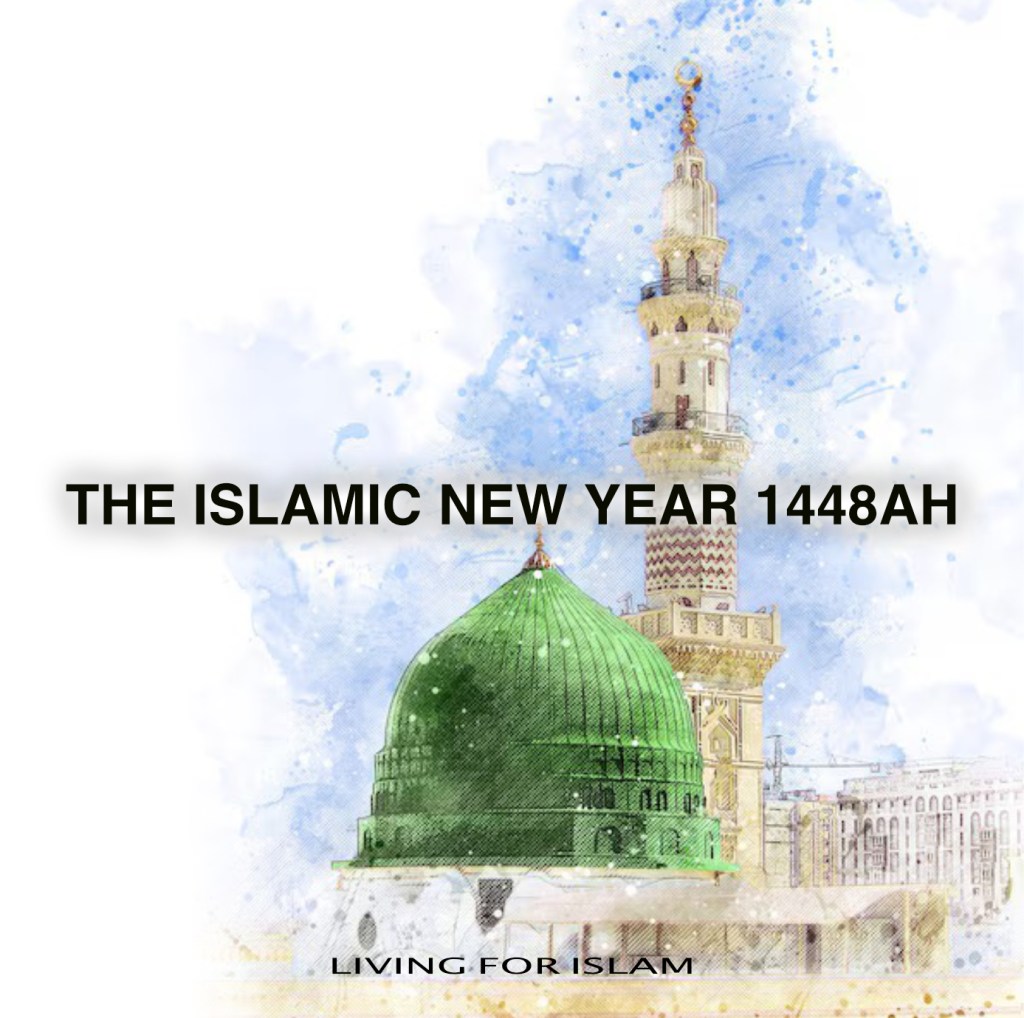
Today, the first of Muharram marks the beginning of a new Islamic year. But the more interesting question is why.
Why does the Muslim calendar begin with the Hijrah?
During the lifetime of the Prophet ﷺ, Muslims did not have a formal calendar. Years were identified by major events, the Year of the Elephant, for example, or other memorable occurrences that served as reference points.
As the Islamic state expanded during the khilafah of Umar ibn al-Khattab (ra), this became increasingly impractical. Official correspondence required clear dates. Contracts, judicial rulings and administrative records all needed a common system of reckoning.
Umar (ra) gathered the Companions to discuss the matter.
They were familiar with the calendars of the Persians, Romans and others around them. Yet rather than simply adopting a foreign system, they sought a calendar that reflected the identity, history and aspirations of the Muslim Ummah.
Several suggestions were considered. Some proposed beginning with the Prophet’s ﷺ birth. Others suggested the first revelation. Others pointed to major victories such as Badr. None of these were chosen. Instead, the Companions agreed upon the Hijrah.
The choice is remarkable. The Companions chose what appeared, on the surface, to be a migration from one city to another.
Why?
Because they understood what the Hijrah truly represented. The Hijrah was not merely a journey. Nor was it simply an escape from persecution. It was the moment when Islam moved from being a belief carried by individuals to a way of life embodied in a society.
In Makkah, Muslims possessed the truth but lacked the ability to implement it publicly. In Madinah, Islam was not merely believed, it was practised, protected and established.
Justice was administered. Economic life was organised. Communal obligations were fulfilled. The authority of revelation extended beyond individual worship into the structures of society itself.
The Muslims had carried a seed through thirteen difficult years in Makkah. Madinah was where it broke ground.
The Hijrah marked the moment when Islam became not merely a faith held in hearts, but a force active in the world.
It is reported that Umar (ra) said: “The Hijrah separated truth from falsehood. Let it mark the start of our era.”
Why Muharram?
A further question remains.
The Prophet ﷺ arrived in Madinah during the month of Rabi’ al-Awwal. If the calendar commemorates the Hijrah, why does the Islamic year begin with Muharram?
Because what the Companions were commemorating was not merely the arrival. It was the beginning of the process.
During the Hajj season, at the Second Pledge of Aqabah, the Ansar pledged their support and protection to the Prophet ﷺ. That pledge changed everything. For the first time, a community stood ready to receive Islam not merely as a religion, but as the foundation of a society.
After Aqabah, preparations for migration began in earnest.
Muharram was the first month after that decisive turning point. The physical migration would occur later, but the direction had already changed. The calendar is not counting from when the Prophet ﷺ set foot in Madinah. It is counting from when the direction changed.
A Civilisation Marks Time Differently
The significance of this choice becomes even clearer when we consider how Muslims have used this calendar ever since.
Zakah is calculated according to the lunar year, as is the age of bulugh where its signs are absent. The iddah of a widow is measured by lunar months. The fast of Ashura, the days of Hajj and the sacred months are all anchored to the Hijri calendar.
But its significance extends far beyond acts of worship.
The great events of Islamic history were recorded according to this calendar. The Battle of Badr. The Battle of Uhud. The opening of Makkah. The expansion of Islam from the Atlantic coast of Andalusia to the frontiers of China. The establishment of courts, schools, libraries and centres of learning. The correspondence of khulafah, judges and scholars. The treaties, institutions and achievements of a civilisation that shaped much of the known world for centuries. All of it was dated from the Hijrah.
This was no accident. Civilisations mark time according to what they believe matters most. The Muslims chose a migration. Not because it was a moment of weakness, but because it was the moment Islam became a civilisation.
What It Asks of Us
Every Muharram is an invitation to remember. Not simply the journey from Makkah to Madinah, but what that journey made possible.
The Hijrah was not merely about preserving Islam. It was about establishing it.
The Prophet ﷺ did not arrive in Madinah and retreat from society. He built one. He united tribes. He administered justice. He organised economic life. He settled disputes. He established institutions. He nurtured a community that would carry Islam far beyond Arabia.
The Islamic New Year reminds us not just where we came from. But of what we are capable of becoming.

