

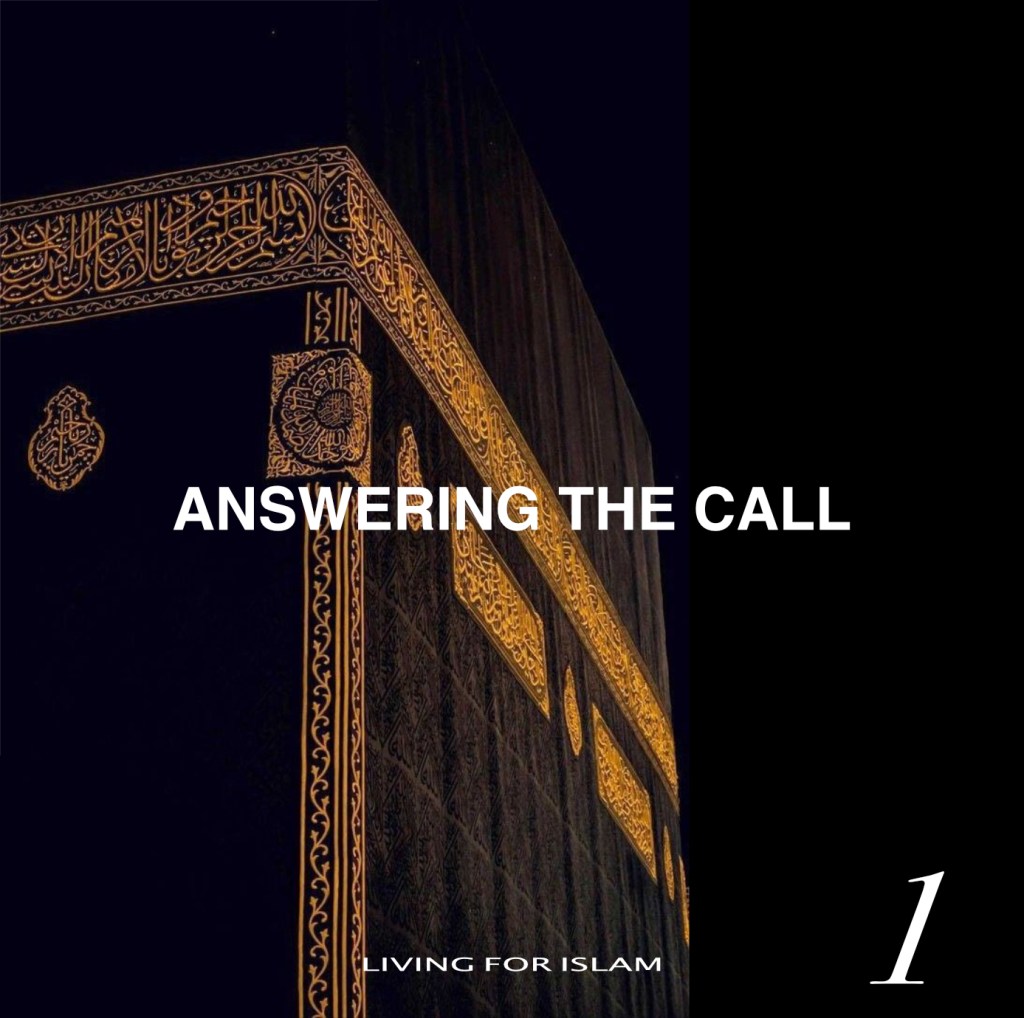
THERE ARE SOME obligations in Islam that we fulfil and move on from. And then there is Hajj.
I have yet to meet a believer who says that they do not want to go to Hajj. The desire sits somewhere deep within the Muslim heart, sometimes close to the surface, sometimes buried beneath years of distraction, responsibility, and delay, but rarely absent altogether.
Many describe it as though somewhere deep inside, a call is being heard. Not simply travelling. Being summoned.
The Qur’an captures this feeling with extraordinary beauty:
وَأَذِّن فِى ٱلنَّاسِ بِٱلْحَجِّ يَأْتُوكَ رِجَالًۭا وَعَلَىٰ كُلِّ ضَامِرٍۢ يَأْتِينَ مِن كُلِّ فَجٍّ عَمِيقٍۢ
And proclaim to humanity the Hajj. They will come to you on foot and on every lean camel; they will come from every distant path. (al-Ḥajj 27)
It is difficult to read this verse without feeling that one is witnessing something larger than language itself. The ayah is not merely about pilgrimage. It is about longing, movement, surrender, sacrifice, and a divine proclamation that has echoed across the earth since the days of Ibrahim (as).
The command came after Ibrahim (as) and his son Ismail (as) completed the building of the Kaʿbah. Allah commanded Ibrahim (as): “Proclaim the Hajj to humanity.”
The scene itself is astonishing. Ibrahim (as) stands in a barren desert valley, far from every centre of civilisation, instructed to call humanity toward a House that at that moment sat isolated in the emptiness of Makkah.
How could one man’s voice reach beyond the mountains around him, let alone across time and space?
Yet this is precisely where the miracle begins.
Allah did not ask Ibrahim (as) to make people come. He only commanded him to proclaim. The delivery of the message belonged to Allah.
And for thousands of years, humanity has continued answering that call.
The verse begins with a striking word: Wa adh-dhin, proclaim.
The word shares the same linguistic root as the adhān, the call to prayer. This is not a quiet invitation whispered into the desert. It is a public, resonant announcement intended to echo outward beyond the limits of human reach.
The connection is profound.
The adhān calls believers to prayer five times a day. Ibrahim’s (as) proclamation calls humanity to Hajj across generations. Both are summonses toward Allah. Both continue reverberating long after the original voice has fallen silent.
The mu’adhdhin stands in the masjid and calls: “Come to prayer.”
Ibrahim (as) stood beside the Kaʿbah and called humanity toward Hajj.
But the adhān does not merely wait to be heard by whoever happens to be nearby. It enters homes, interrupts routines, reaches into distraction and sleep, and demands a response. A person can ignore it, or rise and move.
Hajj works in much the same way. The call has already gone out. It has been going out since Ibrahim (as) stood in that valley. The question placed before every Muslim of means is not whether the call exists, but whether they are listening and whether, having heard it, they are moving.
The universality of the verse is equally striking.
Allah does not say: “Proclaim to the believers.” Nor does He say: “To your people.” He says: fi al-nās, among humanity.
The language immediately breaks every boundary of ethnicity, nationality, class, and tribe. Hajj was never meant to belong to one race, nation, or people. The Kaʿbah is not the property of a particular people. The ayah itself dismantles such notions.
And nowhere is this more visible than in the Haram itself.
The wealthy walk beside the poor. The African beside the European. The Arab beside the Asian. Languages collide in the air around the Kaʿbah like waves. Skin colour, passport, profession, and social status dissolve beneath the simplicity ofihrām.
Millions move together around one centre.
The Qur’an described this reality long before Islam spread across the globe. At the time this verse was revealed, there were no aircraft carrying millions of pilgrims from every continent.
Yet Allah speaks with complete certainty: “They will come.”
Not “they may come.” Not “perhaps they will come.” They will come. And they still do. Empires have risen and collapsed. Borders have shifted. Economies have flourished and failed. Wars have erupted. Pandemics have spread. Yet Hajj continues exactly as Allah promised Ibrahim (as) that it would.
Then comes one of the most beautiful subtleties in the ayah: Ya’tūka, they will come to you.
Allah does not say: “They will go to the Kaʿbah.” Nor: “They will visit the Sacred House.”
He says to Ibrahim (as): “They will come to you.”
The pilgrimage is not merely a journey toward a structure of stone. It is a journey into the legacy of Ibrahim: the legacy of tawḥīd, surrender, sacrifice, and trust in Allah. Every pilgrim who makes tawāf is, in a sense, answering Ibrahim’s call. Every talbiyah is an echo of that ancient summons.
Allah then describes how they will come with vivid imagery. That image of the how gives an insight into the nature of the who.
“They will come on foot…” The Qur’an uses the word: rijālan
People moving on their feet through effort and exertion. The imagery is not one of ease or luxury.
Notably, those walking are mentioned before those riding. In worldly terms, mounted travel would have signified status and prestige. Yet Allah honours the walkers first. Many scholars reflected on the wisdom within this ordering: effort and sacrifice possess a special nobility with Allah.
Hajj is not meant to be entirely comfortable. There is wisdom in the exhaustion, the heat, the waiting, the physical strain. The journey strips away illusion and returns a person to their most essential condition: dependent, vulnerable, and seeking Allah.
The difficulty is not incidental. It is part of the point.
The image deepens further: “And upon every lean camel…”
Allah does not merely mention camels. He specifies: ḍāmir.
Lean, worn animals thinned by long travel. Before Allah even tells us how far the pilgrims have come, He shows us the exhaustion etched onto the mounts themselves.
One can almost see caravans crossing deserts for weeks under a burning sun, driven forward by something stronger than fatigue. The camel’s weariness becomes testimony to the pilgrim’s sincerity. These pilgrims did not set out when conditions were perfect. They set out anyway.
Then comes the final image: min kulli fajjin ʿamīq, from every distant mountain pass.
Fajj is a mountain path or pathway cut through terrain. But Allah adds ʿamīq, deep. That is usually used for wells, oceans, and valleys. But here distance is described as depth. Because the Arabs conceptualized immense distance as something deep and plunging. It gives an image of pilgrims emerging from the “depths” of the earth, converging upon one sacred point. And perhaps people do not only come from distant lands. They come from deep places within themselves: carrying sins, fears, grief, unanswered prayers, and hopes known only to Allah.
And they gather saying: Labbayk Allahumma labbayk. Here I am, O Allah. Here I am.
But the talbiyah is not the language of initiation. It is the language of response to a call.
Yet this is precisely where balance is needed.
Some romanticise the idea of being called to Hajj while endlessly postponing the obligation itself. Yes, pilgrims often say: “I felt called.” Or, “Allah opened the way.” And this is true. But the Qur’an does not allow just passivity.
Allah ﷻ says:
وَلِلَّهِ عَلَى ٱلنَّاسِ حِجُّ ٱلْبَيْتِ مَنِ ٱسْتَطَاعَ إِلَيْهِ سَبِيلًۭا
Pilgrimage to this House is an obligation owed to Allah by those who are able to find a way. (Āle ʿImrān 97)
Hajj is not merely a spiritual aspiration. It is a duty. Once in a lifetime, for those who possess the financial means and physical ability. That obligation is meant to shape our priorities, our planning, our financial decisions, and the direction of our lives. The believer is not meant to leave Hajj perpetually in the category of “someday.”
The call has already been issued publicly through revelation. The believer is not waiting for a mystical invitation to descend from the sky.
But notice what Ibrahim (as) had already done before the command to proclaim was even given. He had obeyed, laboured and built.
This is not a story about passive spirituality. It is a story about human effort meeting divine facilitation.
And perhaps that is the deeper reality behind what pilgrims mean when they say: “Allah opened the way.”
Because Allah opens the way for those already walking toward Him: those intending, sacrificing, saving, planning, and moving toward the obligation He commanded.
The call has gone out. It is echoing still, across mountains and oceans and generations, exactly as it has since Ibrahim (as) first stood beside the Kaʿbah and proclaimed.
The only question that remains is a simple one.
Are you answering it?

