

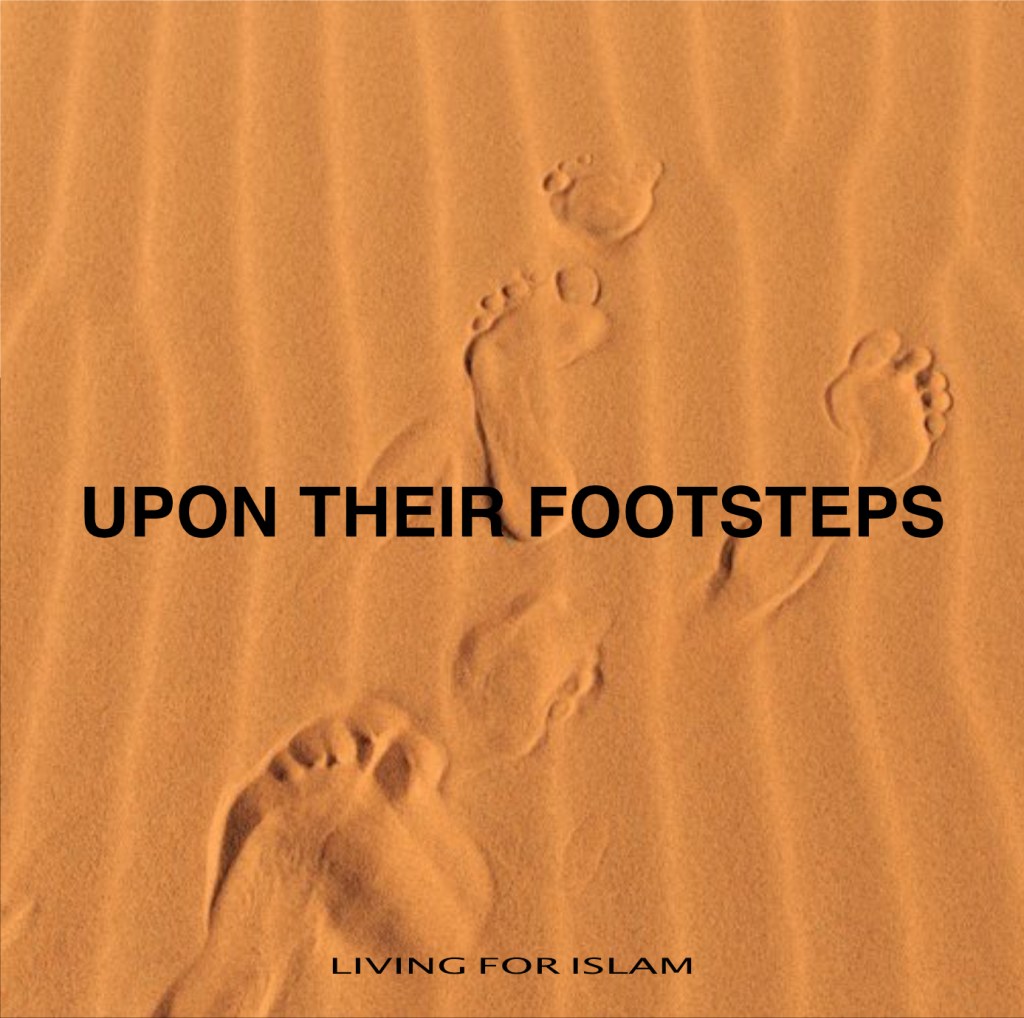
WHAT DOES IT mean to really care about those around you? In Surah Al-Kahf, Allah records the Prophet’s ﷺ response to those who rejected the message.
فَلَعَلَّكَ بَـٰخِعٌۭ نَّفْسَكَ عَلَىٰٓ ءَاثَـٰرِهِمْ إِن لَّمْ يُؤْمِنُوا۟ بِهَـٰذَا ٱلْحَدِيثِ أَسَفًا
Perhaps you would destroy yourself in grief, upon their footsteps, if they do not believe in this discourse, out of sorrow.(al-Kahf 6)
On a first reading, the meaning seems clear enough. But read it slowly, paying attention to what each word is actually saying, and something deeper opens up. Three words in particular carry a weight that translation cannot express. Each one, when you consider it carefully, does not just describe the Prophet ﷺ. It asks something of us.
The first is bākhi’un, and most translations are too soft here.
The word describes something being consumed from within. It is the kind of exhaustion that comes not from giving up, but from refusing to. Like a horse that drives itself past the point of collapse, an internal wearing away happens precisely because the effort does not stop. “Destroy” is technically correct, but it misses the texture. What the Qur’an describes is closer to a heart that is consuming itself.
The verse pairs it with nafsaka, your very self. This is not the grief of someone who is sad from a distance. It is the grief of someone whose care has become physical, who feels in his body what it means for people to walk away from something that could save them in the akhirah.
There is a kind of concern that just fits comfortably alongside the rest of life. You can identify the problem, acknowledge that it matters, but then just carry on. And then there is the concern that this verse is describing, the kind that presses, that does not leave you unchanged, that follows you home.
Allah is not asking us to replicate this exactly. The verse itself gently corrects even the Prophet ﷺ at this level of intensity. But it is showing us what genuine care looks like when the mission is real to someone. And in doing so, it asks a question of every reader: what kind of concern do you actually carry?
The second word is āthārihim, upon their footsteps, their traces, the impressions left by those who have already gone.
Athar in Arabic is not simply a path or a direction. It is what remains after someone has left. A footprint in the earth. The silence after a voice. The same root gives us ta’thīr, influence, the mark one thing leaves on another, and athar in the hadith sciences, a transmitted report: something that outlasts its original moment because someone thought it worth preserving. Athar is the trace of a presence, not the presence itself.
This single word changes the whole scene. The Qur’an does not describe the Prophet ﷺ mid-argument with those who rejected. It is describing him after they have gone, standing where they stood, surrounded by the evidence of their absence. Not confrontation. Not pursuit. Just the fading imprint of where an encounter used to be.
This is not the grief of watching a stranger walk away. It is the grief of someone who stayed at the site of departure, who could not simply turn and move on, because what had been lost there was too important to leave behind.
The third word is asafā, and it comes at the very end of the verse. Its position matters as much as its meaning.
Asaf is not simple grief. It is grief mixed with frustration, the unresolved pain of someone who sees something terrible happening and cannot stop it. When Musa (as) returned to find his people worshipping the calf, the Qur’an describes him as ghadban asifan, angry and asif, carrying a grief that had become almost physical. It is not a quiet emotion. It presses.
And it comes here at the end, after everything else. After bākhi’un nafsaka. After the image of departure. After the mention of disbelief. Asafā is what remains in the chest when the scene is over, and you are still standing in it.
The verse traces a complete arc: from the Prophet’s ﷺ inner state of self-consuming grief, to the place where he is standing, amid the traces of those who left, to what settles in his heart when it is all over. From the inside out, and then back in again. And the Qur’an does not rebuke this arc. It describes it with care, which is its own way of honouring it.
What the verse insists on preserving, even as it recalibrates, is the asafā itself. It could simply have said: do not grieve over those who disbelieve. It does not say that. It describes the grief in full, holds every layer of it up, and then, only then, reminds him that his responsibility is the work of delivery, and that what comes after belongs to Allah alone. The emotion is not dismissed. It is given somewhere to stand.
Now hold that image against our own.
The Prophet ﷺ felt intense grief upon the traces of specific people who had just walked away. Not a general sadness about the state of the world. Not an abstract concern for humanity. He was standing where particular people had stood, feeling the weight of their particular departure from something that mattered absolutely.
What do we feel, standing where the people around us stand?
The neighbour whose door we have passed a thousand times. The colleague whose whole framework for understanding the world leaves no room for any of this. The family member who drifted, or was never close, or who asks questions we have never quite found the time to answer properly. The friend whose life runs alongside ours in every way except the one the Qur’an says is most consequential.
Are we standing at the edge of their footsteps? Or have we long since gone home, having made a quiet, largely unexamined peace with the fact that the people immediately around us have no particular relationship with this message, and that this is simply how things are?
This is not a question about organised da’wah programmes, though those matter. It is a question about us. About whether something in us notices the absence of those around us from guidance as a genuine loss, the kind that sits in the chest, that does not leave us entirely comfortable. Whether the way we speak and deal and grieve and rejoice leaves any āthār at all, any trace of a different way of living in this world.
The honest answer, for much of the Ummah today, is that this grief has gone quiet. Not because Muslims have abandoned their faith. But because we have, slowly and almost without noticing, stopped feeling the weight of other people’s distance from it. Da’wah has become something specialists do, something that happens at events and in organised spaces, rather than the natural overflow of a heart that is still standing at the edge of someone else’s footsteps, still feeling what it means that they have gone.
The verse does not ask us to replicate the prophetic intensity exactly. But it does ask us to feel something real. To be people who have not made their peace with the fading of those footprints.
The traces remain, and people are still walking. Are we present at the edge of their footsteps, truly feeling their absence, or have we grown indifferent, no longer noticing the path they leave behind?
| QUR’ANIC REFLECTION · SURAH AL-KAHF 6 |

