
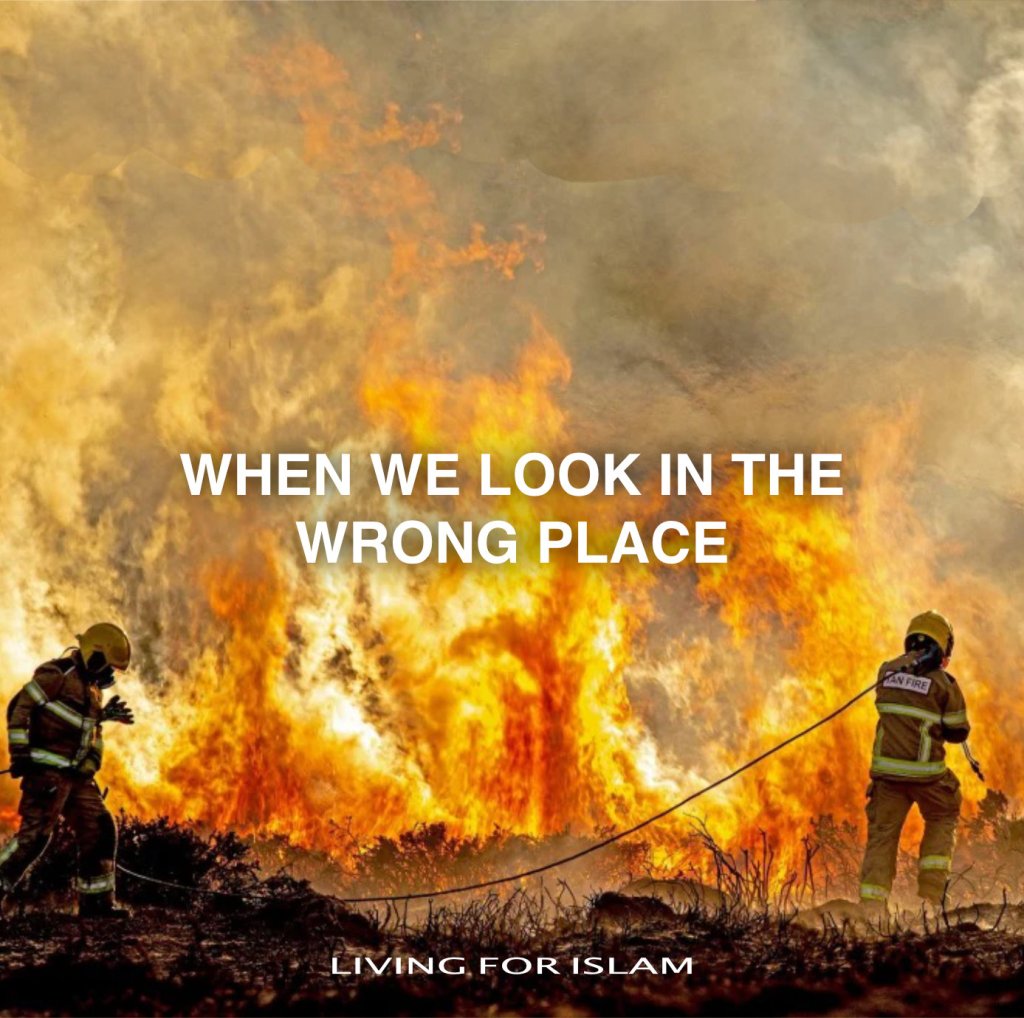
WILDFIRES HAVE RAGED across many parts of Britain this summer in the exceptionally dry conditions.
The government’s response to these wildfires has been to ban disposable BBQs. That makes sense. These can provide the spark that ignites a rapidly spreading fire. Individual responsibility matters.
But there is something uncomfortable about the way we often talk about environmental crises.
We focus on the behaviour of the individual while ignoring the systems that create the conditions in which that behaviour becomes so dangerous.
The disposable BBQ becomes the story. The drought does not. The person who lights the fire becomes the problem. The wider question of why our land, water systems and public services are under such pressure receives far less attention.
And this is not unique to wildfires.
It is a recurring feature of modern capitalism. Problems created or amplified at a systemic level are repeatedly translated into questions of individual behaviour.
Use less water. Drive less. Recycle. Buy sustainable products. Don’t use disposable BBQs. Take shorter showers. Change your consumption.
There is nothing wrong with any of these things. As Muslims, we should have no difficulty with the principle that individuals are responsible for their actions. The Qur’an condemns waste and excess:
وَلَا تُسْرِفُوا ۚ إِنَّهُ لَا يُحِبُّ الْمُسْرِفِينَ
“Do not be excessive. Indeed, He does not love those who are excessive.” (al A’raf 31)
But individual responsibility cannot become the place where systemic responsibility goes to hide.
Who is Responsible?
Consider what is happening with water.
England is experiencing severe water stress after an exceptionally dry period. Reservoirs are under pressure. The landscape is parched. The risk of wildfire rises precisely because there is less moisture in the environment.
At the same time, water companies in England and Wales lose billions of litres of treated water every day through leakage.
We quite rightly tell individuals not to waste water. But what does it mean to talk about individual responsibility without also asking about institutional responsibility?
A household leaving a tap running is wasteful. But so is an infrastructure system allowing enormous quantities of treated water to disappear into the ground.
The two things are not equivalent.
The household has responsibility. But so does the institution with vastly greater power and capacity to prevent the waste. And with greater power comes greater responsibility.
This distinction matters because we increasingly live in systems where those with the least power are encouraged to think of themselves as the primary cause of problems they did not create.
A person can decide whether to use a disposable BBQ. They cannot decide whether fossil fuel companies continue extracting and burning hydrocarbons at an enormous scale. They cannot decide whether an ageing water network is properly maintained, whether fire and rescue services have sufficient funding and personnel, where water-intensive AI data centres are built, or whether products are designed to last decades or to be discarded within a few years. They certainly cannot decide whether the economy is organised around perpetual consumption.
Yet when the consequences become visible, the individual is often told to change their behaviour.
When People are Made Lightweight
There is a remarkable Qur’anic verse that offers a different way of thinking about this.
Describing Pharaoh, Allah says:
فَاسْتَخَفَّ قَوْمَهُ فَأَطَاعُوهُ ۚ إِنَّهُمْ كَانُوا قَوْمًا فَاسِقِينَ
So he made his people lightweight, and they obeyed him. Indeed, they were a defiantly disobedient people. (az Zukhruf 54)
The phrase fa-stakhaffa qawmahu is striking. Often rendered as “he made light of his people” or “he made fools of his people”, the verb istakhaffa comes from the root khāʾ-fāʾ-fāʾ carrying the idea of making something light. Pharaoh did not simply deceive his people. He made them “light”, easier to influence and easier to lead. He shaped the way they understood reality.
And once people accept a shallow explanation of a problem, they can be led to respond to the wrong thing.
Sometimes the most effective way of maintaining a system is not to prevent people from seeing the truth. It is to teach them to look in the wrong place.
Look at the Spark. But Look Beyond it.
The disposable BBQ is real, as is the danger it can cause. The responsibility of the person who lights it in tinder-dry conditions is real. But it is only one part of the causal chain. A wildfire requires an ignition source, but it also requires fuel and conditions that allow that fire to spread.
Why is the land so dry? Why are our water resources under such strain? What kind of economic system encourages us to extract, produce, consume and discard on an ever-increasing scale? Why are enormous quantities of treated water still being lost through leaking infrastructure? And why are increasingly water-intensive AI industries expanding in a world already short of water?
These are much harder questions than whether somebody should have brought a disposable BBQ to the park.
But they are also much closer to the root of the problem.
Who has the Power to Change the System?
This is where the environmental debate exposes something about the way modern capitalism operates.
There is nothing inherently wrong with asking individuals to change their behaviour. The problem comes when individual behaviour becomes the primary lens through which a systemic problem is understood.
We are encouraged to think of ourselves as consumers whose environmental impact is determined by the choices we make in our homes, our cars and our shopping baskets. Those choices matter. But they take place within an economic system that has already made countless decisions on our behalf. It shapes what is produced, how long products last, how resources are extracted, how infrastructure is maintained and where investment flows. It creates incentives for corporations to maximise consumption and profit, while the environmental costs of that activity are often distributed across society. The individual is then asked to compensate for those costs through personal restraint.
This is the problem with individualising responsibility, which is different from individual responsibility. The latter is necessary. The former can become a way of concealing power.
We should therefore be cautious whenever a complex social problem is reduced to a simple story about individual behaviour. An explanation can be technically true and still be profoundly misleading if it causes us to ignore the larger causes.
Islam Begins From a Different Understanding of Resources
This is where an Islamic framework offers something deeper than simply encouraging Muslims to become more environmentally conscious consumers.
Islam changes the way we understand ownership, resources and authority.
Allah says:
وَإِذْ قَالَ رَبُّكَ لِلْمَلَائِكَةِ إِنِّي جَاعِلٌ فِي الْأَرْضِ خَلِيفَةً
And when your Lord said to the angels, ‘Indeed, I am placing upon the earth a khalīfah.’ (al Baqarah 30)
Humanity has been given a position of responsibility on the earth, but that position is not absolute ownership. We remain servants of Allah, accountable for how we exercise the authority and resources He has placed in our hands.
That accountability applies to individuals. But it also applies to those who exercise power over society and its resources.
The concept of amānah changes the way we think about resources. But it also changes the way we think about government.
A ruler does not simply possess power. Power is a trust. The resources upon which society depends cannot simply be treated as opportunities for private profit. They are an amānah. And essential resources cannot simply be treated as though their social importance disappears once they acquire a market price.
The Prophet ﷺ said: “Muslims are partners in three things: water, pasture and fire.” (Abu Dawud)
The hadith establishes a principle of collective rights to resources upon which society depends. That has profound implications for how we think about modern utilities.
If water is essential to human life, treating it simply as another commodity whose primary purpose is to generate financial return is not a neutral economic decision. It is a decision about who has the right to control something upon which everyone depends.
The Islamic framework does not simply ask: How much profit can this resource generate? Instead it asks: How is this resource to be managed as an amānah for the people?
Taqwa Below. Amanah Above.
Perhaps this is the balance we have lost. Islam does not place environmental responsibility entirely on the individual or entirely on the state. The individual has taqwā. Those entrusted with power have amānah. Each is accountable according to the power they possess.
A government tolerating enormous systemic waste while telling people to use less water fails in its amānah just as surely as an individual who wastes water fails in taqwā.
Islam therefore does not remove responsibility from the individual. It places responsibility at every level where power exists.
What Would be Different?
If Islam places responsibility at every level of society, then an Islamic system would have to look different from one in which the market is allowed to determine almost everything and the state intervenes only when things go wrong.
Essential resources such as water and energy could not simply be treated as commodities whose primary purpose is to generate financial returns. The hadith that Muslims are partners in water, pasture and fire establishes a different principle of collective rights and responsibility.
Political authority would be understood as an amānah rather than simply the regulation of competing interests. Those entrusted with power would be accountable for how resources are managed, whether essential needs are protected and whether harm is prevented.
Economic activity would also have moral limits. Wealth is a means, not the measure of what is good. Exploitation, harm and waste do not become acceptable simply because they are profitable. Contentment (qanāʿah) and the prohibition of excess (isrāf) challenge the assumption that human flourishing requires endless consumption.
None of this means an Islamic society would be free from waste, environmental damage or irresponsible individuals. Muslims remain human beings, and individuals remain accountable for their choices.
But the system itself would not be structured to push responsibility continually downwards while allowing those with the greatest power to escape scrutiny.
Yes, Ban the BBQ. But Look Deeper.
We should absolutely tell people not to light fires in tinder-dry conditions. Individual taqwā matters. But so does our willingness to look beyond the immediate cause and ask harder questions about the systems that shape our lives, our resources and our environment.
Perhaps that is one of the lessons from Pharaoh.
Not only that people can be deceived, but that they can be made so “light” that they stop asking whether they have been shown the whole truth.
|QUR’ANIC REFLECTION · SURAH AZ ZUKHRUF 54|

