
ALLAH SAYS IN Surah Ta Ha:
وَأَضَلَّ فِرْعَوْنُ قَوْمَهُۥ وَمَا هَدَىٰ
And Pharaoh led his people astray and did not guide. (Ta Ha 79)
This is amongst one of the shortest verses in the story of Pharaoh, yet it contains one of the most profound lessons about leadership in the entire Qur’an.
Consider everything that preceded this verse. Pharaoh claimed lordship over his people. He oppressed Bani Isra’il. He murdered innocent children. He challenged Musa (as). He mobilised an entire nation against the truth. He pursued the believers to the sea, and the sea closed over him.
Yet after all of that, Allah summarises his entire legacy in a single sentence.
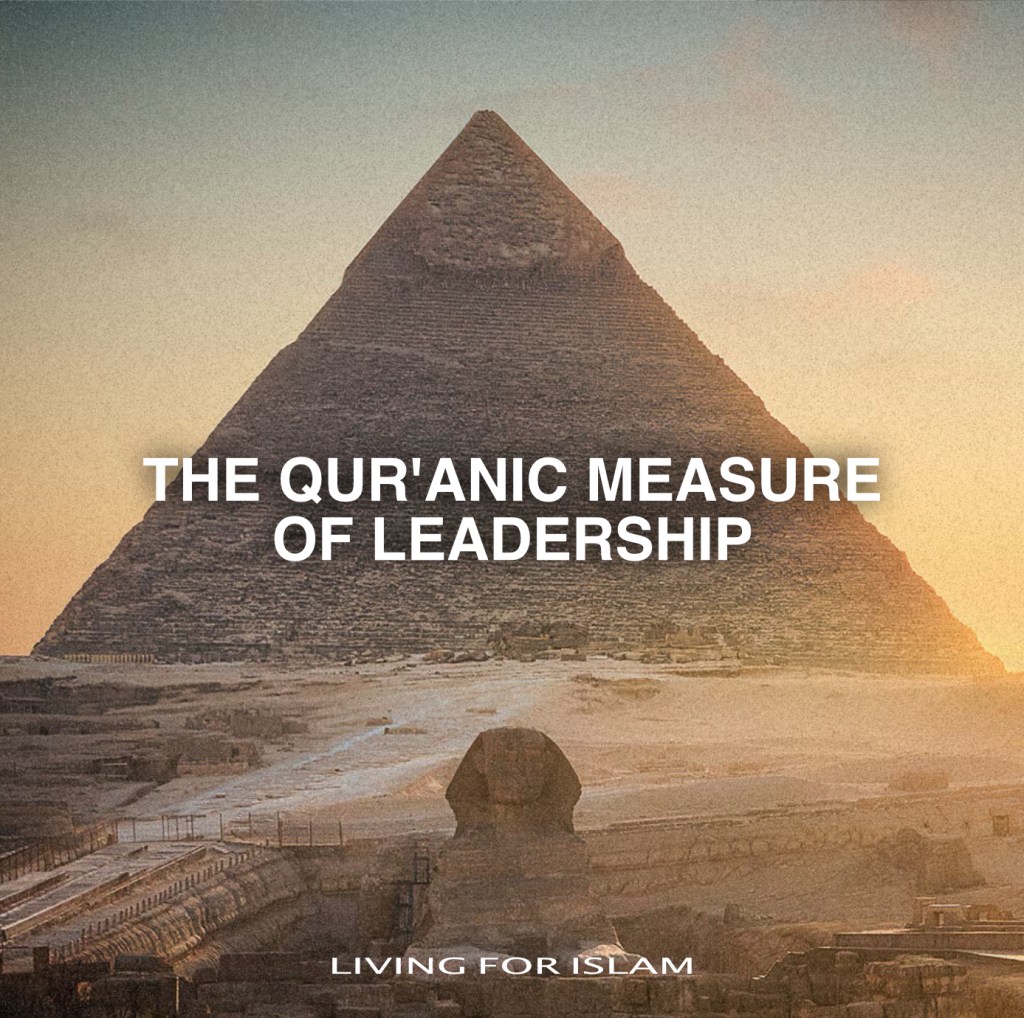
Remarkably, Allah does not say that Pharaoh was powerful or wealthy. He does not mention that Pharaoh built monuments, or that he controlled a great empire admired and feared by other nations. Instead, Allah evaluates Pharaoh according to one criterion alone: did he guide people toward the truth, or away from it?
The word Allah uses is aḍalla, not merely “led astray” in a passive sense. Pharaoh did not simply lose his own way. He actively caused the misguidance of those beneath him. He was the instrument of their deviation. And set against aḍalla is the word Allah withholds from him entirely: hadā, he did not guide. The contrast is clear. There is no middle ground, no partial credit, no acknowledgement of whatever else he may have achieved.
The Qur’an repeatedly shows that Pharaoh viewed himself very differently. He claimed to be a guide for his people. He portrayed himself as the protector of society and the voice of wisdom. Like many rulers today and throughout history, he presented his rule as necessary, beneficial, and righteous.
But when the story is over, and the sea has settled, Allah delivers His verdict: aḍalla and did not give hadā.
This should make every Muslim pause, particularly when we consider how we evaluate those who hold authority over us today. We become impressed by economic development, military strength, political stability. These things occupy our conversations and shape our judgements. Yet this short ayah reminds us that Allah weighs leadership on a different scale entirely.
The fundamental question is not what a ruler has built, but where he is leading the people. Are they being guided toward obedience to Allah, or away from it? Is the name of Allah being elevated in the life of the community, or quietly displaced? Is the civilisation that arises from his rule shaped by guidance, or by misguidance?
A ruler may claim to be a reformer. He may speak constantly of progress and national advancement. He may convince millions that he is carrying them toward a better future. The Qur’an does not ask us to dismiss these claims, it asks us to look past them to the only question that ultimately matters:
Is he giving hadā, or is he causing aḍalla?
That is the Qur’anic standard. And it does not change with the age, the ideology, or the nature of the claims being made.
After all the power, all the wealth, all the speeches, all the monuments, all the claims of greatness, Pharaoh’s legacy comes down to four words:
وَأَضَلَّ فِرْعَوْنُ قَوْمَهُۥ وَمَا هَدَىٰ
May Allah make our communities among those who hold their rulers to His standard. And may He grant the ummah leaders who carry the people toward hadā, not away from it.
|QUR’ANIC REFLECTION · SURAH ṬA HA 79|

