

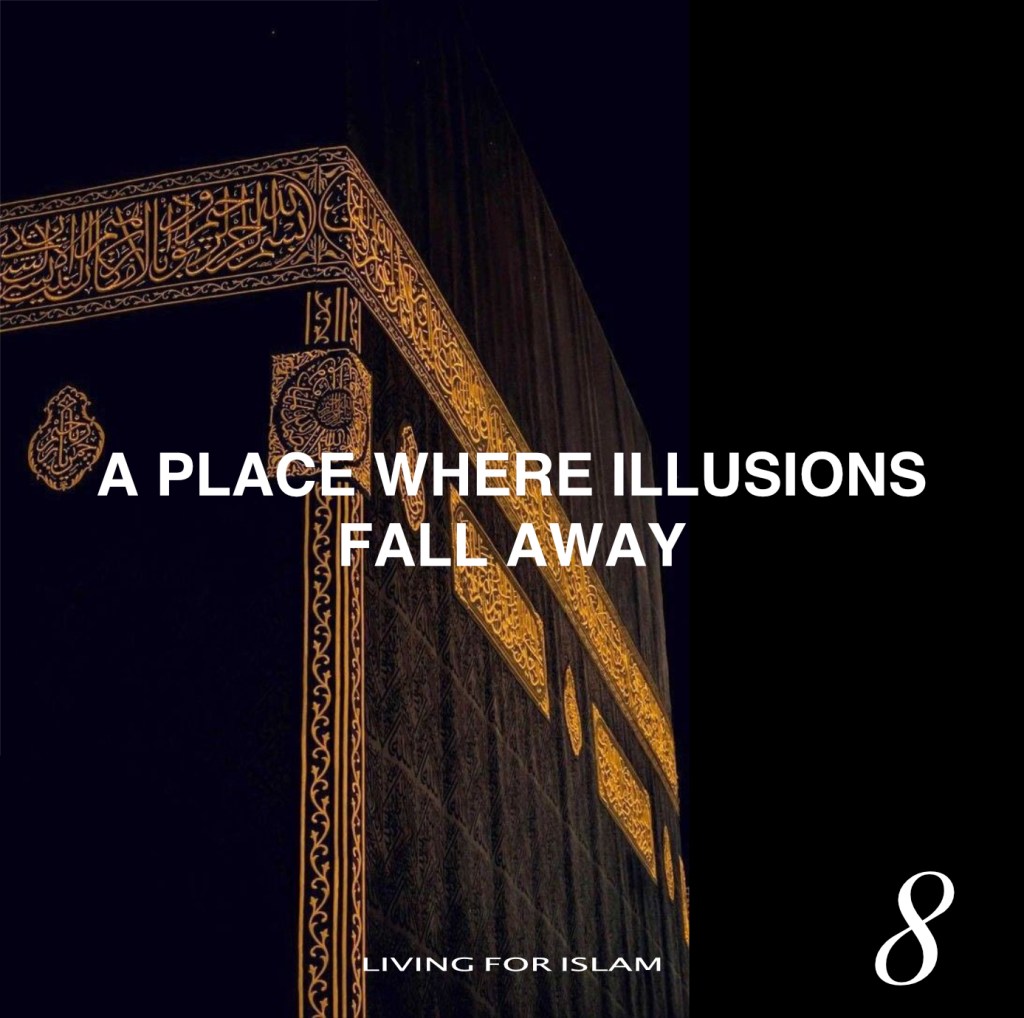
EVERY JOURNEY OF Hajj begins at Mina.
At first glance, Mina appears temporary and functional, endless rows of white tents spread across a valley outside Makkah. But Mina is not merely a staging post before Arafah. It is, in the deepest sense, where the pilgrim begins to shed illusion.
This is fitting. Mina is where Ibrahim (as) was tested beyond anything most human beings will ever face. It is where Shaytan appeared to him, not once, but three times, to dissuade him from the command of Allah. And it is where Ibrahim (as), each time, refused. The stoning of the jamarat re-enacts that refusal. But before the pilgrim reaches the jamarat, they spend their first night here, in tents, in the valley where that test took place. The ground itself carries a meaning. Mina is where the architecture of the self, comfort, status, certainty, begins to be dismantled.
I have been blessed to perform Hajj twice, and in many ways Mina gave me very different perspectives each time.
The first time, I went alone.
I probably would not recommend that to everyone. There was a loneliness to it that was difficult to describe. Millions surrounded me, yet much of the journey felt deeply solitary. But perhaps because of that solitude, I experienced Hajj more openly.
I remember wandering between camps before each salah, praying with Muslims from every corner of the world. You could walk into a tent filled with strangers and leave feeling welcomed as a brother. There was beauty in that. A Nigerian pilgrim sharing tea. A Malaysian uncle insisting you sit with him. A young Syrian man translating the khutbah for someone who did not understand Arabic.
For moments at a time, it felt as though the barriers of race, language, and nationality had dissolved exactly as Hajj intends.
But you also saw the cracks.
Some camps were clearly separated from others. The GCC camps stood gated off from the rest, with different standards of comfort and access. Even in a pilgrimage designed to erase status and hierarchy, human beings rebuilt them almost instinctively. That troubled me then, and it still does.
Perhaps that too is part of the lesson of Mina. Ibrahim (as) did not face Shaytan from a place of comfort and security. He faced him from a place of exposure. And so do we.
The second time I performed Hajj, I went with a group.
Everything was different.
This Hajj was organised, structured, comfortable. Mina was air-conditioned. The bathrooms were separated and cleaned around the clock. Food arrived on schedule. In the VIP section, well-known scholars gave lectures while pilgrims rested in cooled tents.
It felt insulated from hardship.
Until it rained.
What began as rain became flooding. Water surged through the tents. Sandals floated away. Bags soaked through. I remember standing with others, watching the water rise, waiting for it to recede, and then the slow, quiet work of cleaning debris from the tent floor, wringing out what could be saved, hunting down our sandals, trying to settle again. Nobody was panicking. Nobody was angry. There was something almost wordless about it. Thousands of people in various states of soaked disarray, simply doing what needed to be done.
And in that stillness, something became very clear.
No package can fully protect you from dependence on Allah. Not money. Not planning. Not status. Not comfort.
Floodwater does not distinguish between ordinary pilgrims and VIP pilgrims.
In the end, all of us were simply human beings trying to regain our footing together. And that, I realised, is not a disruption to Hajj. That is Hajj.
That experience changed the way I understood Mina itself.
Mina is a temporary city. For five days each year it holds millions of people, then it is dismantled. The valley returns to silence. It is a city built entirely around the temporary, designed to be filled briefly and then left again. There is something in that which mirrors what Hajj is trying to do to the pilgrim. You arrive with your routines, comforts, identities, assumptions. And then, slowly, they are taken from you, not as punishment, but as preparation.
Before Arafat. Before the stoning. Before the sacrifice.
Mina asks you to arrive and then let go.
You see the beauty of the Ummah and its fractures side by side. You realise how quickly comfort disappears. And somewhere in all of that, you begin to see yourself more honestly, not the version you present to the world, but the one that remains when the water rises and the floor needs cleaning and you are simply a person doing what needs to be done.
Maybe that is the only state in which a pilgrim can truly stand on Arafah. Stripped back. Dependent. Present.

