
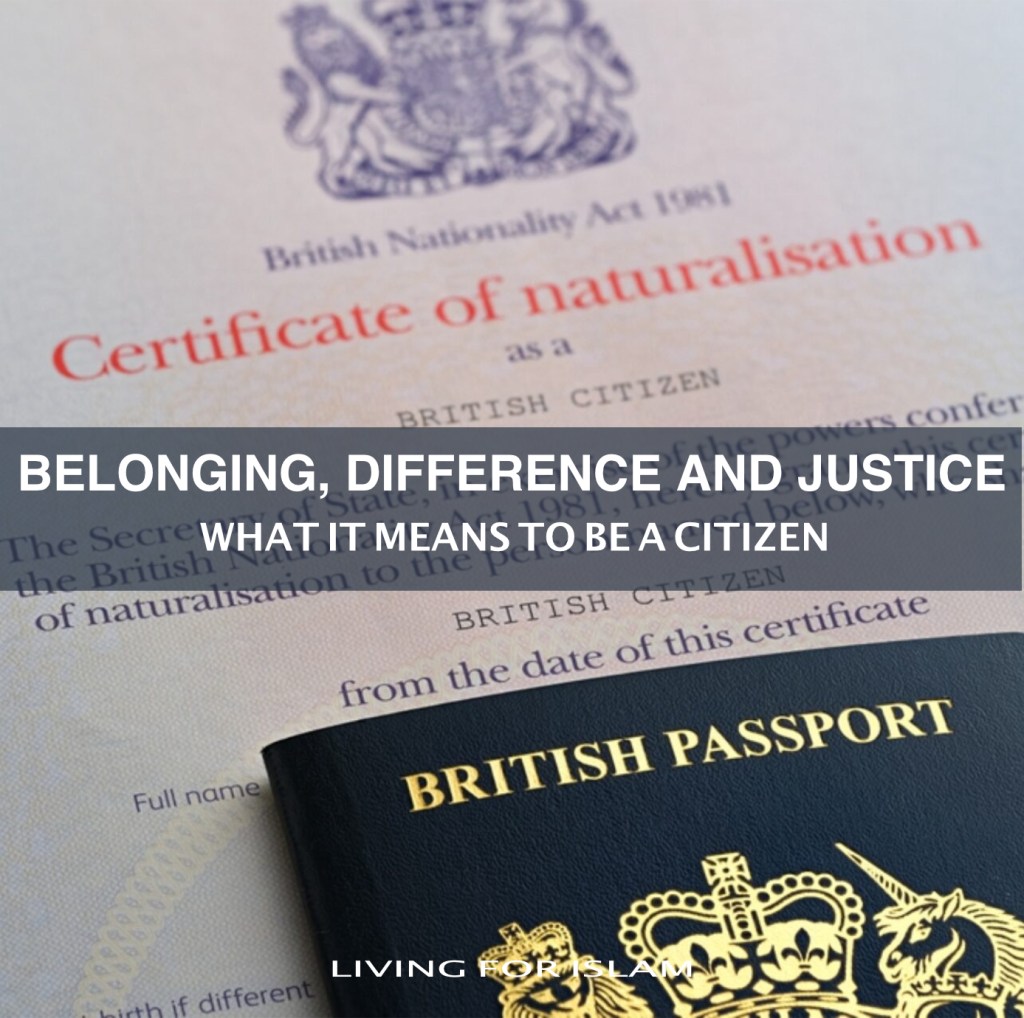
MANY MUSLIMS LIVING in the UK feel uneasy about citizenship. On paper, citizenship is described as equal and inclusive. In reality, it is difficult to attain, expensive, slow, and sometimes insecure. Even after naturalisation, there is a feeling that belonging remains conditional and can be taken away at any time.
This feeling is not about documents or laws. At its heart, it is about how a society understands belonging and whether people are trusted or feared.
To understand this tension, it helps to look at the worldview behind modern citizenship and compare it with how Islam historically understood society and human difference.
The Modern Nation State and Conditional Belonging
Modern nation-states like the UK are shaped by caution. They assume that security is fragile, resources are scarce, and loyalty must be tested. Because of this, belonging is tightly controlled.
Citizenship is not treated as something that grows naturally from living together. Instead, it is delayed and conditional. People are asked to prove themselves repeatedly through language tests, cultural expectations, long waiting periods, and high costs. Trust is postponed for as long as possible.
This approach is often driven by economic and security-related anxiety. The modern state is always quietly asking, “What if this person becomes a problem later? A security threat or an economic burden.” As a result, people can live in a society for years while still feeling like they really belong.
Islam Begins from Human Dignity
Islam begins from a radically different moral starting point.
The Qur’an does not describe human beings as problems to be managed. It describes them as honoured by default. Allah says,
وَلَقَدْ كَرَّمْنَا بَنِىٓ ءَادَمَ
We have honoured the children of Adam. (al Isra 70)
This honour is not earned through belief, usefulness, political loyalty or sameness. It is given simply because a person is human.
Because dignity is assumed, justice becomes the first responsibility. Islam does not organise society around suspicion. It organises it around accountability, trust, and moral duty before Allah.
Moral Confidence and Openness in the Qur’an
A central theme of the Qur’an is confidence. Islam does not treat truth as fragile or in need of protection through exclusion or fear. Guidance cannot be forced, and iman loses its meaning when it is pressured.
The Qur’an says,
لَآ إِكْرَاهَ فِى ٱلدِّينِ ۖ قَد تَّبَيَّنَ ٱلرُّشْدُ مِنَ ٱلْغَىِّ
Let there be no compulsion in religion, for the truth stands out clearly from falsehood. (al Baqarah 256)
This reflects a wider worldview. Islam does not fear exposure. It does not assume that living alongside differences weakens iman. It trusts that truth stands on its own.
Because of this confidence, Islam invites people to experience Islam through life, not through tests of loyalty or identity.
How People Lived in Dar al-Islam
This worldview shaped how society functioned in classical Islamic civilisation.
People living in Dar al-Islam were not all the same, and they were not expected to be. Instead, society recognised different groups, each with security and dignity.
Muslims formed the core religious community. They carried religious obligations and responsibility for public leadership, law, and defence. Their belonging was tied to iman, but their duty was to justice.
Dhimmis were non-Muslim communities who lived permanently under Muslim rule. They were not required to convert or assimilate. Their lives, property, places of worship, and religious practices were protected by covenant. They participated in society, trade, and daily life while maintaining their own religious identity. Their belonging was secure, not provisional.
Mustaʾmins were visitors or temporary residents, such as traders, travellers, or envoys. Even though they were not permanent residents, they were granted safety and protection for the duration of their stay. Their presence was not treated with suspicion, but with responsibility and trust.
The Messenger ﷺ said regarding the protection of non-Muslims under Muslim rule: “Whoever kills a person who has a covenant with the Muslims will not smell the fragrance of Paradise.” (Bukhari)
This hadith makes clear the serious obligation to uphold the safety and dignity of those under a Muslim covenant, whether permanent residents (dhimmi) or temporary visitors (musta’min).
How People Interacted
Muslims, dhimmis, and mustaʾmins did not live in separate, isolated worlds. They traded together in markets, worked side by side in crafts and professions, and interacted socially in towns and cities. Dhimmi families might run businesses, lend money, or supply goods to Muslim neighbours. Traders from abroad came as mustaʾmins and enriched the local economy while being granted protection. Society functioned on trust and shared responsibility, not fear or coercion. People knew that protection and safety were guaranteed by both law and moral principle.
Difference Without Fear
Our deen teaches that human difference is not a mistake. Allah says that if He had willed, He could have made humanity one community, but He chose otherwise.
وَلَوْ شَآءَ رَبُّكَ لَجَعَلَ ٱلنَّاسَ أُمَّةًۭ وَٰحِدَةًۭ ۖ وَلَا يَزَالُونَ مُخْتَلِفِينَ
Had your Lord so willed, He would have certainly made humanity one single community, but they will always (choose to) differ (Hud 118)
Difference is part of life. The question is not how to erase it, but how to live justly within it. Because of this, covenants and guarantees were taken seriously. To break protection was not simply a policy decision. It was a moral failure, accountable before Allah.
Islam did not build society on the fear that difference would weaken it. It built society on the belief that justice would strengthen it.
Carrying a Moral Horizon
If Muslims know how Islam allows people to live in societies with dignity, security, and belonging, we gain the confidence needed to offer Islamic answers to today’s problems. We know that there is an alternative to the insecurity and oppression of the modern nation-state system.
Believing in such an alternative built on trust is not extremism. In Islam, it is steadfastness on the truth.

