
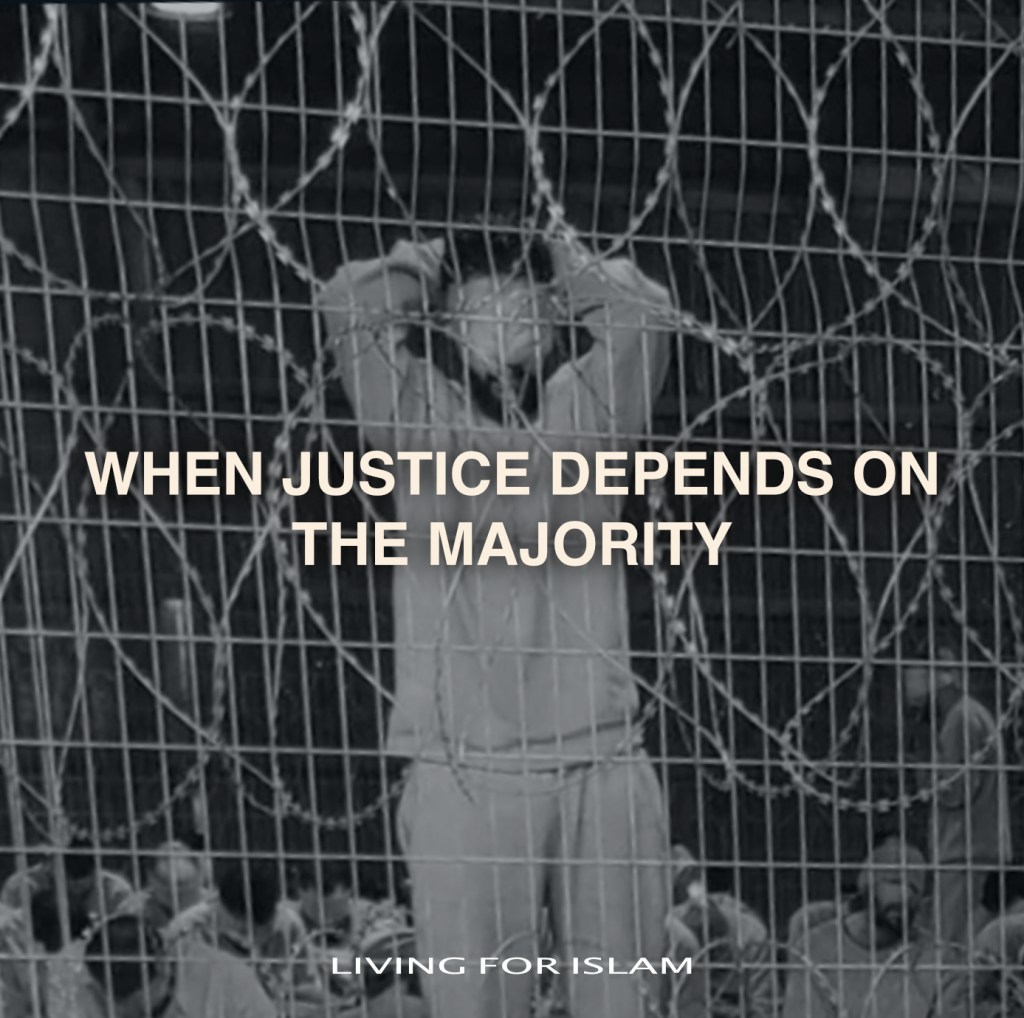
THE ISRAELI KNESSET approved a bill instructing military courts to impose the death penalty on Palestinians convicted of ‘acts of terrorism’. No equivalent penalty applies to Jewish Israelis convicted of killing Palestinians. Executions are to be carried out by hanging within 90 days of sentencing, with no right to appeal.
Palestinians in the occupied West Bank live under military law, while Israeli settlers in the same territory fall under Israeli civil law, creating two parallel legal systems for two peoples living side by side. The law effectively enshrines capital punishment for Palestinians alone, explicitly excluding Israeli citizens or residents, and only Palestinians are tried in military courts.
Rights group B’Tselem reports that the conviction rate for Palestinians tried in Israeli military courts is about 96 per cent, often based on confessions obtained under pressure or torture during interrogations. As of March 2026, approximately 9,500 Palestinians are detained in Israeli prisons, with about half held under administrative detention or labelled “unlawful combatants,” denied trial and unable to defend themselves. Into this context, a mandatory death sentence, with no appeal, a 90-day execution window, and restricted access to lawyers and family, has now been inserted. Human Rights Watch describes the law as one that “aims to kill Palestinian detainees faster and with less scrutiny.”
The Flaw of Democracy: When Majorities Make Justice
How does a system arrive at this point where an obvious injustice becomes law?
The answer lies not only in the malice of individual lawmakers, but in the architecture of a system where law is ultimately what a majority can vote for.
Modern democratic thought has long wrestled with this tension. Thinkers such as John Stuart Mill warned of the “tyranny of the majority,” where a society may act legally, yet unjustly, toward vulnerable groups. Similarly, Alexis de Tocqueville observed that democracies can be free overall, yet still oppress specific groups. The Knesset vote is a textbook example: legally valid, democratically decided, yet morally troubling.
When the source of law is human consensus alone, justice becomes negotiable. It shifts with political mood, public fear, and the composition of a legislature on any given night.
This is why Muslims must reflect on the foundations of justice, beyond legality or popularity.
Justice in Islam: Divine Guidance Above Majority Rule
Islam approaches justice from a fundamentally different starting point. It is not defined by human consensus, but by divine command. Allah says in the Qur’an:
إِنَّ ٱللَّهَ يَأْمُرُ بِٱلْعَدْلِ وَٱلْإِحْسَـٰنِ
“Indeed, Allah commands justice and excellence…” (al-Naḥl 90)
Here, al-‘adl is not a flexible social construct; it is a binding obligation. Allah further commands:
يَـٰٓأَيُّهَا ٱلَّذِينَ ءَامَنُوا۟ كُونُوا۟ قَوَّٰمِينَ بِٱلْقِسْطِ شُهَدَآءَ لِلَّهِ وَلَوْ عَلَىٰٓ أَنفُسِكُمْ أَوِ ٱلْوَٰلِدَيْنِ وَٱلْأَقْرَبِينَ
“O you who believe! Stand firmly for justice, as witnesses for Allah, even if it be against yourselves, your parents, or your relatives…” (an-Nisā’ 4:135)
This verse establishes a principle that transcends politics. Justice must be upheld regardless of personal interest, group loyalty, or public pressure. Even regarding those whom one opposes, Allah commands:
وَلَا يَجْرِمَنَّكُمْ شَنَـَٔانُ قَوْمٍ عَلَىٰٓ أَلَّا تَعْدِلُوا۟ ۚ ٱعْدِلُوا۟ هُوَ أَقْرَبُ لِلتَّقْوَىٰ
Do not let the hatred of a people prevent you from being just. Be just; that is nearer to taqwā. (al-Mā’idah 8 )
The Prophet ﷺ reinforced this principle: “Those before you were destroyed because if a noble person committed theft, they left him, but if a weak person committed theft, they punished him.” (Bukhari)
This highlights the danger of selective justice, a system where laws are applied differently depending on who you are. In Islamic terms, this is a form of ẓulm, oppression or injustice, which Allah strictly forbids.
Severe Punishments in Sharī‘ah
Islamic law (Sharī‘ah) exercises extreme caution regarding the severest punishments. The legal maxim is to avoid prescribed punishments in cases of doubt.
Allah emphasises:
مَن قَتَلَ نَفْسًۢا بِغَيْرِ نَفْسٍ أَوْ فَسَادٍۢ فِى ٱلْأَرْضِ فَكَأَنَّمَا قَتَلَ ٱلنَّاسَ جَمِيعًۭا
Whoever kills a soul unless for a soul or for fasād in the land, it is as if he has killed all mankind… (al-Mā’idah 32)
Because human judgment is fallible, Islamic law demands the highest standards of evidence and due process. Any doubt, coercion, or bias invalidates the punishment.
Equally critical is Islam’s absolute rejection of collective or discriminatory punishment. The Qur’an states:
وَلَا تَزِرُ وَازِرَةٌۭ وِزْرَ أُخْرَىٰ
No bearer of burdens will bear the burden of another. (al-An‘ām 164)
This establishes individual moral responsibility. Punishment cannot be tied to identity, whether ethnic, national, or religious. In contexts of conflict or occupation, this principle is even more vital, as power imbalances make justice vulnerable to distortion.
Anchoring Law in Divine Guidance
This highlights a key distinction: where law is shaped primarily by majority will, it can be reactive; swayed by fear, anger, or political expediency. In Islam, law is anchored in divine guidance, providing stable moral limits that cannot be overridden by public mood. This ensures that justice remains firm and principled, rather than negotiable or transient.
It is not to claim that Muslim societies have always perfectly realised these ideals. They have not. But the framework itself matters: it places justice above power, and principle above popularity.
Conclusion
At a time when legal systems globally are tested by conflict and division and failing, Muslims are reminded that justice is not simply what a majority declares it to be. It is a trust (amānah) from Allah. This trust can only be fulfilled under a system of governance that upholds divine law, the Islamic model of khilāfah, where authority is exercised to manifest the ideals of truth and justice.
The challenge is not only to critique unjust systems but to embody the Qur’anic vision of justice: one that is firm, impartial, and resistant to the shifting tides of human emotion. Only then can we speak of Sharī‘ah not merely as an ideal, but as a living commitment to justice in a world that often struggles to define it.
 Living For Islam