
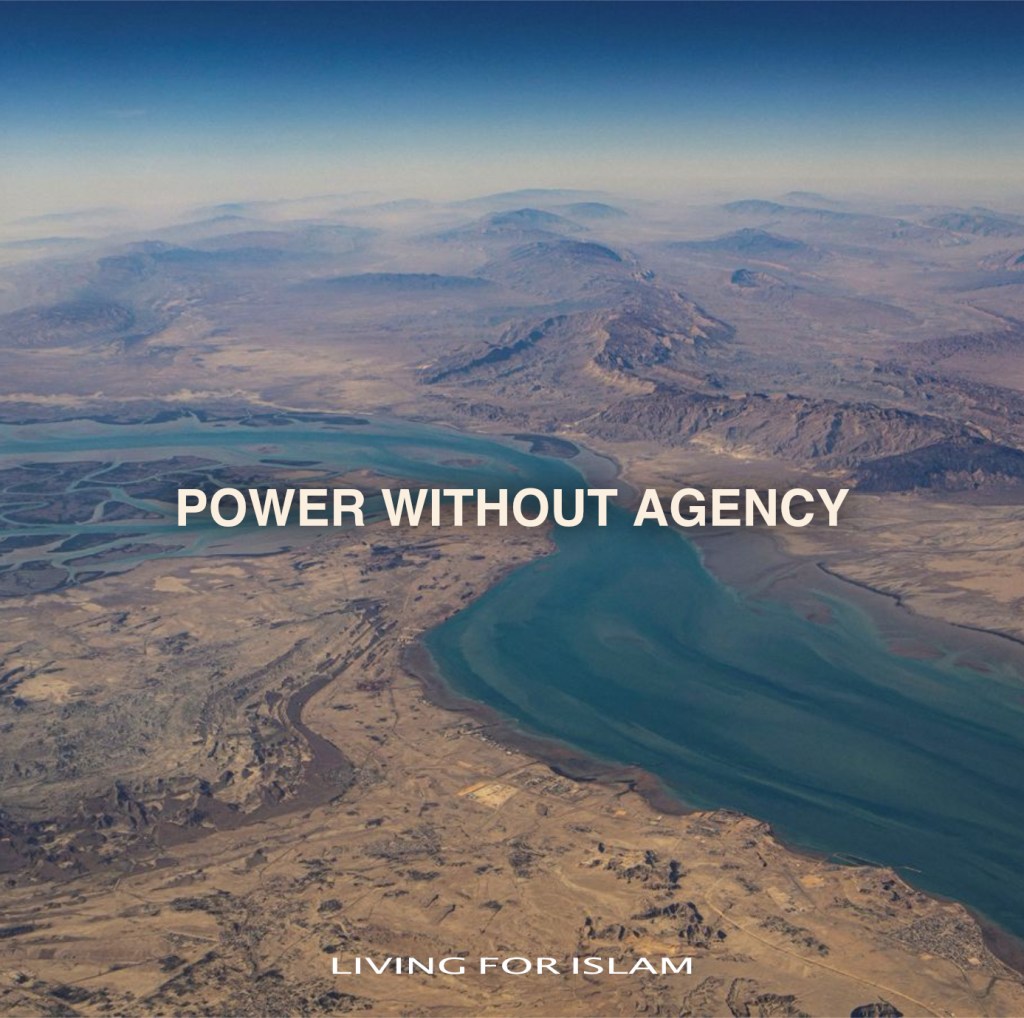
THE STRAIT OF Hormuz. The Bab al-Mandeb. The Suez Canal. These are not incidental features of geography. They are arteries through which energy, goods, and wealth flow to sustain the modern world. Every one of these chokepoints runs through or alongside Muslim-majority lands.
Add to this the vast energy reserves beneath the ground, the strategic landmass spanning three continents, the 2 billion people, and the civilisational depth of the Ummah, and what emerges is a picture of extraordinary material power.
And yet, it cannot stop the killing of children in Gaza.
That is the paradox. The restriction of a single waterway bordering Muslim lands has been enough to disrupt a significant portion of the world’s energy supply. Markets respond. Governments react. The world adjusts. The question is why the Ummah does not translate that same leverage into collective political action.
The gap between what exists and what is exercised has two dimensions, one psychological, the other structural.
The psychological runs deep. Centuries of pre- and post-colonial education, domestic politics, and foreign media have contributed to a widespread internalisation of limitation, one that makes dependence appear natural and strategic weight invisible. The Ummah does not act in part because it does not see itself as capable of acting. This is what some call a colonised mindset: a people coming to see themselves through frameworks imposed from outside. Those in power have little incentive to disrupt this condition; their authority depends on the Ummah remaining politically fragmented. The first step toward recovery is therefore perceptual, to see clearly what Allah has placed in these lands, and to recognise that what appears natural was, in fact, constructed.
But even where that perception shifts, a deeper problem remains. The structural framework itself offers no mechanism for collective action. Action today is taken on the basis of the nation-state. Within that logic, the threshold for mobilisation is clear: when the state itself is threatened, it acts. When injustice occurs beyond its borders, even at catastrophic scale, the response becomes statements, diplomacy, and symbolic gestures. This is not a failure unique to any one government. It is the operating logic of the system as a whole. The Ummah retains moral concern but lacks coordinated agency. It can witness injustice collectively, but it cannot respond to it collectively in any sustained or decisive way.
The issue is not the absence of power. It is the absence of a political structure through which that power can be exercised collectively. In Islam, that structure has always been the Khilafah.
It should not be approached as a slogan or a romantic attachment to a lost past. It refers to a historically attested form of political organisation, one that Muslim jurists across centuries treated as a matter of governance, law, and collective obligation. Classical scholars developed detailed discussions on leadership, accountability, public interest, and the application of the Shariah within a functioning state. Their broad agreement rested on a central premise: that the Ummah requires a political authority through which its collective affairs are organised and its obligations upheld.
This premise emerges from the Qur’anic mode of address itself, to a believing community bound by shared obligations, not to disconnected political units pursuing separate interests. The Prophetic model in Madinah gave this form: a single political community with unified leadership. The Khilafah is the institutional expression of that principle, that the Ummah is not only a spiritual reality, but a political one.
It is also worth being direct about what it is not. The Khilafah is not a theocracy in the sense Western discourse typically implies. The classical model is one of political governance accountable to the Shariah, with the Khalifah as a political leader, not a pope. Non-Muslim citizens held recognised rights and protections within this framework. To dismiss it on the basis of its caricature is not sophistication, it is the conditioning speaking.
The path forward requires honesty about how far the Ummah has drifted from political coherence, and the courage to think beyond inherited frameworks rather than merely improving them at the margins.
وَاعْتَصِمُوا بِحَبْلِ اللَّهِ جَمِيعًا وَلَا تَفَرَّقُوا
Hold firmly to the rope of Allah, all together, and do not become divided. (Al-Imran 103)
The power is real. The weakness is constructed. And what has been constructed can, by His permission, be dismantled.
 Living For Islam