
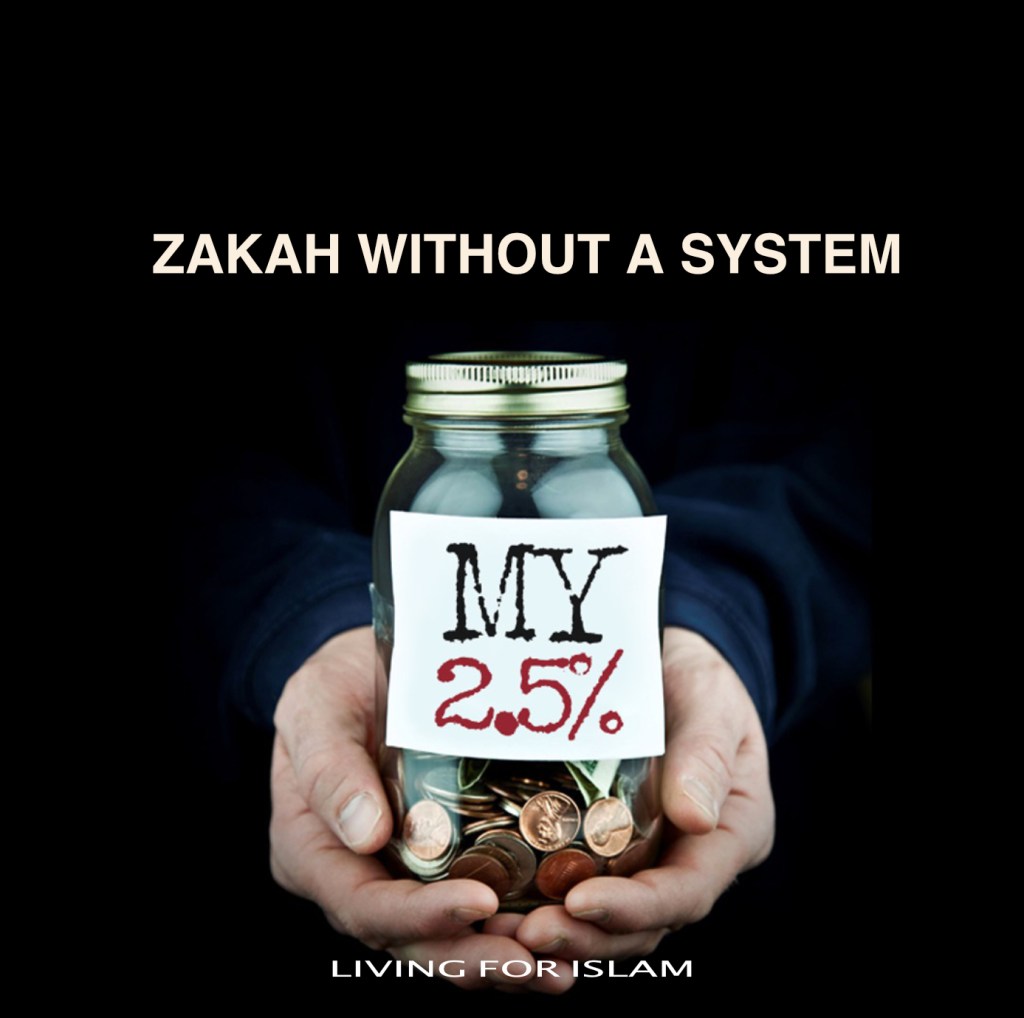
EVERY YEAR, IN Ramadhan, I sit down and calculate my zakat. The calculation itself is not the hard part. Determine the nisab, assess eligible wealth, apply the 2.5%, the fiqh is clear, the method established. Within an hour, I have a figure.
Then the real difficulty begins.
How do I distribute it? Who do I give it to? Which charity is actually trustworthy? How much of what I give will reach those who need it, and how much will be absorbed by administrative costs? Is this organisation properly audited? Did last year’s donation actually deliver? These questions do not have easy answers, and I am not alone in asking them.
Across Muslim communities every Ramadhan, because Ramadhan is when most of us make our annual zakat calculation, the same conversations happen. Group chats fill with recommendations and warnings. Families debate over iftar. We are all trying, in our own way, to fulfil an obligation that deserves better than this annual scramble.
The frustration is not with the act of giving. Muslims give generously, consistently, year after year, despite economic hardship, despite uncertainty. The frustration is with the absence of any structure that makes giving effective. We are doing our part. The system is not doing its job.
This is not a modern failure of organisation or will. It is the consequence of something much deeper: the loss of the institutional framework within which zakat was always meant to operate. To understand why, we need to go back to where zakat begins, in the Qur’an itself.
What the Qur’an Actually Describes
إِنَّمَا ٱلصَّدَقَـٰتُ لِلْفُقَرَآءِ وَٱلْمَسَـٰكِينِ وَٱلْعَـٰمِلِينَ عَلَيْهَا وَٱلْمُؤَلَّفَةِ قُلُوبُهُمْ وَفِى ٱلرِّقَابِ وَٱلْغَـٰرِمِينَ وَفِى سَبِيلِ ٱللَّهِ وَٱبْنِ ٱلسَّبِيلِ ۖ فَرِيضَةًۭ مِّنَ ٱللَّهِ ۗ وَٱللَّهُ عَلِيمٌ حَكِيمٌۭ
Zakat is only for the poor and the needy, for those employed to administer it, for those whose hearts are attracted (to the faith), for (freeing) slaves, for those in debt, for Allah’s cause, and for (needy) travellers. (This is) an obligation from Allah. And Allah is All-Knowing, All-Wise. (at Tawbah 60)
This ayah lists the eight categories of zakat recipients precisely: the destitute (those with nothing), the poor (those who cannot meet their needs), those in debt, travellers in need, those working to free themselves from slavery, those whose hearts are to be reconciled, those in the path of Allah, and, critically, al-‘amilina ‘alayha: those employed to administer it.
That final category is the one modern discussions most often pass over. Yet it is among the most revealing. The Qur’an does not simply describe who should receive zakat. It describes the people responsible for collecting and distributing it. It assumes, from the outset, an administrative apparatus, officials, assessment, accountability, and organised distribution.
In other words, the Qur’anic vision of zakat assumes a state. Not as an afterthought, but as a structural requirement. The obligation was never designed to be discharged through individual transactions between giver and recipient. It was designed to flow through institution, an institution with authority to collect, capacity to assess, and reach to distribute.
The Early Islamic Model: Zakat as Governance
During the time of the Prophet ﷺ, zakat was administered as a public institution. Officials known as ‘amilun were dispatched to regions across the growing Muslim state to assess and collect zakat from livestock, agricultural produce, and trade goods. Funds were distributed locally to eligible recipients, with any surplus transferred back centrally in a ring-fenced zakat fund, for broader deployment.
This was not charity. It was governance. The state identified those in need, assessed the wealth of those obligated to give, collected with authority, and distributed systematically. The individual Muslim did not need to research charities or worry about delivery. The institution handled it.
Abu Bakr (ra) was ready to go to war in his khilafah with the tribes who refused to give zakat. While under Umar ibn al-Khattab (ra), the system was developed further still. Registers of eligible recipients were maintained. Stipends were organised and regularised. Accountability mechanisms ensured funds reached their intended recipients rather than disappearing into administrative excess. The historical record from this period points to a level of social welfare, a measurable reduction in poverty, that the Muslim world has not seen replicated since. Indeed, there is a report that within 6 years of zakat being implemented in Yemen, the governor Muadh ibn Jabal (ra) reported back to Umar (ra) that there was no one to give zakat to!
The reason is not mysterious. A state can do what individuals and charities structurally cannot. It can conduct systematic assessment of wealth across an entire population. It can enforce collection from those who would otherwise withhold. It can identify the poor without relying on them to present themselves. It can distribute at scale, without duplication, without gaps, and with the accountability that only institutional authority makes possible.
A charity can feed the hungry today. Only a state can build the conditions that end hunger.
This is not a romanticised reading of early Islamic history. It is the straightforward institutional logic of why states exist and why the Qur’an assumed one when it described zakat.
The Long Decline: From Institution to Individual
The abolition of the Ottoman Khilafah in 1924 was a decisive rupture in which the structure of centralised Islamic governance was lost.
However, this followed centuries of gradual decline and disunity that eroded the central fiscal authority on which a unified zakat system depended. A single Bayt al-Mal (public treasury) distributing zakat across the breadth of the Muslim world became, in practice, impossible. Power devolved. Governance fractured. And with it, the institutional infrastructure of zakat weakened.
The latter Ottoman period maintained important welfare functions, but largely through the waqf system, religious endowments that served genuine social purposes. The waqf was a real and valuable institution that served people’s needs. But it was not the Qur’anic model. It was an adaptation, a way of preserving something of Islam’s social vision within the constraints of a governance structure that was itself already compromised.
What 1924 did was formalise and complete a fragmentation that had been developing for centuries. The Muslim world was partitioned into nation-states, borders drawn not by Islamic principle but by the interests of colonial powers. And with no central authority remaining, zakat became by default what it had never been designed to be: a matter of individual conscience and private charity.
An emergency arrangement, born of political catastrophe, gradually became the norm. And as it became the norm, the original vision, zakat as a pillar of Islamic governance, began to fade from collective memory.
The Nation-State Patchwork and Its Limits
A fair-minded reader will note that this is not the whole picture. Some Muslim states do operate formal zakat systems. Malaysia has developed a sophisticated national zakat infrastructure. Pakistan has legislation mandating collection. Saudi Arabia incorporates zakat into its fiscal framework. Is this not sufficient?
The objection deserves a direct answer.
These systems represent genuine efforts and achieve real good within their borders. But in doing so, they also illustrate the precise nature of the problem. Each system serves only its own citizens. Malaysian zakat funds do not reach the destitute in Mali or the displaced in Myanmar. Pakistani zakat collection does not extend to the poor of Bangladesh or Somalia. Saudi mechanisms do not assess the wealth of Muslim billionaires resident in London or New York.
The ummah, in Islamic understanding, is one body. Its obligations do not stop at national borders. But nation-state zakat systems are, by definition, bounded by exactly those borders, borders that have no basis in Islamic thought and every basis in the political settlement imposed on the Muslim world after its colonial subjugation.
Beyond the fragmentation, there is a deeper structural problem. Nation-state zakat systems operate within secular constitutional frameworks that constrain their scope and enforce their compromises. They are improvements on pure private charity. But they are approximations of the Qur’anic model, not realisations of it, and the gap between the two is where millions of Muslims in need continue to fall.
Nation-state zakat systems serve their citizens. The Qur’anic vision of zakat serves the ummah.
Meanwhile, the annual Ramadhan scramble continues. Muslims in prosperous countries research charities, debate overhead percentages, and hope their donations arrive. Muslims in poor countries wait for help that comes intermittently, partially, and without the dignity that a right, which is what zakat represents for its recipients, should carry. Both groups are living with the consequences of a broken system, doing their best within it. This setup may also ignore the plight of the poor and needy that live in those prosperous countries.
Where the Evidence Leads
The argument assembled here is not a complicated one. The Qur’an describes a zakat system that requires institutional administration. The early Muslim community had that institution, and it worked. The institution weakened as centralised Islamic governance weakened, and collapsed entirely with the end of the khilafah. What replaced it, private charity, individual giving, fragmented nation-state systems, pragmatic scholarly fatawa, cannot, by its nature, fulfil the original obligation at the scale it was designed for.
Classical Islamic scholars understood this connection between zakat and governance as foundational. Al-Mawardi, in Al-Ahkam al-Sultaniyyah, placed the administration of zakat among the central obligations of the state, not as one function among many, but as a defining responsibility of legitimate Islamic authority. Not as theory but practice.
Some will argue that the khilafah is an ideal too distant to be practically relevant, that Muslims should focus on what is achievable within existing structures. This is a reasonable position, and the work being done through charities and nation-state systems is genuinely valuable and should continue. But pragmatism about short-term action should not make us forget about long-term obligation.
The question is not whether current efforts are worthwhile. They are. The question is whether they are sufficient, whether they can ever, however well-organised, however well-funded, replicate what a unified Islamic governance structure makes possible. The institutional logic says they cannot. The historical evidence agrees.
The khilafah is not a relic of history to be admired from a distance. It is the governance structure within which the obligations of Islam, including the obligation of zakah embedded in Surah at-Tawbah, honoured by the Rightly Guided Caliphs and those that followed them, and systematically dismantled over the last century, can be fully realised.
Every Muslim who has sat with a completed zakat calculation and then spent an hour wondering where to send it already knows, intuitively, that something is missing. Something that the charity sector and today’s scholars rarely talk about. This article is simply an attempt to name what that something is.
 Living For Islam