
THE THEME OF the United Nations International Women’s Day 2026 is “Rights. Justice. Action.” Few would dispute the importance of these ideals. The question Muslims are entitled to ask is whether the framework promoting them is actually capable of delivering them, or whether these words have become a slogan, selectively applied abroad and largely undelivered at home.
The evidence on both counts is damning.
A Framework That Has Failed on Its Own Terms
Start with the countries loudest in proclaiming these values. In Britain, the Home Secretary has publicly declared a crisis of violence against women and girls, not a fringe critique, but an admission from within the establishment itself. Rape conviction rates remain devastatingly low. Women are still killed by partners and ex-partners at a rate that has not meaningfully shifted in decades. The gender pay gap persists. Access to justice remains deeply unequal.
This matters because the critique is not simply that Western rights frameworks are applied hypocritically abroad, though they are. It is that they have failed to deliver even where they have had every opportunity to do so, in the wealthiest, most institutionally developed societies. The framework is not just selective. It is insufficient.
A Geopolitics of Selective Outrage
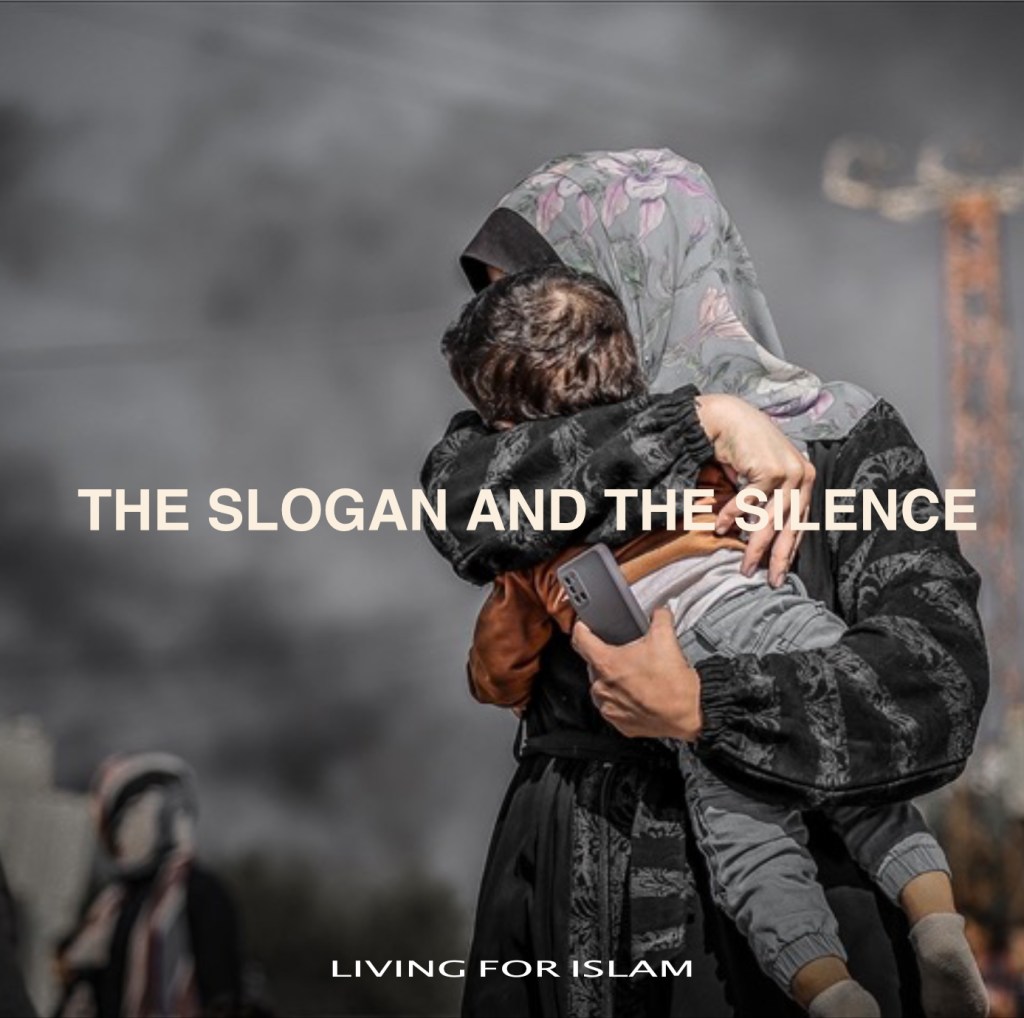
The failure abroad is equally stark. In Afghanistan, the liberation of Muslim women was offered as moral justification for invasion. It is invoked as justification for regime change in Iran. In Gaza, women and girls are being killed in their tens of thousands. In East Turkestan, over a million Muslims have passed through detention camps in a campaign of documented cultural erasure, families separated, religious practice suppressed, women targeted as the specific vehicle through which a people’s identity is to be destroyed. Sudan, Kashmir, the Rohingya- the list continues.
The governments most vocal about gender equality provide the weapons and diplomatic cover for some of these atrocities, and maintain a calculated silence on others. The International Women’s Day statement will still be issued. The hashtag will still be shared.
This is not a peripheral observation. It goes to the heart of whether the dominant global rights framework is a principled system or a political instrument, one deployed against enemies and suspended when inconvenient. A failed framework does not automatically vindicate another. But it does leave the question open: where should Muslims look?
What Islam Established
For Muslims, the answer is not a new moral framework. It is a return to the one already revealed.
More than fourteen centuries ago, Islam established enforceable rights for women at a time when much of the world treated them as property. Women could own and inherit wealth, enter contracts, and maintain complete financial independence. Marriage required free consent. The mahr belonged to the wife alone. These were not aspirational ideals, they were operative law, adjudicated in courts and embedded in the institutions of Islamic civilisation.
Khadijah bint Khuwaylid (ra) was a merchant of independent means who employed the Prophet ﷺ before their marriage. Aisha bint Abi Bakr (ra) became one of the foremost legal authorities of the early Muslim community, teaching men and women alike; her narrations formed a pillar of Islamic jurisprudence. Fatima al-Fihri is credited with establishing the first university in the world. Islam produced women of scholarship, commerce and authority because its framework made space for them from the beginning.
But Islamic justice was never purely political. It extended inward, to the fabric of social life, to how communities treat their own women, in speech, in law, and in reputation. Here too, the Quranic framework was precise.
Islam also protected something modern rights discourse tends to overlook: honour.
The Qur’an prescribed serious legal consequences for false accusation:
وَٱلَّذِينَ يَرْمُونَ ٱلْمُحْصَنَـٰتِ ثُمَّ لَمْ يَأْتُوا۟ بِأَرْبَعَةِ شُهَدَآءَ فَٱجْلِدُوهُمْ ثَمَـٰنِينَ جَلْدَةًۭ وَلَا تَقْبَلُوا۟ لَهُمْ شَهَـٰدَةً أَبَدًۭا ۚ وَأُو۟لَـٰٓئِكَ هُمُ ٱلْفَـٰسِقُونَ
And those who accuse chaste women and then do not produce four witnesses, lash them with eighty lashes and do not accept their testimony ever after. (an Nur 4)
This verse established the legal principle of qadhf, under which false accusations of sexual misconduct carry serious penalties.
The Qur’an reinforces the protection of honour even further:
إِنَّ ٱلَّذِينَ يُحِبُّونَ أَن تَشِيعَ ٱلْفَـٰحِشَةُ فِى ٱلَّذِينَ ءَامَنُوا۟ لَهُمْ عَذَابٌ أَلِيمٌۭ فِى ٱلدُّنْيَا وَٱلْـَٔاخِرَةِ ۚ وَٱللَّهُ يَعْلَمُ وَأَنتُمْ لَا تَعْلَمُونَ
Indeed, those who love that immorality should spread among the believers will have a painful punishment in this world and the Hereafter. (an Nur 19)
And believers are warned against the culture of suspicion and character assassination:
يَـٰٓأَيُّهَا ٱلَّذِينَ ءَامَنُوا۟ ٱجْتَنِبُوا۟ كَثِيرًۭا مِّنَ ٱلظَّنِّ إِنَّ بَعْضَ ٱلظَّنِّ إِثْمٌۭ ۖ وَلَا تَجَسَّسُوا۟ وَلَا يَغْتَب بَّعْضُكُم بَعْضًا
O you who believe, avoid much suspicion. Indeed, some suspicion is sin. Do not spy on one another nor backbite one another. (al Hujurat 12)
Taken together, these verses establish a clear social principle: a just society must actively guard against slander, suspicion and public humiliation.
In an age of deepfakes and viral defamation, where a woman’s reputation can be destroyed before the truth even surfaces, this principle has lost none of its relevance. Islam recognised the danger of reputational harm and constructed a legal deterrent fourteen centuries before the algorithm existed.
When Leadership Acts
Principles require enforcement. Justice requires leaders willing to act.
There is a widely recounted episode from the Abbasid Khilafah. A Muslim woman, seized and abused by Byzantine soldiers, cried out the name of the Khalifah Al-Mu’tasim. When news reached him, he mobilised an army. The campaign ended with the capture of the Byzantine stronghold of Amorium.
The episode is not cited as a military template. It is cited because of what it reveals about accountability: that the violation of a single woman’s dignity was a direct call upon the ruler to act. Her cry reached the khalifah, and he answered it.
Contrast this with today. The cries from Gaza and East Turkestan are heard by every head of state on earth. They are answered with vetoes, arms shipments, and press releases about women’s empowerment. Or, in the case of Muslim rulers, with silence.
The distance between these two responses is not incidental. It reflects a structural difference: a system grounded in divine accountability that cannot be suspended for political convenience, versus one in which rights are a resource to be deployed or withheld according to interest.
The Task Before Us
The gap between Islamic principles and present reality reflects the absence of institutions capable of realising them, not a failure of Islam itself.
For Muslims, that system has a name: the Khilafah. Not an abstraction, but a proven institutional model with a track record of enforcing rights when rulers were held to divine accountability. The story of Al-Mu’tasim is not nostalgia. It is a proof of concept.
“Rights. Justice. Action.”
Islam does not dispute these words. It asks only that they mean something, that they extend to the woman in Gaza and the woman in East Turkestan as readily as the woman in Geneva, that they be grounded in a law that cannot be switched off, and that they be backed by leadership willing to act when it matters.
Islam did not merely call for rights, justice and action. It built a system designed to deliver them. The task for Muslims today is to revive that system, not because the West has failed, but because the world still needs what only Islam can offer.
 Living For Islam