
MANY MUSLIMS IN Britain already know something is wrong, not from headlines, but from daily life.
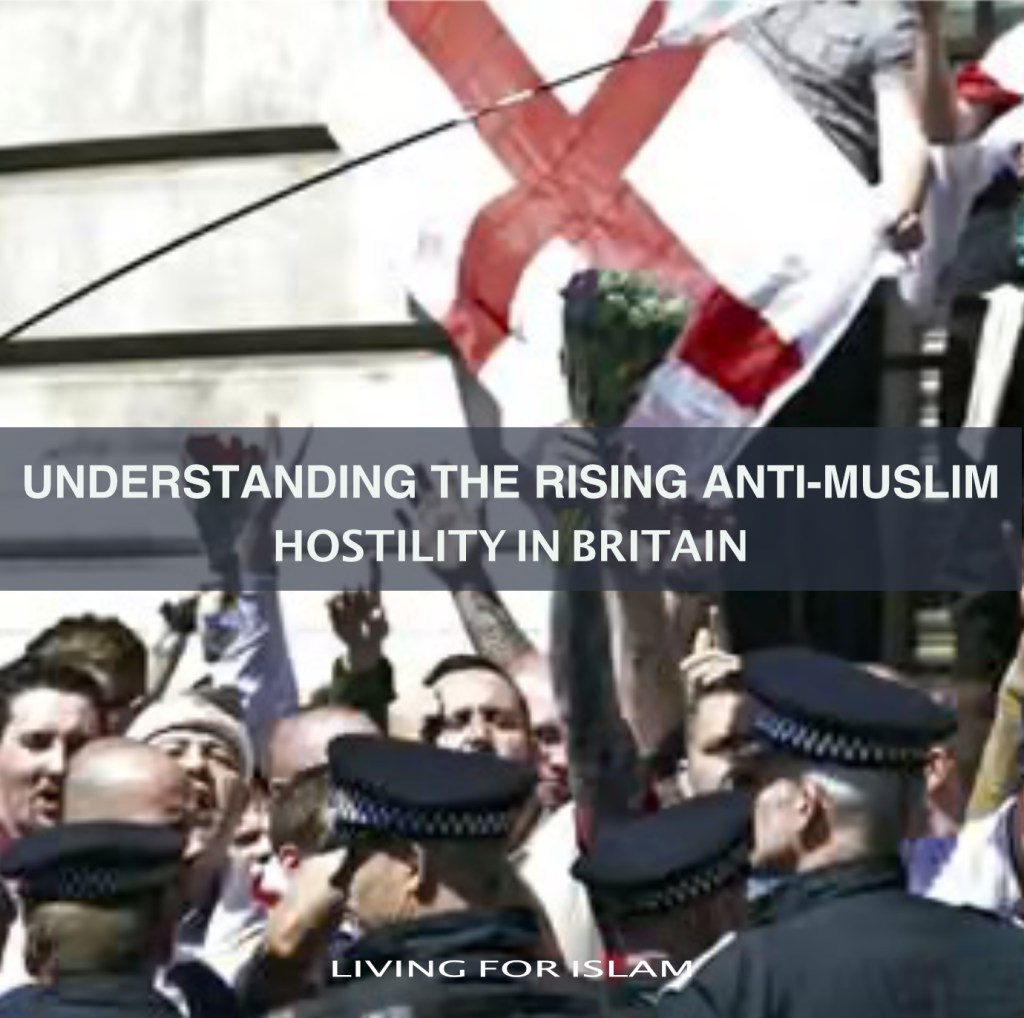
It is the pause before answering a stranger’s question. The calculation parents make before letting their children walk home alone. The flags that line the streets marking territory.
We are often told these moments are isolated. Unfortunate. Unrelated. Or worse, unavoidable.
They are not.
What Muslims are facing in Britain today is not random prejudice or a series of misunderstandings. It is the outcome of political, economic, and social systems that quietly work together. Systems that make hostility feel normal, suspicion feel justified, and Muslim pain easy to ignore.
Understanding this matters, not for theory, but for safety, dignity, and survival.
1. Economic Pressure Needs Someone to Blame
Britain is under real strain. People feel it in stagnant wages, impossible rents, rising cost of living and taxes and failing public services. That frustration has to go somewhere.
Instead of confronting decades of government policy choices that benefited a few and hollowed out the rest, anger is redirected toward visible minorities. Muslims are convenient. We are present, identifiable, and already framed as “different.”
This is not just about jobs or resources. It is about culture. We are portrayed as incompatible, demanding, or threatening, so that economic failure looks like a social problem instead of a political one.
History repeats this pattern relentlessly. When systems fail, minorities pay the price.
2. Twenty Years of Suspicion Have Trained the Public
For over two decades, Muslims have lived under a security lens. After 9/11, citizenship became conditional. Loyalty was questioned. Silence was demanded, and speech was policed.
The language of “moderate” versus “extremist” did lasting damage. It suggested that Muslims, as a group, were permanently on trial.
The result is a quiet but dangerous shift: harm against Muslims no longer feels shocking. Abuse is explained away. Violence is contextualised. Empathy is rationed. Such is the dehumanisation of Muslims across the world.
This does not happen by accident. It happens through repetition.
3. Gaza and the Backlash Against Moral Clarity
Social media has changed something important. Many people in Britain, Muslim and non-Muslim, have seen Gaza directly, without filters or curated mainstream media narratives. Public sympathy has grown. Questions are being asked.
This has unsettled those in power.
When public opinion shifts beyond their control, the response is not reflection; it is containment. Platforms are bought. Influencers are paid. Narratives are managed. Protest is reframed as a threat.
Muslims who speak about justice are no longer heard as citizens with convictions, but as risks to be managed. Anger at oppression is treated as evidence of radicalism. Marches are labelled as hate.
The goal is not debate. It is to make those who speak a danger to society.
4. Global Islam Is Being Redefined, And We Pay the Price
Internationally, authoritarian regimes like the UAE promote a version of Islam that is silent, obedient, and disconnected from justice. Political engagement is criminalised. Solidarity is suspicious. Moral courage is rebranded as extremism.
This matters in Britain.
When Islam is globally represented as passive, or punished for dissent, Muslims here are more easily portrayed as either submissive or dangerous, with no legitimate space in between.
This Is How the System Fits Together
These forces reinforce one another:
- Economic failure seeks scapegoats
- Long-term suspicion and dehumanising lowers empathy
- Shifting public opinion triggers elite backlash
- Global narratives delegitimise Muslim agency
The result is not chaos. It is managed hostility, socially tolerated, politically useful, and selectively enforced.
The Far Right Is Loud, But Not Alone
Far-right groups are the most visible face of anti-Muslim hostility. They harass, intimidate, and sometimes attack. But they are not operating in a vacuum.
They feed on the same narratives already circulating. Social media rewards outrage. Their content spreads faster than nuance. And their actions help justify broader claims that Muslims are a “problem.”
They are a symptom, not the source.
What This Means for Us
This matters because misunderstanding the problem leads to internalising blame. Anti-Muslim hostility is not a personal failure. It is not caused by how visibly Muslim you are, how softly you speak, or how carefully you explain yourself.
It is a systemic problem, and seeing it for what it is clearly is the first form of protection and allows communities to respond, not react.
This is not about despair. It is about refusing to be confused about what is happening to us, and why.
To be continued…
 Living For Islam