
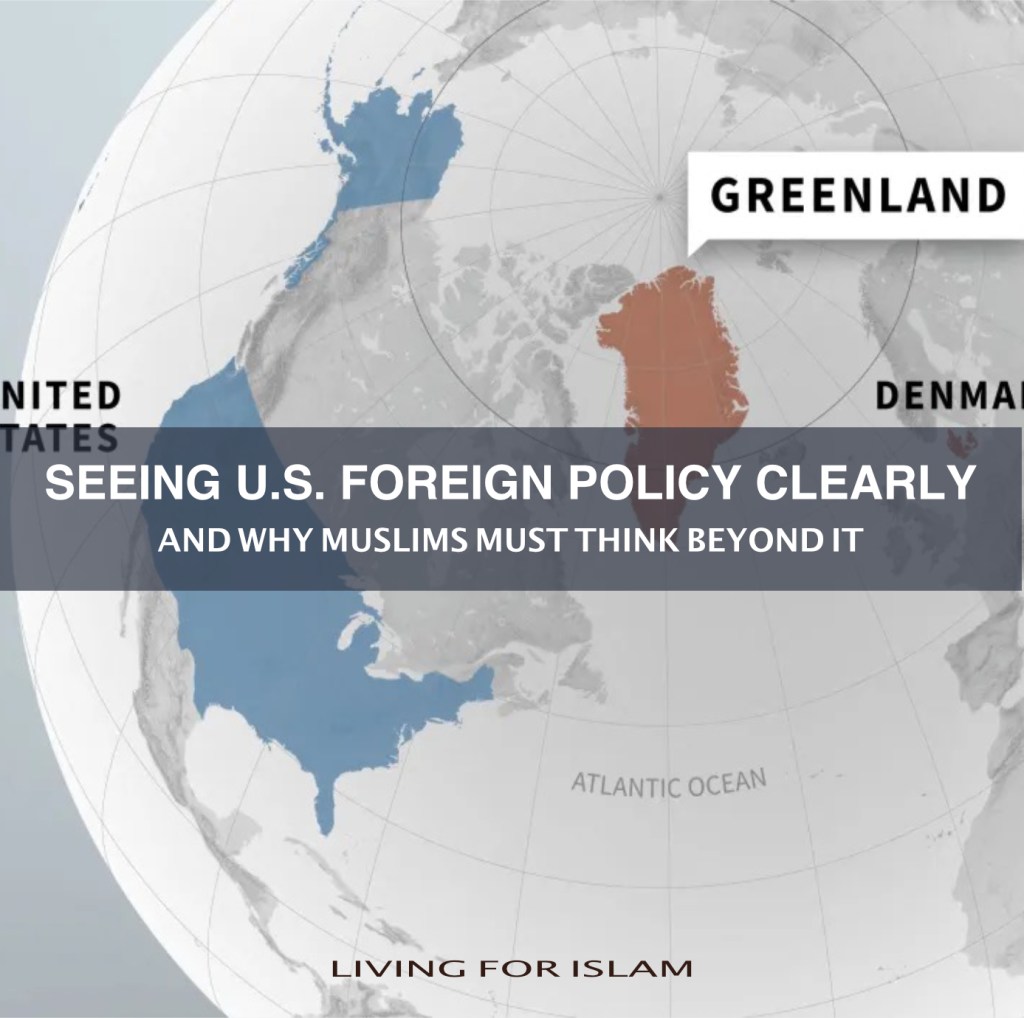
IN 1823, U.S. President James Monroe announced what became known as the Monroe Doctrine: European powers should no longer colonise or interfere in the Americas, and in return, the United States would avoid involvement in European wars and existing colonies. Publicly, the doctrine was framed as defensive, a shield for newly independent states in the Western Hemisphere. In practice, it laid the groundwork for something more enduring: the idea that the Americas constituted a privileged sphere of influence for the United States.
Over time, this doctrine was reinterpreted and expanded. In the early twentieth century, the Roosevelt Corollary justified U.S. intervention across Latin America. During the Cold War, anti-communism supplied a new rationale. After the Cold War, the language shifted again, toward democracy promotion, human rights, and humanitarian intervention. While the justifications changed, a consistent assumption remained: the United States claimed the authority to shape political outcomes beyond its borders when its interests were perceived to be at stake.
From Central America to the Caribbean, from Iran in 1953 to Iraq in 2003, and from sanctions regimes to military bases encircling key regions, U.S. foreign policy has repeatedly demonstrated that sovereignty is conditional when it conflicts with American strategic, economic, or security priorities. These interventions are not random, nor are they merely the product of individual leaders. They reflect deeper ideas embedded in the U.S. political worldview.
The Ideas that Shape US Power
Four interrelated concepts help explain the persistence of U.S. interventionism.
First is American exceptionalism, the belief that the United States is uniquely virtuous and uniquely responsible for shaping global order. This self-image, rooted historically in Manifest Destiny, continues to frame U.S. power not as domination but as leadership.
Second is political realism, which views international relations as competition among states in an anarchic world. In this framework, moral considerations are secondary to survival, influence, and advantage. Cooperation is tactical, not principled.
Third are economic imperatives. Control over trade routes, access to resources, the centrality of the U.S. dollar, and the use of sanctions as leverage all serve a global economic architecture that disproportionately benefits powerful states and corporate elites.
Finally, liberal internationalism provides moral language that reconciles power with conscience. Military interventions are framed as humanitarian, sanctions as tools for democracy, and coercion as responsibility. This does not mean all such claims are insincere, but it does mean moral language frequently aligns with strategic interest.
These ideas often coexist in tension, but together they produce a consistent outcome: a global order in which power determines whose sovereignty is respected and whose is negotiable.
For Muslims observing the world, from Palestine to Yemen, from sanctions that devastate civilian populations to wars justified by selective moral outrage, this pattern is difficult to ignore. The question, then, is not merely how to criticise U.S. foreign policy, but what alternative vision can meaningfully challenge it.
A Different Vision: Islam
Islam begins from a radically different premise: sovereignty belongs to Allah alone (tawhid). No nation, race, or state possesses inherent moral supremacy. Human authority is limited, accountable, and subject to divine law.
يَـٰٓأَيُّهَا ٱلنَّاسُ إِنَّا خَلَقْنَـٰكُم مِّن ذَكَرٍۢ وَأُنثَىٰ وَجَعَلْنَـٰكُمْ شُعُوبًۭا وَقَبَآئِلَ لِتَعَارَفُوٓا۟ ۚ إِنَّ أَكْرَمَكُمْ عِندَ ٱللَّهِ أَتْقَىٰكُمْ ۚ
O mankind, indeed We have created you from male and female and made you peoples and tribes that you may know one another. Indeed, the most noble of you in the sight of Allah is the most righteous of you. (Hujurat 13)
In Islam, nobility is not measured by power, wealth, or military dominance, but by taqwa, justice, and righteous conduct. This directly challenges the logic of exceptionalism that underpins modern empire.
Justice in Islam is not selective or interest-based. Allah commands:
إِنَّ ٱللَّهَ يَأْمُرُ بِٱلْعَدْلِ وَٱلْإِحْسَـٰنِ
Indeed, Allah commands justice and excellence (an Nahl 90)
Justice applies even when it conflicts with self-interest, even against oneself, and even in relations with opponents. Power, therefore, is not a license; it is a responsibility.
Islamic economic principles further distinguish this worldview. Exploitative debt, coercive trade, and unjust extraction of wealth fall under riba and dhulm, both categorically prohibited. The Quran instructs:
يَـٰٓأَيُّهَا ٱلَّذِينَ ءَامَنُوا۟ لَا تَأْكُلُوٓا۟ أَمْوَٰلَكُم بَيْنَكُم بِٱلْبَـٰطِلِ إِلَّآ أَن تَكُونَ تِجَـٰرَةً عَن تَرَاضٍۢ مِّنكُمْ
Do not consume one another’s wealth unjustly but only [in lawful] business by mutual consent. ( an Nisa 29)
Resources such as oil, minerals, land, and labour are not prizes for domination. They are trusts (amanah) from Allah, meant to serve human welfare. Humanity is appointed as khalifah, stewards of the Earth, obligated to manage resources responsibly and equitably, not monopolise them through force or financial coercion.
From this perspective, struggles over Venezuela’s oil or Greenland’s minerals are not merely geopolitical contests; they reflect a deeper moral failure in how modern systems conceive ownership, entitlement, and power.
The Khilafah: Islam’s Political Alternative to Global Hegemony
Islam does not merely critique unjust power; it offers a political structure to replace it. That structure is the Khilafah, a unified political authority that implements Islamic law, safeguards justice, and represents the Ummah in global affairs.
The obligation to establish a Khilafah is not a modern invention nor a marginal opinion. Classical scholars across the major schools of Islamic law regarded it as a communal obligation (fard kifayah), without which many aspects of Islamic law, justice, public welfare, defence, and international relations cannot be properly upheld.
The Khilafah rests on principles fundamentally opposed to modern hegemonic systems:
- Sovereignty belongs to Allah, not to a nation-state, constitution, or elite class.
- Authority is conditional and accountable, limited by Shari‘ah
- Unity replaces fragmentation: artificial borders imposed by colonial powers have no moral legitimacy in Islam.
- Foreign policy is restrained by justice, not interest alone. Treaties, war, and diplomacy are governed by law, not exceptionalist claims.
This is precisely why the Khilafah is treated as an existential threat by Western powers. A political entity that rejects liberal internationalism, refuses economic subjugation, and denies moral legitimacy to interventionist war cannot be absorbed into the existing global order.
This does not mean the Khilafah is immune to failure or abuse. Islamic history records periods of injustice alongside periods of remarkable governance. But Islam does not judge systems by the sins of their violators; it judges them by their principles and accountability mechanisms.
For Muslims, then, the question is not whether the Khilafah is “acceptable” to the world as it is. The question is whether Muslims will continue to accept a world order built on domination, exploitation, and selective morality, or work patiently and deliberately toward a system rooted in divine sovereignty and justice.
What This Means for Muslims Today
Muslims today live under a global order largely shaped by values at odds with Islamic ethics. Responding to this reality requires more than outrage. It requires clarity, discipline, and long-term thinking.
Three priorities are essential:
1 Intellectual confidence in Islam
Muslims must understand Islam as a comprehensive way of life, not merely a private faith. Deep study of the Qur’an, Sunnah, and Islamic legal and political thought is necessary to envision and articulate credible alternatives to dominant ideologies.
2 Responsible da‘wah and engagement
Many people, Muslim and non-Muslim, sense that the current global system is unjust but lack a coherent framework to critique it. Muslims should communicate Islam’s principles clearly and ethically, showing how they address real human problems.
3 Serious discussion of Islamic political reform in the Muslim world
Questions of governance, accountability, and law cannot be avoided. Any discussion of Islamic political unity or authority must be truly in line with the Quran and Sunnah and not just the current systems clothed in Islamic language.
Conclusion: Beyond Cynicism and Power Politics
U.S. foreign policy, shaped by exceptionalism, realism, and economic dominance, illustrates the consequences of a worldview that prioritises power over justice. The Monroe Doctrine was not an anomaly; it was an early expression of assumptions that continue to shape global politics.
Islam offers a different moral horizon: sovereignty belongs to Allah, justice transcends borders, economics serves human dignity, and power is accountable. This does not guarantee perfection, but it provides a framework that refuses to normalise exploitation as “realism.”
For Muslims, the task is neither blind rejection of the world nor naïve idealism. It is principled engagement, grounded in divine guidance, intellectual rigour, and patience. The current global order is not inevitable. History shows that worldviews shape civilisations, and Islam remains a living source of ethical and political imagination for those willing to think seriously about it.
 Living For Islam