
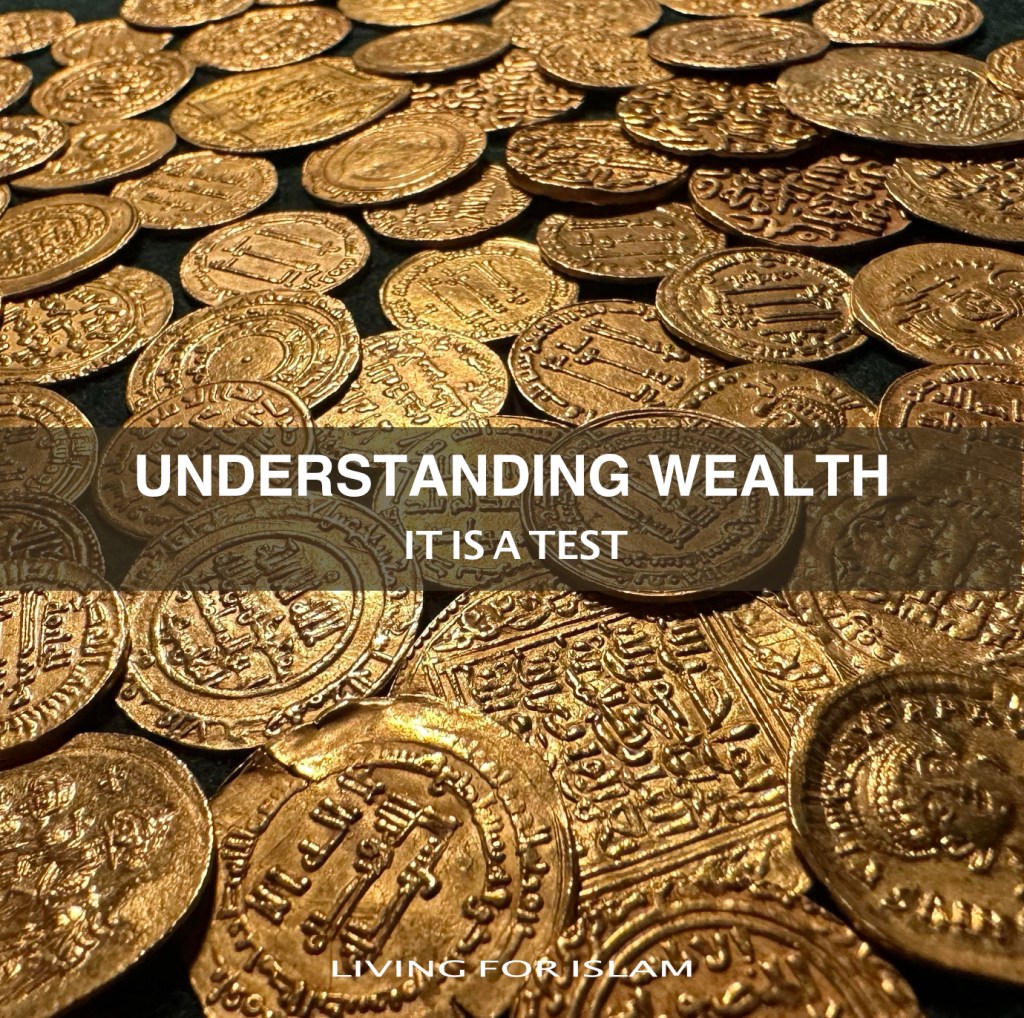
MANY OF US instinctively see wealth as a blessing and poverty as a trial. We admire those with abundance and sympathise with those in need. Yet the Qur’an reminds us that both states are tests, ibtilā, from Allah. How we respond, whether in wealth or need, determines our true success.
The Divine Equation of Ibtalā
فَأَمَّا ٱلْإِنسَـٰنُ إِذَا مَا ٱبْتَلَىٰهُ رَبُّهُۥ فَأَكْرَمَهُۥ وَنَعَّمَهُۥ فَيَقُولُ رَبِّىٓ أَكْرَمَنِ
وَأَمَّآ إِذَا مَا ٱبْتَلَىٰهُ فَقَدَرَ عَلَيْهِ رِزْقَهُۥ فَيَقُولُ رَبِّىٓ أَهَـٰنَنِ
And as for man, when his Lord tests him and [thus] is generous to him and favours him, he says, ‘My Lord has honoured me.’ But when He tests him and restricts his provision, he says, ‘My Lord has humiliated me.’” (al-Fajr 15–16)
Wealth does not automatically signify karama (honour), nor does poverty signify ahana (humiliation). They are like different exam papers: some are tested through abundance, others through need. The real measure is the heart’s response, gratitude and humility in wealth, patience and contentment in poverty.
The Spiritual “Audit”: Why the Delay?
The Messenger ﷺ said: “The poor Muslims will enter Paradise before the rich by half a day, the length of which is five hundred years.” (Tirmidhī)
This is not a punishment for wealth, but a reminder of accountability, hisāb. Imagine an airport security line: a traveller with a small carry-on (the poor) passes quickly, while a traveller with ten oversized trunks (the wealthy) is held back for careful inspection. Every coin earned and spent is examined, every act judged. Wealth increases the “administrative burden” on the Day of Judgment.
The Test of the Heart
Beyond external accountability, wealth tests the heart in quiet ways. Years spent earning, protecting, and managing wealth can reduce time for worship, reflection, and dhikr. As the Messenger ﷺ said: “Wealth is in the heart, and poverty is in the heart.” (Tabarani)
Without baraka, blessing, wealth can bring anxiety, loneliness, or insatiable desire. True richness comes from contentment with what Allah provides, recognising that all we have is entrusted to us as amanah.
Similarly, poverty tests patience. It challenges us to trust Allah, remain grateful, and avoid despair. Both states are trials; the outward condition is secondary to the inward response.
Stewardship: Wealth Beyond the Self
Wealth is not only a personal test, but it also affects the community. How we manage Allah’s trust can bring benefit or harm. The Prophet ﷺ and the Sahaba exemplified responsible stewardship: Khadijah (ra), Uthman ibn Affan (ra), and Abdurrahman ibn Awf (ra) used their wealth to support the needy, strengthen the community, and forward the Cause of Allah.
Wealth becomes a true blessing when used to help others, rather than hoarded to satisfy selfish desires. Left unchecked, it can foster greed, distraction, and arrogance, turning a test of the heart into a trap.
True Wealth: A Heart at Peace
Allah gives with infinite wisdom, sometimes through abundance to see if we will be grateful and generous, sometimes through scarcity to see if we will turn to Him. True wealth lies in a heart content with whatever “suitcases” Allah has assigned for this journey.
Every level of provision carries a test. Whether rich or poor, our challenge is the same: maintain gratitude, patience, generosity, and sincerity. Real richness is not measured in money, possessions, or social status; it is measured in a heart at peace with Allah’s decree. It is a heart not attached to wealth but to the One who bestows it.
 Living For Islam