
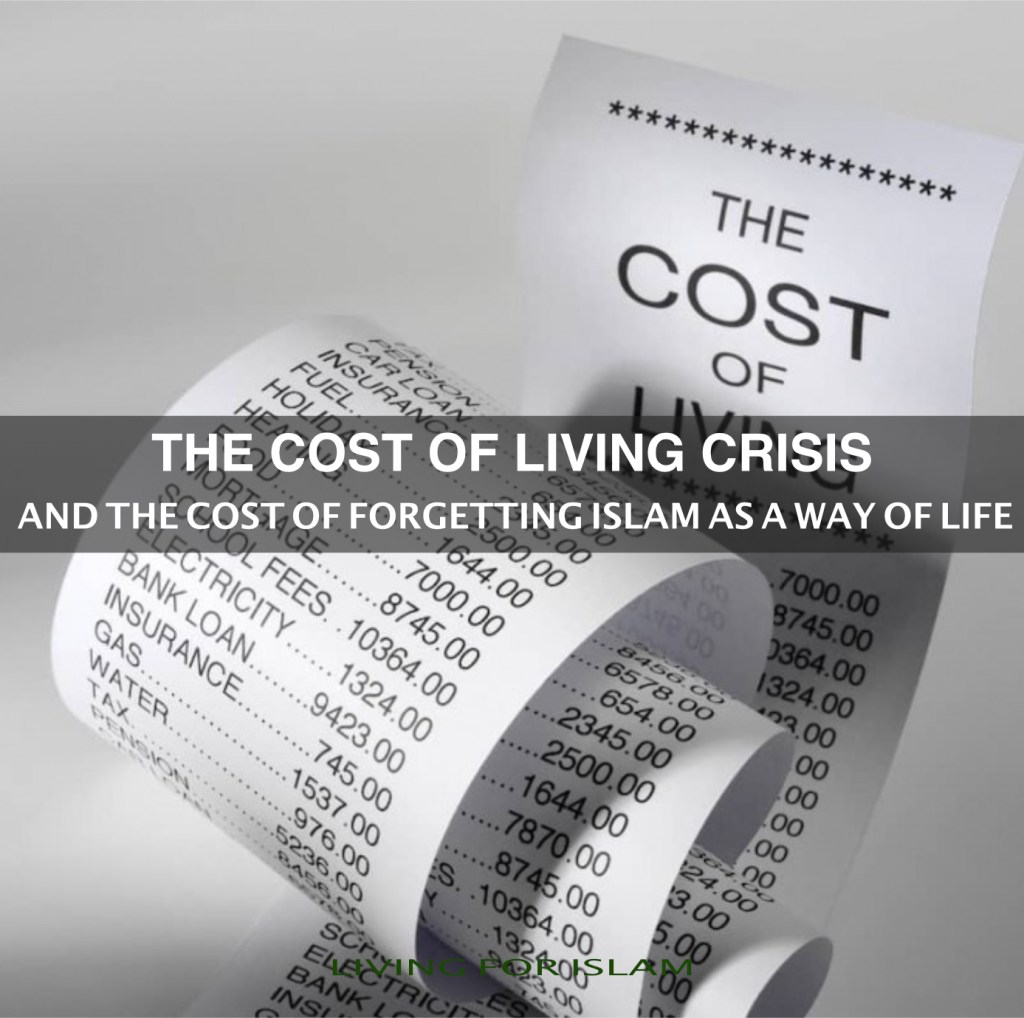
THE COST-OF-LIVING crisis has now entered its fourth year. I still remember buying a six-pint bottle of milk for around £1.70. Four years on, the same milk costs around £2.50, a 47% increase. That is far beyond any inflation figures routinely quoted by government ministers.
We were told it would be temporary. But prices have not meaningfully come down for most of the things we need. What was once described as a “crisis” is now simply the cost of living.
Every morning on my way to work, I pass a food bank. The queues outside it are not shrinking; they are growing. This is no longer an emergency response to an exceptional shock. It is a permanent feature of daily life in one of the wealthiest countries on earth.
Energy costs remain at levels that many people have never experienced before. Stories of families choosing between heating their homes, washing their clothes, or putting food on the table are no longer shocking, they are routine.
The latest Joseph Rowntree Foundation report confirms that there has been no relief for millions of households. Among those in the bottom 40% of incomes in the UK:
- More than half of low-income households have gone without heating to reduce energy bills
- Over five million households have cut back on or skipped meals because they cannot afford food
- Almost four million households have borrowed to pay for basic necessities, with around 70% of them now in arrears
- Seven million households have gone without essentials for four consecutive years
People now watch interest rate announcements from the Bank of England with bated breath. A quarter-percentage-point cut can mean hundreds of pounds saved on mortgage repayments, and therefore hundreds of pounds freed up for food, heating, and transport.
It is easy to blame bad luck, Trump tariffs, or external factors such as the war in Ukraine. But this is not misfortune. It is systemic failure.
When Survival Is Rebranded as Responsibility
In response to these conditions, people are repeatedly told to “do their bit”: use less energy, cut back further, absorb higher costs, and adjust expectations.
Advice circulates constantly: Turn off lights. Batch cook. Reduce car journeys. Shift energy use to off-peak hours.
These measures may reduce bills at the margins, but they do not address the root of the problem. A society in which ordinary people must permanently ration basic necessities is not experiencing a temporary squeeze, it is exposing the reality of its economic system.
Personal responsibility cannot compensate for structural injustice.
Islam’s Definition of Real Security
The Messenger of Allah ﷺ said: “Whoever among you wakes up secure in his property, healthy in his body, and has food for the day, it is as if he were given the entire world.” (Tirmidhī)
This hadith is striking in its clarity. Success is not defined by accumulation, consumption, or social status, but by security, health, and sustenance.
Despite worsening economic conditions in Britain, and far more severe hardship across much of the world, many people still possess these blessings. For this, all praise is due to Allah.
Yet this hadith does more than encourage gratitude. It points to a deeper truth: Islam does not merely recognise people’s basic needs; it establishes a system designed to guarantee them.
Islam as a System, Not a Sentiment
Islam is not confined to personal spirituality or individual morality. It is a complete way of life that organises society so that people’s essential needs are met as a matter of right, not charity.
Under Islam, the state is obligated to ensure the provision of:
- Food
- Clothing
- Shelter
- Energy
- Healthcare
- Education
- Security and justice
This obligation is not optional, and it is not outsourced to markets, charities, or volunteers.
An Economy Free from Debt and Interest
At the heart of today’s crisis lies a debt-based economic model driven by interest. In such a system, people’s homes, livelihoods, and stability are tied to fluctuating interest rates over which they have no control.
Islam forbids riba and rejects an economy built on perpetual debt. Wealth is meant to be real, and ownership genuine, not conditional on decades of repayments to banks.
To be “secure in one’s property” means precisely that: what you own is truly yours, not rented back from financial institutions.
Money That Holds Its Value
Islamic currency is based on gold and silver, real assets with intrinsic value, rather than fiat money that can be created at will. This severely limits inflation and protects people’s savings.
It also restrains the state. Governments cannot endlessly spend beyond their means and quietly transfer the cost to the public through inflation. Just as individuals must live within their means, so too must the state.
This creates long-term stability rather than short-term political convenience.
Fair Distribution Without Crushing Ordinary People
In Islam, taxation is limited and purposeful. A worker largely keeps what they earn. Zakat is only due on surplus wealth above the nisab after a full year has passed.
This encourages circulation of wealth and prevents hoarding, which Islam forbids. Land taxes apply to those who own and use land, ensuring resources are not monopolised.
Ordinary people are not burdened with excessive taxation to cover government incompetence or corporate excess.
Energy and Food Security
In Islam, essential resources such as oil, gas, and energy are public property. They cannot be privatised.
This prevents private companies from holding entire populations hostage through extortionate pricing. Energy is managed by the state in the public interest, with security and affordability prioritised over profit.
Food security is treated with equal seriousness. An Islamic system ensures sufficient domestic production to feed its people, rather than dangerous reliance on imports vulnerable to conflict, sanctions, or speculation.
“Too Simple” Only for a Corrupt World
Some argue that such a system is unrealistic in the modern world, that today’s societies are too complex.
In reality, modern systems have been made deliberately complex to conceal exploitation and enable corruption. Islam, through clear rules, accountability, and enforceable justice, keeps matters simple, and it is precisely this simplicity that protects people.
It must also be stated clearly: the failures of many Muslim countries today are not failures of Islam, but of its absence. Most are governed by imported capitalist or socialist models, sometimes wrapped in Islamic language but fundamentally opposed to Islamic principles.
From Darkness to Light
The cost-of-living crisis is not merely an economic issue. It is a crisis of values, priorities, and systems.
Islam does not promise luxury; it guarantees dignity. It does not chase endless growth; it secures basic needs. It does not enrich a few while burdening the many; it establishes justice.
If the past four years have taught us anything, it is that temporary fixes are not enough. What is required is a return to Islam, not merely as a set of personal rituals, but as a complete system for organising life with justice, security, and dignity at its core.
The believers can’t be those who adjust to a broken system. They need to be those who question and fix it.
Allah ﷻ says:
الٓر ۚ كِتَـٰبٌ أَنزَلْنَـٰهُ إِلَيْكَ لِتُخْرِجَ ٱلنَّاسَ مِنَ ٱلظُّلُمَـٰتِ إِلَى ٱلنُّورِ بِإِذْنِ رَبِّهِمْ إِلَىٰ صِرَٰطِ ٱلْعَزِيزِ ٱلْحَمِيدِ
Alif Lām Rā. This is a Book which We have revealed to you so that you may bring people out of darkness into the light, by the permission of their Lord, to the path of the Almighty, the Praiseworthy. (Ibrahim 1)
 Living For Islam