
IN SECULAR SOCIETIES, many Muslims quietly wonder how faith and public life should interact. This tension, between staying true to Islamic principles and navigating secular contexts, shapes how we view scholars, authority, and responsibility.
Islam is a way of life that speaks to justice, morality, and social responsibility. Navigating this balance is not always straightforward, particularly for Muslims living in Western societies.
Part of this discomfort is shaped by history. In Europe, religion (the Church) and political power (the monarchy) were once closely intertwined, in ways that produced injustice and silenced dissent. Over time, this experience led to a deep suspicion of religious authority in public life. Modern secularism emerged as a safeguard against religion being used to justify oppression. This historical memory continues to shape Western attitudes toward religion.
Islam approaches the matter differently. While Islam does not separate religion from public life, it also does not grant rulers any sacred status like we saw in medieval Europe . Power, in Islam, is a trust, one that must remain accountable to Allah and His Messenger ﷺ.
يَـٰٓأَيُّهَا ٱلَّذِينَ ءَامَنُوٓا۟ أَطِيعُوا۟ ٱللَّهَ وَأَطِيعُوا۟ ٱلرَّسُولَ وَأُو۟لِى ٱلْأَمْرِ مِنكُمْ ۖ فَإِن تَنَـٰزَعْتُمْ فِى شَىْءٍۢ فَرُدُّوهُ إِلَى ٱللَّهِ وَٱلرَّسُولِ إِن كُنتُمْ تُؤْمِنُونَ بِٱللَّهِ وَٱلْيَوْمِ ٱلْـَٔاخِرِ ۚ ذَٰلِكَ خَيْرٌۭ وَأَحْسَنُ تَأْوِيلًا
O believers! Obey Allah and obey the Messenger and those in authority among you. Should you disagree on anything, then refer it to Allah and His Messenger, if you (truly) believe in Allah and the Last Day. This is the best and fairest resolution. (an-Nisa 59)
Scholars were never meant to function as extensions of the state, but as an independent voice within society.
Islamic history reflects this ideal, even if it did not always live up to it. After the era of the rightly guided khulafah, leadership shifted toward dynastic rule. Yet rulers continued to seek legitimacy through Islam, and scholars retained the responsibility to advise, correct, and restrain power when it strayed. This balance, often strained, was central to the moral health of the ummah.
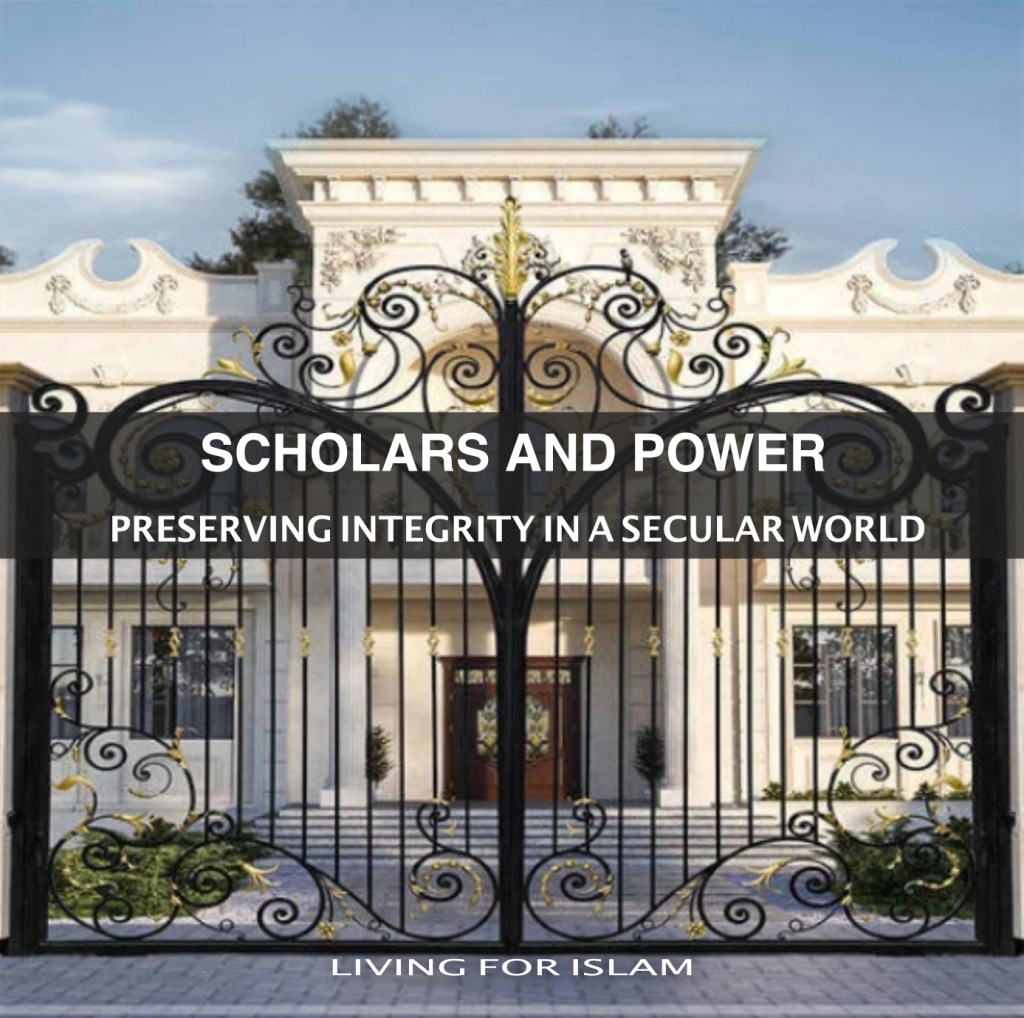
The Prophet ﷺ warned of the danger that accompanies closeness to authority. Ibn ‘Abbas (ra) narrated that the Messenger of Allah ﷺ said: “Whoever goes to the gates of the ruler will be afflicted with trials.” (Tirmidhi) This was not a call to political disengagement, but a warning about how proximity to power can quietly erode integrity, even with good intentions.
Some of the most respected scholars in Islamic history took this warning seriously. Figures such as Abu Hanifah, Ahmad ibn Hanbal, and Imam al-Nawawi (may Allah have mercy on them) avoided positions that would compromise their independence.
The scholar’s refusal to compromise was not rooted in rebellion, but in a deep awareness that religious credibility is easily lost when scholarship becomes dependent on political approval. Their legacy endures precisely because their authority was moral, not institutional.
For Muslims, this issue feels especially relevant today. We often see religious voices elevated because they are “safe,” “moderate,” or politically convenient, while others are marginalised or silenced. This can create confusion: which voices speak from principle, and which from proximity to power?
The question is not whether scholars should engage with governments or institutions. Engagement is needed and even beneficial. The Messenger ﷺ said, “Verily, Allah is pleased with three things for you… He is pleased for you to worship Him without associating anything with Him, to hold fast to the rope of Allah altogether, and to give sincere advice to those in charge of your affairs…” (ibn Hibban)
The real question is whether such engagement preserves independence, honesty, and the ability to say “no” when Islamic principles are compromised.
A community that rewards compliance over integrity should not be surprised when moral clarity is lost. As Imam Abu Hanifah advised, “If you see a scholar going to the doors of rulers, question his religion,” reminding us that closeness to authority can compromise the scholar’s role as a moral compass.
Scholars cannot remain independent without the support of an ummah that values truth over comfort and credibility over access. The great teacher Ibn Taymiyyah echoed this responsibility when he said, “The ulama are the heirs of the Prophets; their responsibility is to enjoin good and forbid evil, even if this displeases kings and rulers.” (Majmu’ al-Fatawa)
In an age where Muslims are navigating public scrutiny, and political pressure in a secular world, we need scholars who are grounded, thoughtful, and courageous, voices that speak with wisdom without surrendering their moral compass.
 Living For Islam