

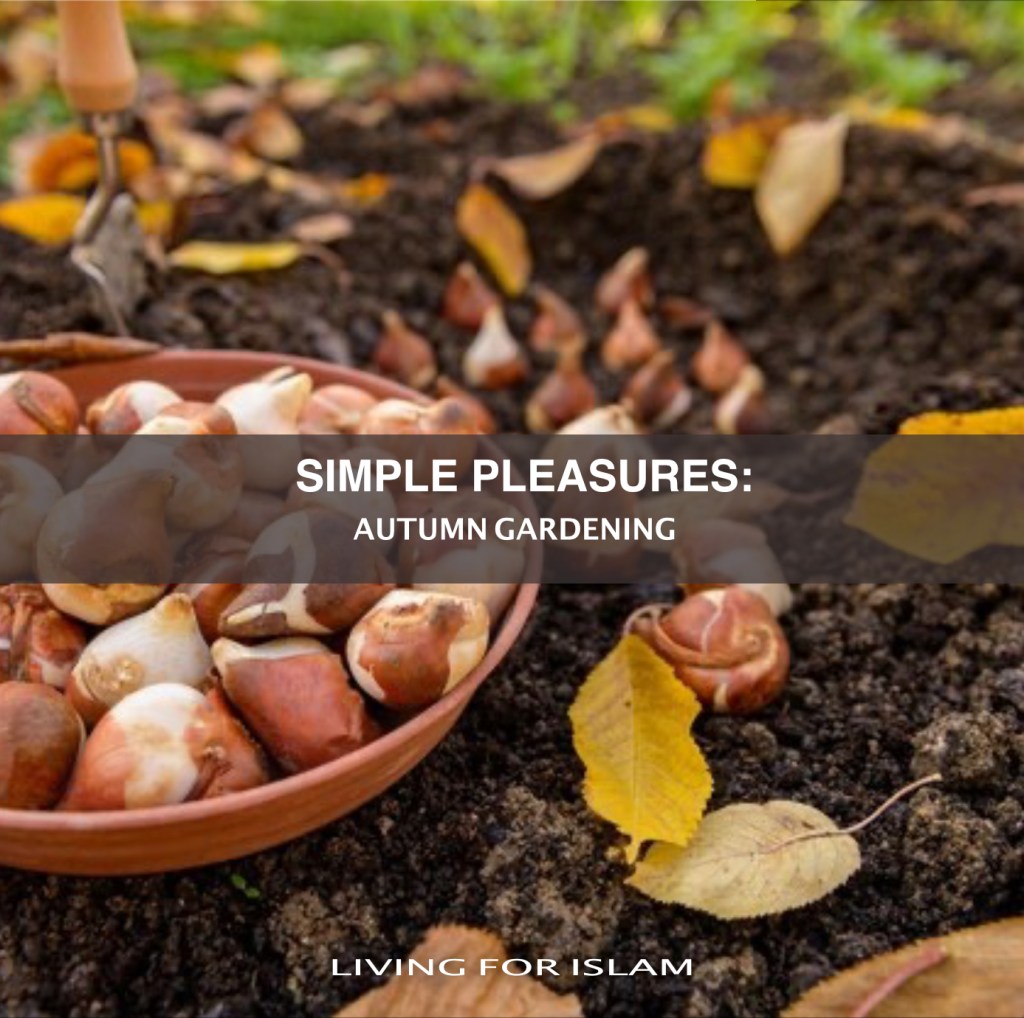
MID TO LATE autumn is always a busy time in the garden.
The trees stand almost bare now. Their last leaves drift down, joining the golden mounds scattered across the lawn. I rake them up and add them to the compost heap, recycling at its finest.
The herbaceous perennials that lit up the summer now need cutting back, preparing for winter’s harsh frost. Several shrubs and trees need pruning as well.
The work is physical and often tiring, done with cold fingers and wet boots. Yet a strange calm settles in. These small, steady tasks steady the mind.
And then comes the moment I wait for every year: the arrival of next spring’s bulbs. Shipped from Holland, this year brings a mix of bold tulips and graceful fritillaries.
For days, I have watched the weather, hoping for a break in the bitter cold and relentless rain.
Finally, the moment arrives. I dig small pockets in the borders and patches of lawn, willing to try something a little new. A bismillah as I place each bulb into the cold soil.
There is something profoundly humbling about touching the earth, the earth from which our father Adam (as) was created, and the place to which we will all return when the life of this dunya ends.
مِنْهَاخَلَقْنَٰكُمْوَفِيهَانُعِيدُكُمْوَمِنْهَانُخْرِجُكُمْتَارَةًأُخْرَىٰ
From the earth We created you, and into it We will return you, and from it We will bring you out once again. (Ta Ha 55)
To place an almost lifeless seed or bulb in the soil and then wait for Allah to bring it forth, to let it unfurl in spring and bloom, is a gardener’s reminder: our role is effort, and His is fruition.
The gardener learns tawakkul, trust that Allah will let our efforts bear fruit in their own time.
The gardener learns sabr, enduring the long grey stretch of winter, believing that something good is quietly preparing beneath the surface.
The gardener learns khilāfah, stewardship, the responsibility of caring for the little corner of earth placed in our hands.
And when next spring the blooms return, by His will, the gardener learns shukr as he pauses to notice the beauty his Lord creates, and the blessings He scatters so generously.
وَإِن تَعُدُّوا۟ نِعْمَةَ ٱللَّهِ لَا تُحْصُوهَا ۗ إِنَّ ٱللَّهَ لَغَفُورٌۭ رَّحِيمٌۭ
If you tried to count Allah’s blessings, you would never be able to number them. Surely Allah is All-Forgiving, Most Merciful. (Nahl 18)
The health benefits of gardening are well understood. Gardens and green spaces are linked with better physical, mental, and social well-being. Those who garden daily have wellbeing scores 6.6% higher and stress levels 4.2% lower than those who never garden. Even half an hour outside, with soil under your nails, burns as many calories as badminton or volleyball.
And for the plants that feed insects, birds, and humans, there is the beautiful reward the Prophet ﷺ described: “There is none amongst the Muslims who plants a tree or sows seeds, and then a bird, or a person, or an animal eats from it, but it is regarded as a charitable gift for him.” (Bukhari)
Gardening remains one of life’s simple pleasures.
 Living For Islam