

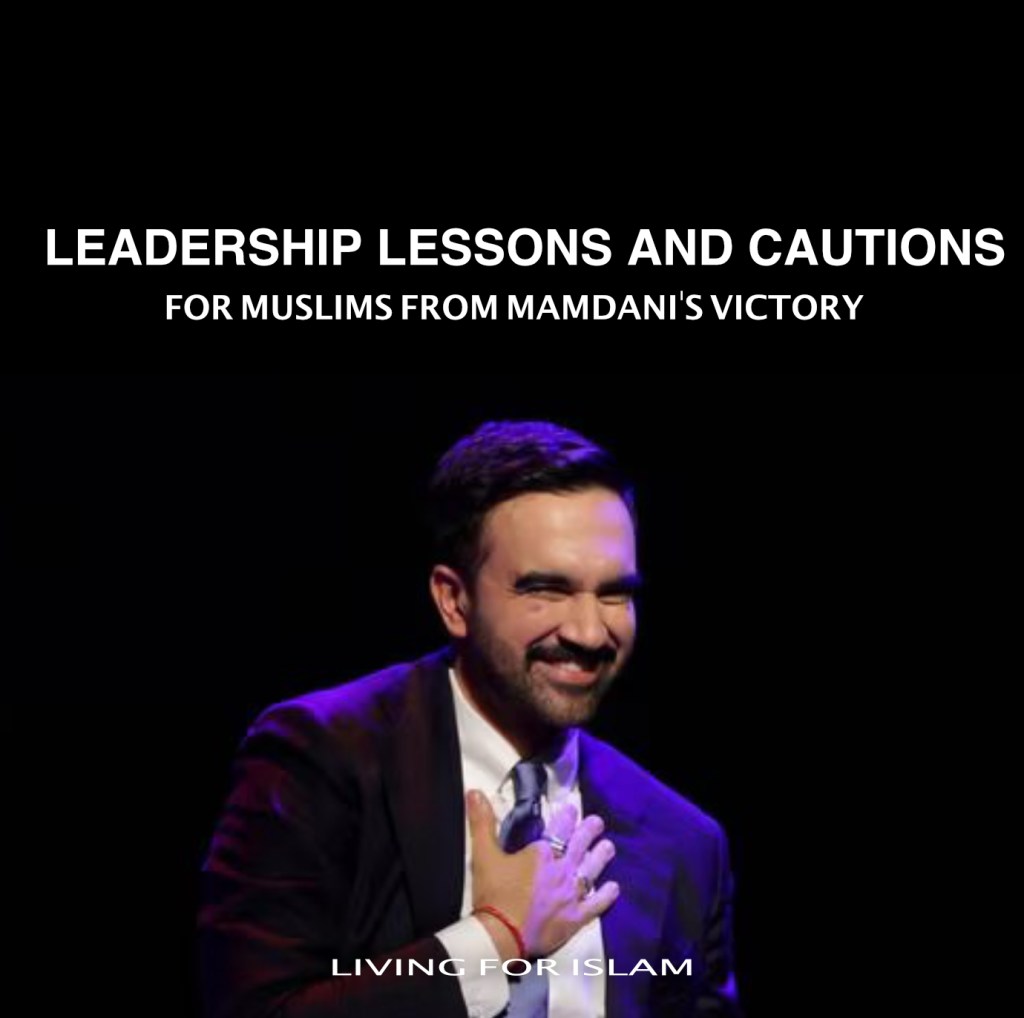
THE RECENT ELECTION of Zohran Mamdani as the new mayor of New York City has sparked conversations across the Muslim world. His victory is not just a political event, it is a moment that invites reflection. What can Muslims, especially those aspiring to lead or influence society, learn from this development? What should the common man expect from those who lead them?
Leadership in Islam has always been viewed as a trust (amānah), not a privilege. It is a responsibility that demands sincerity, humility, and courage. As Allah ﷻ tells us:
وَجَعَلْنَـٰهُمْ أَئِمَّةًۭ يَهْدُونَ بِأَمْرِنَا وَأَوْحَيْنَآ إِلَيْهِمْ فِعْلَ ٱلْخَيْرَٰتِ وَإِقَامَ ٱلصَّلَوٰةِ وَإِيتَآءَ ٱلزَّكَوٰةِ ۖ وَكَانُوا۟ لَنَا عَـٰبِدِينَ
We (also) made them leaders, guiding by Our command, and inspired them to do good deeds, establish prayer, and pay zakah. And they were devoted to Our worship. (al-Anbiyā’ 73)
From Mamdani’s victory, we can see some positive qualities, as well as important cautions to remember.
Positive Lessons
1. Be Authentic and Genuine
In an age of image-making and self-promotion, sincerity stands out. Mamdani’s appeal came partly from being himself, open, honest, and real. People gravitate toward authenticity because it builds trust. The Prophet ﷺ said: “Indeed, among the worst of people is one with two faces, coming with one face to these and another to those.” (Bukhari)
When you act with sincerity, you benefit others through your presence and integrity. Be yourself, be sincere, and Allah will put acceptance for you in the hearts of people.
2. Be Honest and Courageous
True leadership demands courage, the ability to speak truth, even when it is unpopular. The Prophet ﷺ said: “Say the truth even though it is bitter.” (Bulugh al Maram)
Standing for your principles is not always easy, especially in environments that pressure believers to conform. Yet honesty, coupled with wisdom, earns deep respect and lasting credibility.
3. Lead with a Servant’s Heart
In Islam, leadership is about service, not status. There is an important distinction between leadership as a goal and leadership as a means to another goal. The messengers were all given leadership as a means of influencing people towards righteousness.
The Prophet ﷺ said: “Every one of you is a shepherd and is responsible for his flock. The leader of people is a guardian and is responsible for his subjects. …” (Bukhari)
And he ﷺ said: “The leader of a people is their servant.”(Shah Waliullah)
And he ﷺ said: “The most beloved of people to Allah are those who are most beneficial to others.” (al-Mu‘jam al-Awsaṭ)
A true leader seeks to uplift others, not elevate himself. Wherever Allah places you, in your family, workplace, or community, aim to add value and serve sincerely.
4. Listen to Understand, Not Just to Respond
Many people listen merely to reply; few listen to truly understand. The Prophet ﷺ gave his full attention to everyone who spoke to him, young or old, rich or poor. He never cut people off or dismissed their concerns. Listening with empathy is one of the most powerful tools of leadership and da‘wah alike.
5. Have Vision and Purpose
Mamdani connected with the emotions of ordinary people and shared a hopeful vision. Whilst we should understand that his liberal socialist vision does little to further the Islamic cause, he definitely inspired many to follow him.
Allah commands:
قُلْ هَـٰذِهِۦ سَبِيلِىٓ أَدْعُوٓا۟ إِلَى ٱللَّهِ ۚ عَلَىٰ بَصِيرَةٍ أَنَا۠ وَمَنِ ٱتَّبَعَنِى
Say, (O Prophet): “This is my way. I invite to Allah with insight—I and those who follow me.” (Yusuf 108)
A believer leads with clarity, not imitation. In every field, politics, business, education, or activism, Muslims must have a clear vision rooted in iman and guided by divine principles. Leadership without vision is motion without meaning.
Cautions for Muslim Leaders
1. Don’t Compromise Iman to Please Everyone
While engagement with people of all backgrounds is part of living in a diverse society, Islam sets clear boundaries in matters of worship and belief. Respect and kindness never require dilution of one’s creed. Allah reminds us:
وَتَعَاوَنُوا۟ عَلَى ٱلْبِرِّ وَٱلتَّقْوَىٰ ۖ وَلَا تَعَاوَنُوا۟ عَلَى ٱلْإِثْمِ وَٱلْعُدْوَٰنِ
Cooperate with one another in goodness and righteousness, and do not cooperate in sin and transgression. (al-Mā’idah 2)
In our efforts to be accepted, we must not lose sight of who we are. Our iman is our anchor, not a costume we adjust to every crowd.
The Messenger ﷺ said: “Whoever seeks the pleasure of Allah by the displeasure of people, Allah will suffice him against the people. Whoever seeks the pleasure of people by the displeasure of Allah, Allah will leave him to the patronage of the people.” (Tirmidhi)
2. Let Islam Shape Your Vision
The vast majority of the world’s people suffer under the economic insecurity and corruption of capitalism. Many turn to socialism as the only alternative. Yet neither system has brought lasting justice. Islam offers a balanced and coherent path, real justice, a true revelation from the Creator of all that exists.
Allah ﷻ says:
ٱلْيَوْمَ أَكْمَلْتُ لَكُمْ دِينَكُمْ وَأَتْمَمْتُ عَلَيْكُمْ نِعْمَتِى وَرَضِيتُ لَكُمُ ٱلْإِسْلَـٰمَ دِينًۭا
Today I have perfected your deen for you, completed My favour upon you, and chosen Islam as your way. (al Ma’ida 3)
And He commands:
إِنَّ ٱلدِّينَ عِندَ ٱللَّهِ ٱلْإِسْلَـٰمُ
Indeed, the only way of life in the sight of Allah is Islam. (ale Imran 19)
Our vision must be guided by Qur’anic truth and justice, not borrowed from failed political theories. If we are to strive then it should be to strive in Allah’s cause. As we have seen with so many Muslim politicians in the West (and the Muslim world), symbolic victories mean little if iman and values are compromised and the Islamic system is never applied.
When Muslim leaders fail to deliver, which will almost certainly happen due to the inherent failure of man-made ideologies, Islam should not bear the blame. The goal is not simply to win office, but to win Allah’s pleasure through service and integrity and solve human problems through the application of Islam.
Conclusion
Muslims need to be aware of the leadership qualities that Islam develops and demands. But leadership in a non-Islamic system comes with challenges. There are real costs to gaining positions, which we must consider very carefully when deciding if we can and should run for certain roles.
Whether we lead a household, a team, or a city, we will all be accountable before Allah for what we do and how we use our influence.
Let us, then, strive to embody leadership that reflects our iman: sincere, just, visionary, and compassionate. May Allah grant us leaders who are guided by revelation, humble in service, and firm upon truth. Ameen.
 Living For Islam