
LAST SATURDAY, MY wife and I were driving through Stamford Hill, the heart of London’s ultra-Orthodox Jewish community.
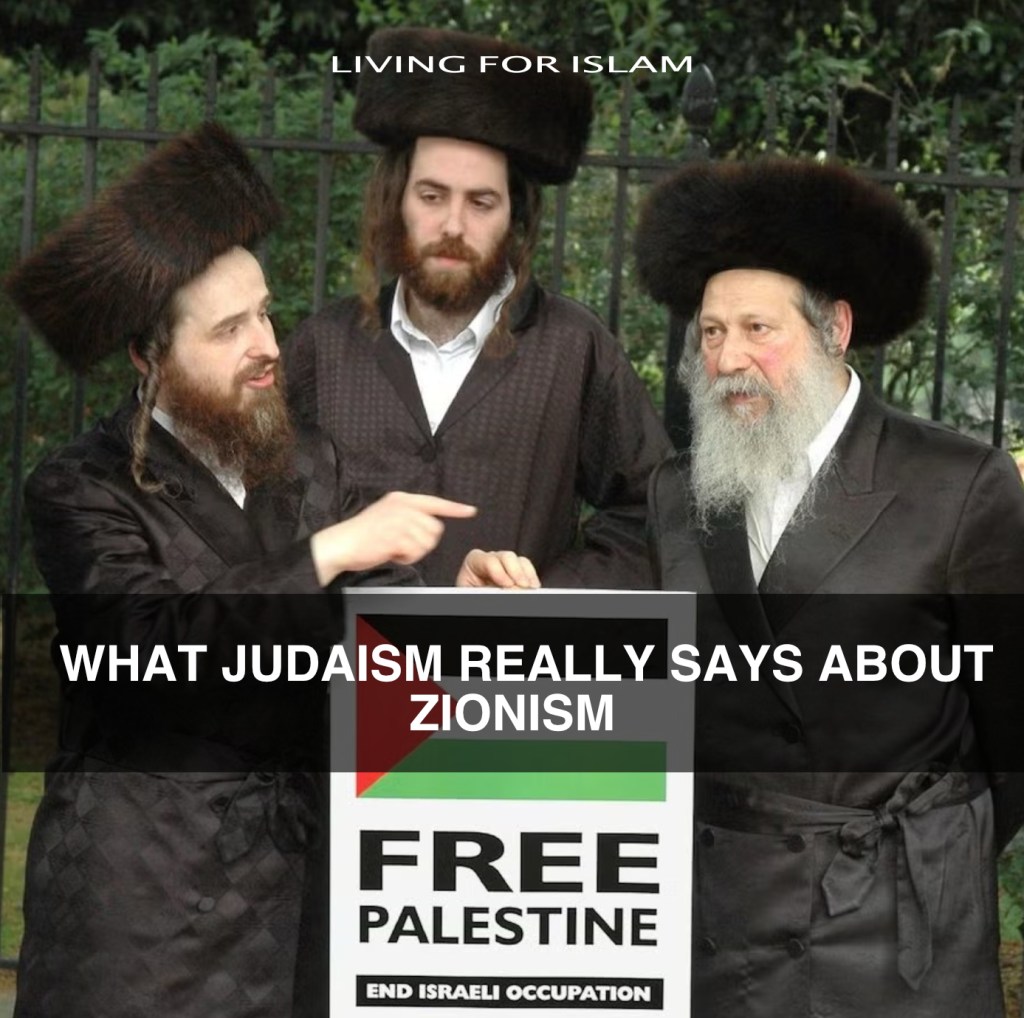
It was the Sabbath. Everywhere we looked, men in shtreimels, those distinctive round fur hats, walked alongside children on their way to synagogue. Women in traditional dress chatted on the pavements. It was a vivid scene, a close-knit community living their faith with quiet conviction.
As Muslims, I think many of us know very little about Jewish beliefs. That gap in understanding can easily give rise to dangerous misconceptions, such as confusing Judaism with Zionism. And such confusion can have tragic consequences, as seen in the recent stabbing at a synagogue in Manchester.
That is why I was so struck by a recent episode of The Thinking Muslim podcast featuring Rabbi Beck, who lives right there in Stamford Hill. He offered a rare and eye-opening perspective.
Originally from Palestine, Rabbi Beck drew a clear line between Judaism, which is a faith, and Zionism, which is a political ideology. He emphasised that opposing the State of Israel is a political stance, not an expression of anti-Semitism.
He explained that Judaism is a religion rooted in belief in God and obedience to the Torah, while Zionism, founded by atheist Theodor Herzl, is a secular nationalist movement. It replaced spiritual devotion with political ambition. In doing so, it hijacked Judaism, pushing its original teachings to the margins and branding them as “ultra-Orthodox.”
Rabbi Beck stressed that criticising Israel is not the same as hating Jews. Many devout Jews, particularly in ultra-Orthodox communities, reject Zionism entirely. They refuse to serve in the Israeli army or take part in its political institutions. Even among secular Jews around the world, support for Israel’s policies is far from universal.
Contrary to what we often hear, Rabbi Beck argued that Israel is actually one of the most dangerous places for Jews today. Since 1948, tens of thousands of Jewish families have left the country. By contrast, Jews have long lived safely in Muslim-majority nations such as Morocco, Tunisia, Turkey, and even Iran, enjoying full civic rights and religious freedom.
Historically, Jews and Muslims coexisted peacefully across Palestine and much of the Muslim world, sharing festivals, food, and mutual respect. The hostility we see today, Rabbi Beck noted, stems from political occupation, not religion. Palestinian leaders, including those in Hamas and Fatah, have repeatedly distinguished opposition to Israel from opposition to Jews as a people.
Addressing the recent violence, Rabbi Beck condemned attacks such as the Manchester synagogue incident. He attributed such acts not to anti-Semitism, but to anger over Israel’s actions in Gaza. He warned that when we conflate Judaism with Zionism, we risk fuelling more hatred and more violence, something that harms Jews and Muslims alike.
Rabbi Beck himself is active in pro-Palestinian demonstrations. Even on the Sabbath, he walks long distances to attend protests, observing Jewish law while standing for justice. His message is simple but powerful: Jews and Muslims can live together in peace. Opposing Israel is not the same as opposing Jews.
From a theological point of view, Rabbi Beck reminded listeners that the Torah forbids Jews from establishing a sovereign state before the coming of the Messiah. To do so, he said, is to rebel against God. Jews may live in the Holy Land, but only under God’s authority, not a political one. Zionism, by prioritising nationalism over faith, violates this divine principle. True redemption, he believes, will come through the Messiah, not through politics, and it will bring harmony among all people.
On the question of justice for Palestinians, Rabbi Beck was clear. Palestinians should not pay the price for the Holocaust, a tragedy in which they had no part. No foreign power, not Britain and not the United Nations, had the right to take land from one people and give it to another. He believes peace is still possible. History shows it in places like South Africa and the former Soviet Union. Under Palestinian sovereignty, he says, Jews could continue to live safely and loyally, as they do today in Morocco and Iran.
In the end, Rabbi Beck’s message is unmistakable. Anti-Zionism is not anti-Semitism. Judaism forbids the establishment of a Jewish state before the Messiah. The root of this conflict is political occupation, not religious difference. Zionism, he warns, endangers Jews and defies divine law.
True redemption, he insists, will not be political but spiritual. And when it comes, it will bring peace, justice, and coexistence between Jews and Palestinians alike.
 Living For Islam