
The Myth of Equality
The American Declaration of Independence begins with words: “We hold these truths to be self-evident, that all men are created equal…”
Yet by the Civil War, nearly four million Black people remained enslaved—denied every right the Declaration proclaimed. Even after the 13th Amendment ended slavery in 1865, legal freedom did not bring equality. Black Americans continued to live as second-class citizens.
An Unfinished Struggle
Segregation and open discrimination defined American life. Out of this injustice rose the Civil Rights Movement—an era of courage and progress, but one that left the deeper question unresolved. Even during Obama’s presidency, Black Lives Matter revealed how far the nation remained from its founding ideals.
Two and a half centuries later, the question still echoes: are all people truly equal?
A Broken Foundation
Women, too, had to fight for rights. These struggles expose a deeper truth: the problem lies not in how the system is applied, but in the system itself.
The founders who preached equality were slave owners. Their order privileged wealth and power over justice. It is the same secular structure, built on inequality, that continues to fail minorities. Civil rights movements sought fairness but rarely questioned whether the system itself could ever deliver it.
The New Target
Today, Muslims face similar challenges. Across the West, politicians and media outlets create and exploit anti-Muslim sentiment, while policies like Prevent disproportionately target Muslim communities. Islamophobia has become a political tool.
New York mayoral candidate Zohran Mamdani’s recent speech on the issue captured what many Muslims feel: anger, exhaustion, and determination.
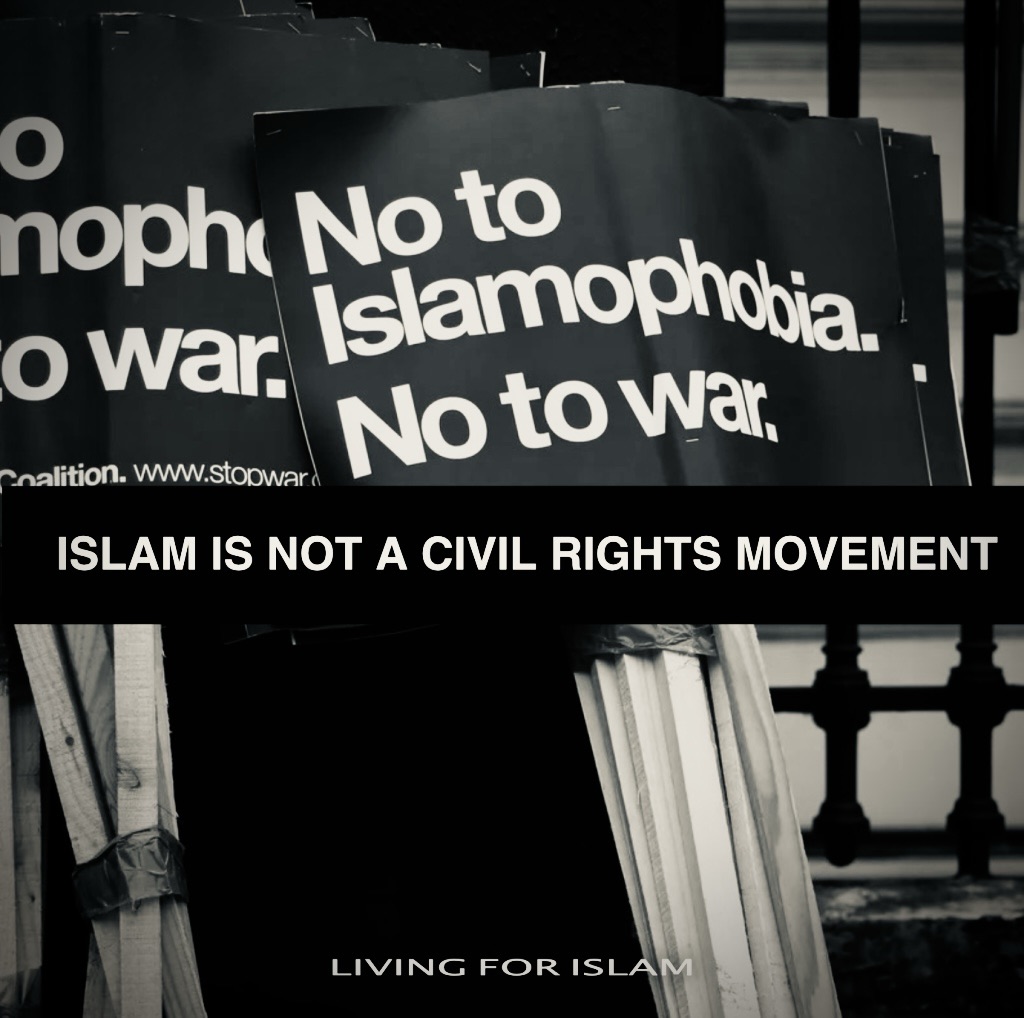
But we need to be careful. Muslims join politics and activism seeking justice. But if the goal is to simply be accepted in a flawed system, if the dream of every Muslim is simply to be treated the same as everyone else, progress will remain limited. Real change requires challenging the roots of injustice, not merely seeking a place within it.
Beyond Civil Rights
Islam was never a civil rights movement. It was never meant to conform to human ideologies or seek their approval. Bilal (ra) was not left beneath the burning sun for equality. Sumayyah (ra) was not tortured for tolerance. The Messenger ﷺ was not driven out of Ṭā’if to make Islam acceptable. Their struggle sought not acceptance, but the replacement of a corrupt order with one grounded in truth and justice.
A Mission to Bring Light
Allah ﷻ says:
الٓر ۚ كِتَـٰبٌ أَنزَلْنَـٰهُ إِلَيْكَ لِتُخْرِجَ ٱلنَّاسَ مِنَ ٱلظُّلُمَـٰتِ إِلَى ٱلنُّورِ بِإِذْنِ رَبِّهِمْ إِلَىٰ صِرَٰطِ ٱلْعَزِيزِ ٱلْحَمِيدِ
“Alif, Lam, Ra. [This is] a Book which We have revealed to you, [O Muhammad], that you might bring mankind out of darkness into the light by permission of their Lord—to the path of the Exalted in Might, the Praiseworthy.” (Ibrahim 1)
And:
هُوَ ٱلَّذِىٓ أَرْسَلَ رَسُولَهُۥ بِٱلْهُدَىٰ وَدِينِ ٱلْحَقِّ لِيُظْهِرَهُۥ عَلَى ٱلدِّينِ كُلِّهِۦ ۚ وَكَفَىٰ بِٱللَّهِ شَهِيدًۭا
“He it is Who has sent His Messenger with guidance and the religion of truth, that He may make it superior over all other ways of life. And sufficient is Allah as a Witness.” (Al-Fath 28)
The Standard of True Justice
Islam’s goal is not equality under flawed systems but lasting justice under divine law. It establishes a moral, political, and economic order where every person’s dignity is recognised before Allah. No race, class, or gender holds superiority except through righteousness.
When laws follow desire, they serve power. When they follow divine guidance, they protect all equally.
Lessons from History
History proves this. Under Islamic governance, diverse communities lived in peace and safety. Non-Muslims enjoyed legal rights and justice—not by rulers’ mercy, but by law.
This stands in contrast to secular systems that promise freedom but preserve privilege, that speak of equality while sustaining inequality.
From Reform to Transformation
Islam calls not for reform, but for transformation, freeing humanity from submission to human authority and returning it to submission to Allah alone.
In such a system, power is a trust, wealth serves the community, and law reflects divine justice, not elite interests.
This remains Islam’s call: to move beyond partial reform toward a world where justice is complete, consistent, and rooted in faith in Al-‘Adl, the All-Just.
It is this transformative vision that the Muslims need to bear in mind if we are to follow in the footsteps of the Messenger ﷺ and his Companions.
 Living For Islam