
THE RECENT TOP RIBA Stirling Prize for architecture went to Appleby Blue Almshouse in South London. This was designed for elderly people to reduce loneliness.
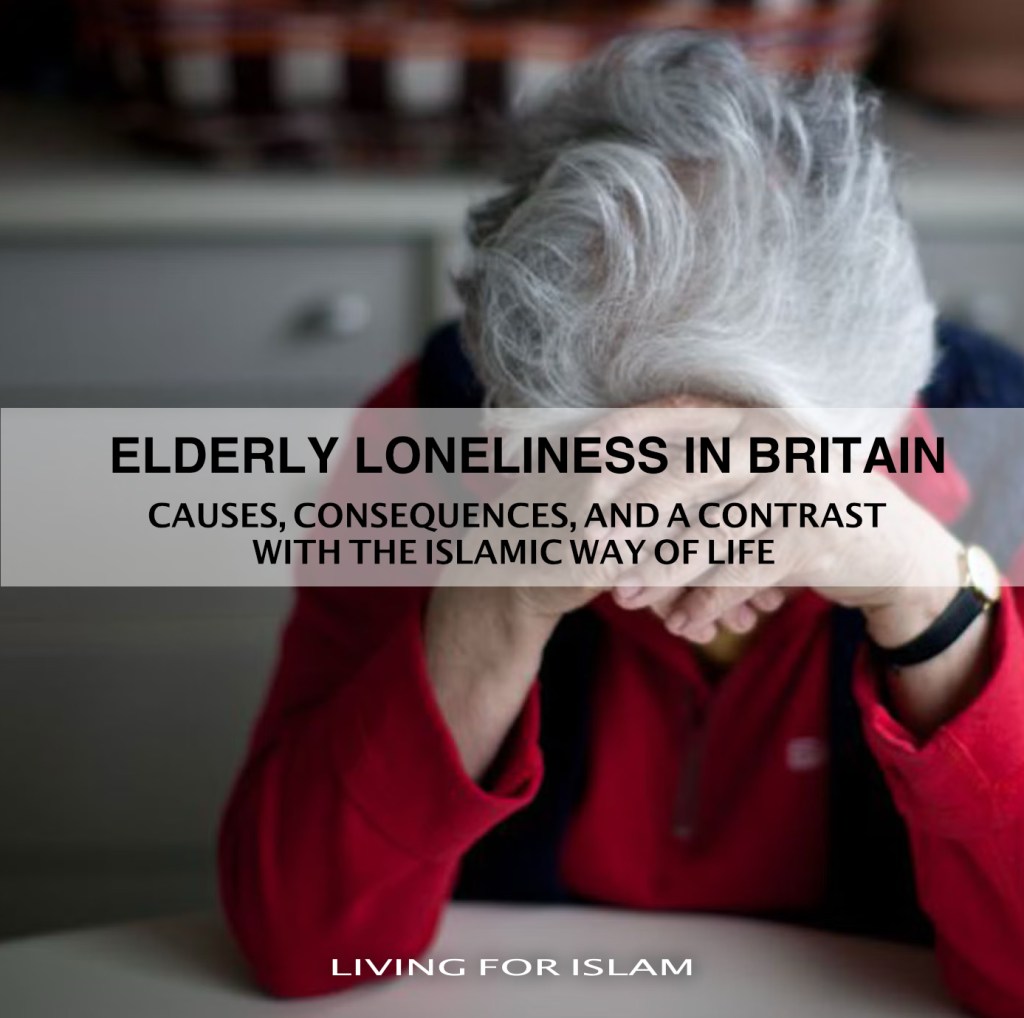
In modern Britain, loneliness among the elderly is a growing social concern, not just a matter of emotional discomfort, but a complex issue with real consequences for health, well-being, and society. With the number of older people increasing and traditional support structures declining, many find themselves isolated in ways that previous generations may not have experienced. Yet when we look at other cultural frameworks, such as the Islamic worldview, we find alternative approaches that offer valuable lessons.
The Roots of Elderly Loneliness in the UK
Loneliness among the elderly in the UK has multiple, interwoven causes. One of the most immediate is the simple fact of living alone. Over two million people aged 75 and older live by themselves, often following the death of a spouse or long-term partner. While independence is valued, for many, it also means reduced social contact, especially when mobility or health concerns limit their ability to go out or engage with others.
Another major factor is the geographic dispersal of families. Children and grandchildren frequently move away for work or lifestyle reasons, sometimes even abroad, leaving older relatives without regular visits or nearby support. This trend is especially pronounced in a society where nuclear families and individualism have taken precedence over extended family living.
Community structures that once helped bind people together, local pubs, churches, libraries, and community centres, have seen a significant decline, either due to government funding cuts or changing lifestyles. Alongside this, services that once supported older people, such as local day centres or accessible public transport, have become less available, further isolating those most in need of connection.
Physical health issues also contribute significantly. People are living longer with a greater burden of chronic conditions. Arthritis, impaired vision or hearing, and diseases like dementia can make it difficult, and sometimes intimidating, to socialise. Mental health challenges such as depression and anxiety can deepen isolation, and are often both a cause and consequence of prolonged loneliness.
As people age, the loss of friends and peers is an unavoidable reality. The passing of a spouse, close friends, or siblings can drastically shrink social circles. Unfortunately, forming new friendships later in life is not always easy, especially when mobility is restricted or confidence is low.
Digital exclusion further compounds the problem. Although increasing numbers of older adults are tech-savvy, a significant portion still lack access to, or comfort with, modern digital communication. This creates a barrier to social media, video calls, and online communities that many younger people rely on for staying in touch.
Cultural attitudes can also prevent elderly individuals from seeking help. There is often a reluctance to admit to feelings of loneliness, driven by a sense of pride, shame, or fear of being seen as a burden. British cultural norms around stoicism and self-reliance may further discourage openness or vulnerability.
Finally, poverty and transportation issues limit social interaction for many elderly individuals. Low income can prevent participation in hobbies or outings, while losing the ability to drive or the closure of rural transport services can leave people literally stuck at home.
Much of this is a reflection of the underlying values in society: freedom, materialism and individualism. The government values the economically able over those who aren’t. Whilst there are strict rules to ensure children are looked after by their parents, there are no rules to force children to look after their parents in later life. Housing, for instance, is not designed for an extended family. The cost of living forces people to work long hours, and many are unable to care for their elders even if they want to.
A Silent Epidemic with Serious Consequences
The impact of loneliness on older adults isn’t just emotional; it has measurable consequences on health. Research links chronic loneliness to higher risks of heart disease, stroke, dementia, and premature death. Mental health suffers too, with increased rates of depression and anxiety. Loneliness is also associated with higher healthcare usage, including more frequent GP visits and emergency hospital admissions.
What’s Being Done in the UK?
Awareness of the issue has grown in recent years, with efforts underway to tackle it. Charities such as Age UK and The Silver Line offer helplines, befriending services, and community engagement initiatives. Lunch clubs, phone calls, and home visits can make a significant difference in improving the quality of life for isolated older people.
Notably, the UK government recognised loneliness as a public health issue by appointing the world’s first Minister for Loneliness. While symbolic, this step underscores the importance of systemic solutions to what is now considered a national concern.
A Cultural Contrast: Islamic Teachings and the Elderly
In contrast to secular Western societies, Islamic teachings offer a holistic framework that significantly reduces the risk of elderly loneliness. At the heart of Islam’s approach is a deep reverence for family, community, and the elderly, woven into both daily practice and spiritual belief.
Family responsibility is central. Islam obliges children to care for their ageing parents. The Qur’an explicitly states:
وَوَصَّيْنَا ٱلْإِنسَـٰنَ بِوَٰلِدَيْهِ
And We have commanded people to (honour) their parents. (Luqman 14)
Rather than institutionalising the elderly, living with or near family is the cultural and religious norm. Looking after one’s parents is seen not just as an obligation, but as a spiritual opportunity, a path to Paradise.
Beyond the family unit, respect for elders is a societal value. The Messenger ﷺ said: “He is not one of us who does not show mercy to our young ones and respect our elders.” (Tirmidhi)
This ethos encourages the younger generation to actively engage with and support the elderly, emotionally, socially, and practically.
Community life in Islamic societies also provides structural protection against isolation. Masajid, Friday prayers, and religious holidays like Eid are all inherently communal. These regular gatherings ensure frequent face-to-face contact and a sense of belonging. Neighbours, too, are expected to care for one another and have extensive rights, creating a broader social safety net.
Financial support is baked into the system through zakat (obligatory charity) and sadaqah (voluntary giving). These not only address material needs but promote a culture of compassion and inclusion.
Spirituality becomes a gateway to connection, and growing old is seen not as a burden but as a blessing. Elders are valued for their wisdom, experience, and contribution to the moral fabric of society.
Overarching all of this, we have the care of the Khalifah, who ensures that where problems arise or there is a shortfall, then the needs of the elderly are met.
Umar bin al-Khattab (ra) passed by an old man begging. He asked him: “To which of the People of the Book do you belong?” He said: “I am a Jew.” He replied: “What has compelled you to that which I see?” He said: “I am begging to pay the jizya, and on account of my need and old age.” Then ‘Umar got hold of his hand, took him to his house and gave him something from his home, then sent him to the treasurer of the Bayt al-Mal and said: “Take care of this man and other similar men. By Allah, we have not done justice to him that we ate (jizya) from him when he was young, but we forsook him when he was old. Verily, the alms are for the poor and destitute. The poor are the Muslims, and this one is a destitute from the People of the Book.” So he removed the jizya from him. (Qadi Abu Yusuf, Kitab al Kharaj)
Ideal vs. Reality
We still see these Islamic values in the majority of the Muslim world, even in the century-long absence of the Khilafah. However, the dominance of modernity with its urbanisation, globalisation, and economic pressures has weakened traditional structures, and loneliness is rising in parts of the Muslim world too.
However, the Islamic framework itself, when applied sincerely, offers a robust model for preventing elderly isolation. By centring social responsibility, intergenerational care, and community engagement, it provides not only practical solutions but also spiritual meaning to ageing and caregiving.
Conclusion
The rise in elderly loneliness in Britain reveals deeper changes in how society views ageing, community, and human connection. But unless we understand how values like freedom, materialism, and individualism—along with a break from Divine guidance—have shaped society, current efforts will remain fragmented and ineffective.
Islamic teachings, in contrast, present a values-driven, holistic approach that places the elderly at the heart of family and community life. Whether or not one follows Islam, its emphasis on duty, dignity, and connection offers timeless insights into how we might create a more compassionate society, one where no one is left to age alone.
 Living For Islam