
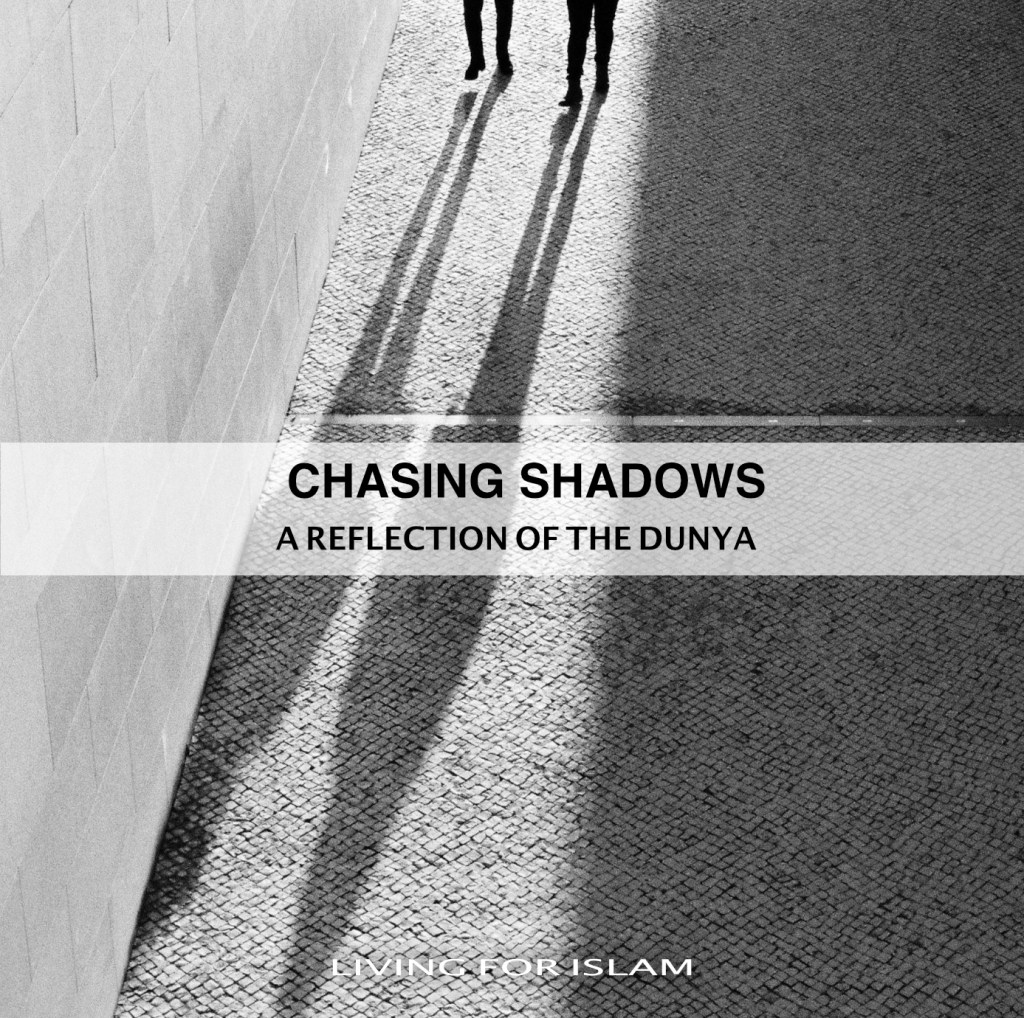
AS A KEEN photographer, I’ve come to see shadows as both a playful element that can be used in a composition and, often, a frustrating interference to avoid.
Recently, I was reminded of a saying attributed to either Ibn al-Qayyim or Al-Fayrozabadi: ‘The dunya is like a shadow. If you try to catch it, you will never be able to do so. But if you turn your back on it, it has no choice but to follow.”
This example is powerful on many levels. It’s a subtle yet striking reminder of the fleeting nature of worldly life and the danger of becoming attached to it.
A shadow, like the dunya, isn’t real in and of itself; it’s simply a sign that something real exists. The dunya is not the true life; the life of the akhirah is.
In the dunya as well, it should remind us to look for the source of the problems we face, for some problems are the result of another. As a Palestinian scholar once said: ‘Israel is the shadow of Arab Rulers. If we want to get rid of Israel, first we have to get rid of the Arab rulers.’
Just as shadows are temporary and constantly changing, sometimes long, sometimes entirely absent, the life of this world comes and goes. It’s transient and constantly changing.
Occasionally, a shadow offers momentary relief, like shade on a hot day, but overall, it carries little lasting benefit. So too is the dunya: we take what we need from it, but its value is limited and temporary.
This perspective is echoed in the words of the Messenger of Allah ﷺ. When the companions found him sleeping on a mat of palm fibres that had left marks on his side, they said: “O Messenger of Allah, shall we not prepare a soft bedding for you?” He ﷺ replied: “What do I have to do with this world? My relationship with this world is like that of a traveller who stops under a tree for shade, then continues on his way.” (Tirmidhi)
Even the smallest things can serve as reminders for the believer. A shadow may seem insignificant, but for those who reflect, it can point to something far greater.
 Living For Islam