
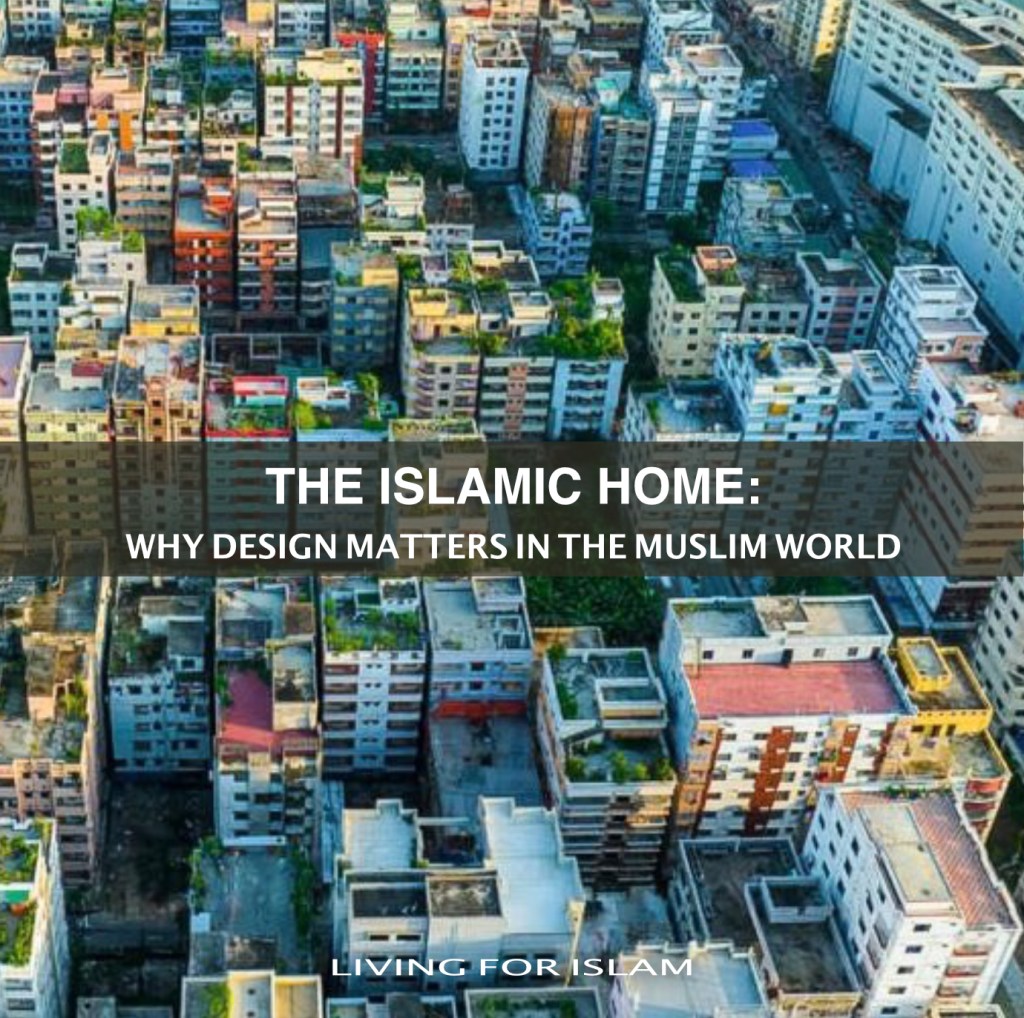
DHAKA HAS ALWAYS been congested. It’s hot, noisy, grimy, and overflowing with people. That much hasn’t changed. But what has changed — and not for the better — is the very identity of the city, especially in how we live.
I remember a different Dhaka. A city where homes stood on generous plots of land, rarely more than two stories high, with gardens in the front and back. There was space. There was dignity. There was privacy.
Now, those same plots are filled with nine-story apartment blocks, packed tightly, window-to-window. You can stare straight into your neighbour’s flat. Each unit houses a 2.1-member nuclear family with a car and all the trappings of modern life — but none of its soul.
Gone is the privacy. Gone is the serenity. Gone is the Islamic character that once shaped our homes. Gone is the green space that connects us to Allah. And we are worse off for it.
Homes Reflect Who We Are
Architecture is never neutral. It reflects the values of the society that built it. Islamic architecture — both in form and function — is rooted in a worldview that honours the sacred balance between public and private life.
Islam recognises that public life is where we exert ourselves: in work, trade, politics, and daily struggles. But home, the home, is where we retreat to rest, reconnect, and rebuild ourselves spiritually and emotionally. The Qur’an even uses the word maskan, derived from sakinah (tranquillity), to describe the home. This is not accidental. Our homes are meant to be sanctuaries.
And so, Islamic design preserves that sanctity. Across the Muslim world, from Fez to Lombok, we find homes with central courtyards, high walls, inward-facing windows, and lush gardens and water features meant to remind us of Jannah. These are not just aesthetic choices; they are theological ones. Privacy is sacred, and architecture was built to protect it.
Segregation and Space: A Divine Blueprint
Islamic homes are also designed with modesty (ḥayā’) and family dynamics in mind. Guests are welcomed in separate areas — often at the front — while the private quarters remain undisturbed. Even in the most humble Bedouin tents, a simple curtain divided guests from the rest of the household.
This sense of privacy extends within the home as well. Parents and children are encouraged to have separate sleeping spaces. Boys and girls require their own rooms as they grow. Children should be separated in bed from the age of seven. Islam also emphasises equitable treatment between children, the importance of cleanliness, and the encouragement of large families, all of which directly influence how homes should be structured.
In North Africa and the old Muslim quarters of Andalusia, we still see these principles at play. Even rural Bangladeshi villages preserve some of this heritage: homes clustered around central spaces, men and women gathering separately, and dwellings sized and shaped to reflect equity and modesty.
Imported Designs, Imported Values
But as these values fade, replaced by Western architectural models built on individualism and liberalism, we are left with homes that are alien to our faith and our needs.
Today’s urban housing is often cramped, sterile, and overly exposed. Open-plan layouts and glass-heavy facades may appeal to modern aesthetics, but they rob us of privacy and modesty.
Worse still, these designs promote the atomisation of society. The family, once the core unit of a community, is now fragmented. These apartments are designed for nuclear families, not the extended, multigenerational model that Islam encourages. Everyone has their own flat, their own world — but no sense of togetherness.
The Role of Islamic Governance
This crisis in urban design is not just about poor taste and imitation of Western values and norms. It’s about the absence of Islamic governance, systems that would ensure our built environment aligns with our spiritual and communal values.
Without such oversight, Muslim families around the world struggle to find homes that truly accommodate Islamic living. As a result, many are deprived of one of the key sources of happiness in life.
The Prophet ﷺ said: “Four things are part of happiness: a righteous spouse, a spacious dwelling, a righteous neighbour, and a comfortable mount. Four things are part of misery: a bad neighbour, a bad spouse, a restrictive dwelling, and a bad mount.” (Ibn Ḥibbān)
A restrictive or ill-suited home isn’t a trivial matter. It creates stress, erodes family bonds, and distracts us from our ultimate purpose: to worship Allah ﷻ in peace and with focus.
This change in architecture is seen throughout the Muslim world and is deliberate. It is designed to undermine Islam’s presence in our thinking and lives.
Take Makkah, for instance. Today’s hideous designs and luxury hotels differ greatly from the spirituality that should be there. They look more like Las Vegas and corporate greed than the holiness of Islam’s most important site. The design of these structures excludes the poor, going against Islam’s message of brotherhood and equality of man before his Lord.
A Return to Tranquillity
وَٱللَّهُ جَعَلَ لَكُم مِّنۢ بُيُوتِكُمْ سَكَنًۭا
And Allah has made your homes a place to rest (an-Nahl, 80)
The home is meant to be a source of sakinah, not stress. If we truly believe in this divine wisdom, then we must reflect it in our walls, our windows, our spaces.
The Islamic house is not a relic of the past; it is a living vision of how we are meant to live: in privacy, in modesty, in community, and in tranquillity.
It is time we reimagine Dhaka, and every other Muslim city, not just as modern, but as truly Islamic. For that, we also need to reimagine our governance as one that reflects Islam.
 Living For Islam
One thought on “The Islamic Home: Why Design Matters in the Muslim World”