

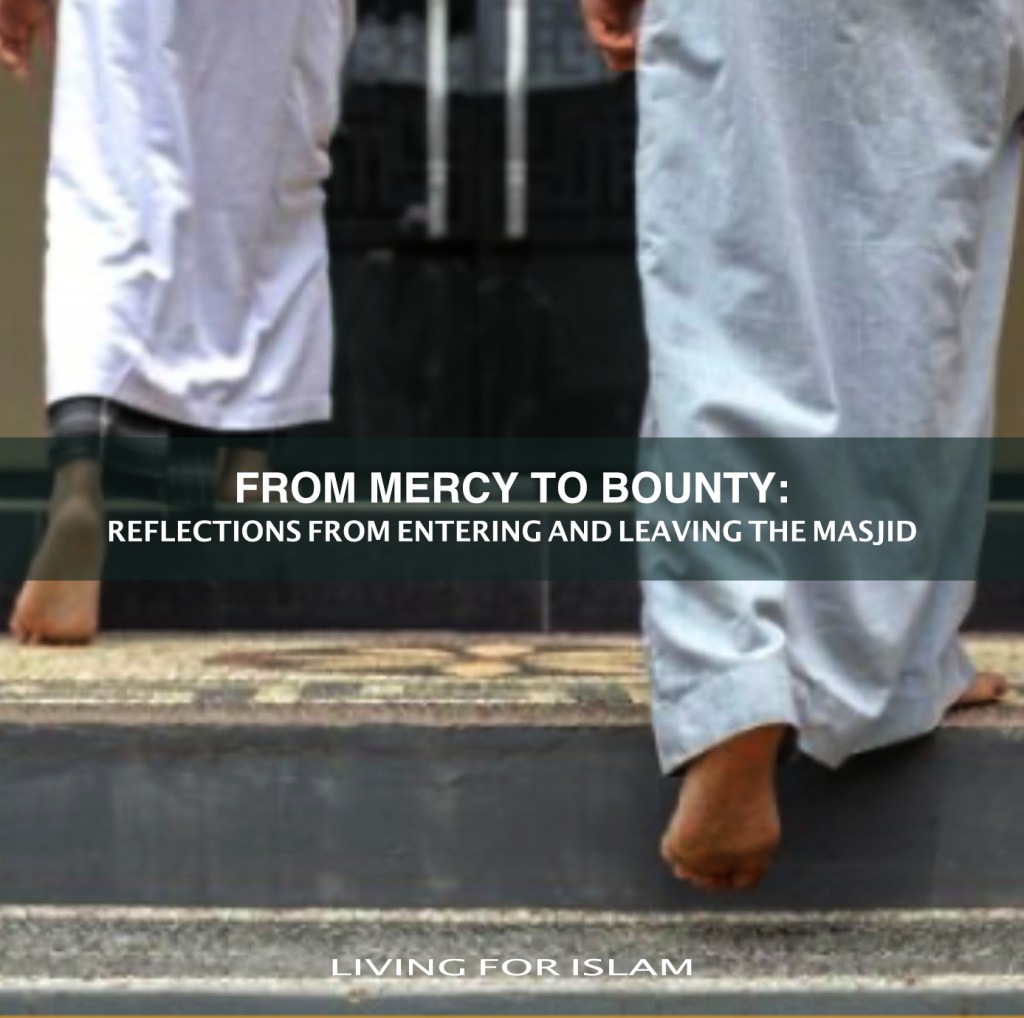
I’M FORTUNATE THAT where I work, there’s a masjid literally just across the road. It makes it much easier to catch the prayers in congregation during the day.
I was thinking the other day: we know the sunnah of entering the masjid with our right foot, and leaving with the left. SubhanAllah, how mindful you have to be just to remember that. To actually think about which foot you’re stepping with—it’s such a small thing, but it makes you pause.
And that small moment sets the scene for what comes next.
When we enter, we say the du‘a:
اللَّهُمَّ افْتَحْ لِي أَبْوَابَ رَحْمَتِكَ
O Allah, open the gates of Your mercy for me.
It’s such a powerful start. You’re entering a sanctuary, a space of worship, community, peace, and the first thing you ask for is His mercy. Whatever action you do in there—whether it’s salah, Qur’an, dhikr, attending or giving a talk, or just sitting quietly and reflecting—it becomes a means to that mercy. And ultimately, that’s what we’re all striving for: the mercy that leads to Jannah.
Then, when it’s time to leave, we say:
اللّهُـمَّ إِنِّي أَسْأَلُكَ مِنْ فَضْلِكَ
O Allah, I ask You for Your bounty/favour/grace.
It’s like we’re saying: “I’m stepping back into the world now—please keep Your blessings with me.” It’s a reminder that everything good—our work, our family, our peace of mind—it all comes from Allah. It also helps keep that connection going, even when we’re outside the masjid, dealing with the day-to-day.
What I find really worrying is how easy it is to say these du‘as on autopilot. You enter, you say the words, you leave—but maybe don’t stop to think about what you’re actually asking from Allah.
And then you remember: the Messenger ﷺ said these du‘as naturally. They weren’t rituals for him. They were real, genuine conversations with Allah. That’s the level of connection he had, and it’s something we’re always trying to build within ourselves.
Even in something as simple as which foot you step with, there’s mindfulness. A small act, tied to a much bigger purpose.
 Living For Islam