

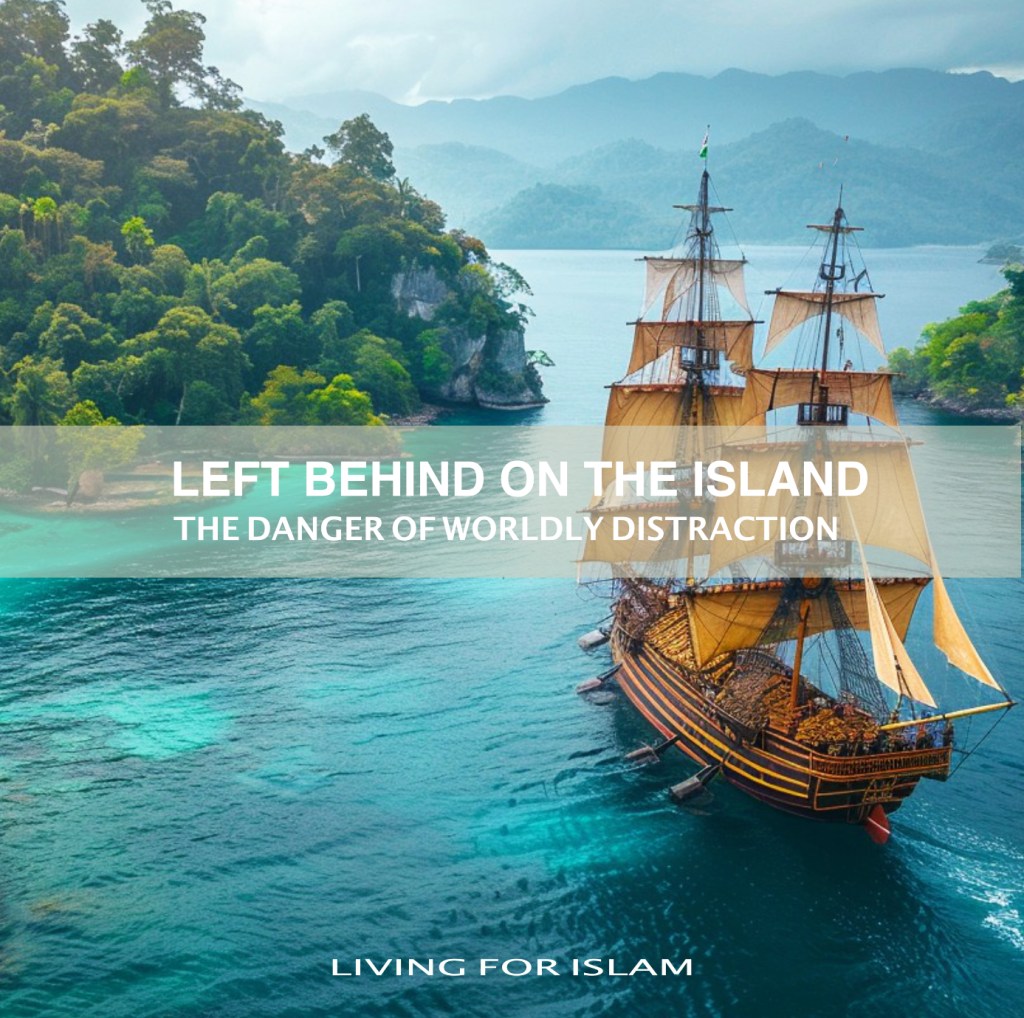
THE PEOPLE OF this world are like passengers on a ship journeying across the sea. During their voyage, the ship halts at a beautiful island. The captain announces that they may go ashore for a short time but warns them not to linger too long.
The passengers disembark and wander in various directions.
The wisest among them return quickly. Finding the ship empty, they choose the most comfortable spots and settle in.
A second group spends more time admiring the island—its lush trees and birdsong enchant them. When they finally return, the best places on the ship are already taken, and they must settle for less comfortable spaces.
A third group roams even farther. They discover brightly coloured stones, which they eagerly collect. But by the time they return to the ship, they are forced to squeeze into the lower decks. The once-dazzling stones that weighed them down now seem dull and pointless.
The final group wanders so far that they can no longer hear the captain’s call. Eventually, the ship departs without them. Lost and abandoned, they wander hopelessly until they perish—either from hunger or at the hands of wild beasts.
This parable, drawn from Al-Ghazali’s Alchemy of Happiness, offers a profound reflection on the human journey through life.
The first group represents those who keep themselves detached from worldly distractions and remain focused on the hereafter. The last group symbolizes the disbelievers, fully absorbed in this world and heedless of the next. The two intermediate groups represent those who, while retaining iman, become entangled to varying degrees in the allurements of the world.
Materialism has always been a powerful force pulling people away from the remembrance of Allah and the Akhirah. But with the removal of an Islamic way of life built on taqwa, and the dominance of materialist ideologies, that pull has become stronger and more relentless. Today’s way of life urges us to stay on the island while the ship of salvation quietly pulls away. by corrupting our understanding of Islam.
What was once a complete way of life has been reduced to rituals. Worship has been confined to personal ibadah; dhikr has become tasbeeh of the tongue and not a remembrance that influences our every dealings—whether in business, governance, or society. Jihad has been diluted to merely the struggle to wake up for fajr. Secularism has made us question whether Islam even has a role in these broader aspects of life.
Where Allah warns about the nature of this life:
ٱعْلَمُوٓا۟ أَنَّمَا ٱلْحَيَوٰةُ ٱلدُّنْيَا لَعِبٌۭ وَلَهْوٌۭ وَزِينَةٌۭ وَتَفَاخُرٌۢ بَيْنَكُمْ وَتَكَاثُرٌۭ فِى ٱلْأَمْوَٰلِ وَٱلْأَوْلَـٰدِ
Know that this worldly life is no more than play, amusement, luxury, mutual boasting, and competition in wealth and children. (al-Hadid 20)
Modernity teaches us to forget all that and prioritise and live only for this life.
Yet the parable makes the danger starkly clear: we are all at risk of ending up in the lowest corners of the ship—or worse, being left behind on the island altogether.
To avoid this end, we must continuously evaluate our lives. Are our actions aligned with our true purpose? Are we preparing to return to the ship? Surrounding ourselves with righteous company, staying mindful of our duties, and striving in the path of Allah must be part of our daily lives.
Allah says:
إِنَّمَا ٱلْمُؤْمِنُونَ ٱلَّذِينَ آمَنُوا۟ بِٱللَّهِ وَرَسُولِهِۦ ثُمَّ لَمْ يَرْتَابُوا۟ وَجَـٰهَدُوا۟ بِأَمْوَٰلِهِمْ وَأَنفُسِهِمْ فِى سَبِيلِ ٱللَّهِ ۚ أُو۟لَـٰٓئِكَ هُمُ ٱلصَّـٰدِقُونَ
The true believers are only those who believe in Allah and His Messenger—without doubt—and strive with their wealth and their lives for the cause of Allah. They are the ones who are true. (al Hujurat 15)
Let us not be of those left behind. Let us prepare now—before the ship sails away for good.
 Living For Islam