

A QUIET KNOCK on the door. It was late. But Abu Bakr (ra) had been expecting it. He had been ready for this moment ever since the Prophet ﷺ told him that Allah had granted him permission to emigrate. Abu Bakr (ra) had prayed to be chosen as the companion on this momentous and dangerous journey.
And so they left Makkah — the Prophet’s ﷺ beloved home of 53 years. It was a moment of sorrow and sacrifice.
The Prophet ﷺ, the best of creation, was still known as al-Amin — the Trustworthy — even by those who opposed him. They entrusted him with their most valued belongings. Yet what turned his people against him were the simple but profound words:
“Laa ilaaha illallah — There is no deity except Allah.”
They knew these words would dismantle their way of life and undermine their power.
For thirteen years, the Prophet ﷺ bore their abuse — the insults, the torture, the boycott. But the situation had reached an impasse. Then, hope arrived from a new direction. Two major tribes in Madinah had accepted Islam and asked for someone to teach them. That someone was Mus’ab ibn Umayr (ra). He spent a year there, ensuring that Islam touched every household in Madinah.
They were waiting for him. Now, it was time to leave.
Time for a new beginning.
The Quraysh were aware of the Prophet’s ﷺ plans. They understood what it would mean if he successfully established himself in Madinah. So they devised a dark plot — to kill him while he slept. But who among them would dare murder the noblest of men and face the wrath of his tribe? Cowards that they were, they decided that youth from every tribe would share the guilt.
وَإِذْ يَمْكُرُ بِكَ الَّذِينَ كَفَرُوا لِيُثْبِتُوكَ أَوْ يَقْتُلُوكَ أَوْ يُخْرِجُوكَ ۚ وَيَمْكُرُونَ وَيَمْكُرُ اللَّهُ ۖ وَاللَّهُ خَيْرُ الْمَاكِرِينَ
“And (remember, O Muhammad), when those who disbelieved plotted against you to restrain you, or kill you, or expel you. But they plan, and Allah plans. And Allah is the best of planners. (al-Anfal 30)
That night, the courageous Ali (ra) slept in the Prophet’s ﷺ bed, deceiving the assassins. Meanwhile, the Prophet ﷺ and Abu Bakr (ra) slipped away from Makkah, leaving only a handful — Ali and Abu Bakr’s family — in on the secret.
They knew the Quraysh would search every route. So, they hid in the Cave of Thawr for three days while the search raged on.
At one point, the Quraysh came dangerously close — right to the mouth of the cave. Abu Bakr (ra) was anxious. But the Prophet ﷺ reassured him:
لَا تَحْزَنْ إِنَّ اللَّهَ مَعَنَ
“Do not grieve; indeed Allah is with us.” (at-Tawbah 40)
And Allah ﷻ sent His help — in the form of a spider. A fragile web was spun across the entrance. When the Quraysh arrived, they saw the web untouched — and left.
The smallest of Allah’s creations had protected the greatest of His Messengers.
After three days, they emerged and met their guide, Abdullah ibn Uraiqit, an expert in navigating obscure desert paths. They would take routes rarely travelled, avoiding detection.
But even then, danger followed. Suraqah ibn Malik pursued them, lured by the bounty on the Prophet’s ﷺ head. Yet, every time he approached, his horse sank into the sand. Realising this was no ordinary man, Suraqah understood the Prophet ﷺ would be victorious. He pledged to keep the journey secret and even misled other search parties.
Meanwhile, in Madinah, anticipation swelled. Each day, people would go out to the outskirts, hoping to be the first to greet the Prophet ﷺ. Men and women, young and old, warriors and children — they were ready for a new era.
When the Prophet ﷺ finally arrived in Quba, just outside Madinah, he rested and built Masjid Quba — the first mosque of Islam. He then sent word to the Ansar. They came in force, escorting him with honour. With spears raised, they declared: “Ride in safety, with our loyalty and obedience to you.”
This was no refugee fleeing persecution. This was a leader arriving with dignity.
The day he ﷺ entered Madinah was one of celebration. The city rejoiced. People climbed rooftops and lined the streets. Children ran and chanted: “The Prophet has come! The Prophet has come!”
Their joy knew no bounds.
A New Chapter Begins
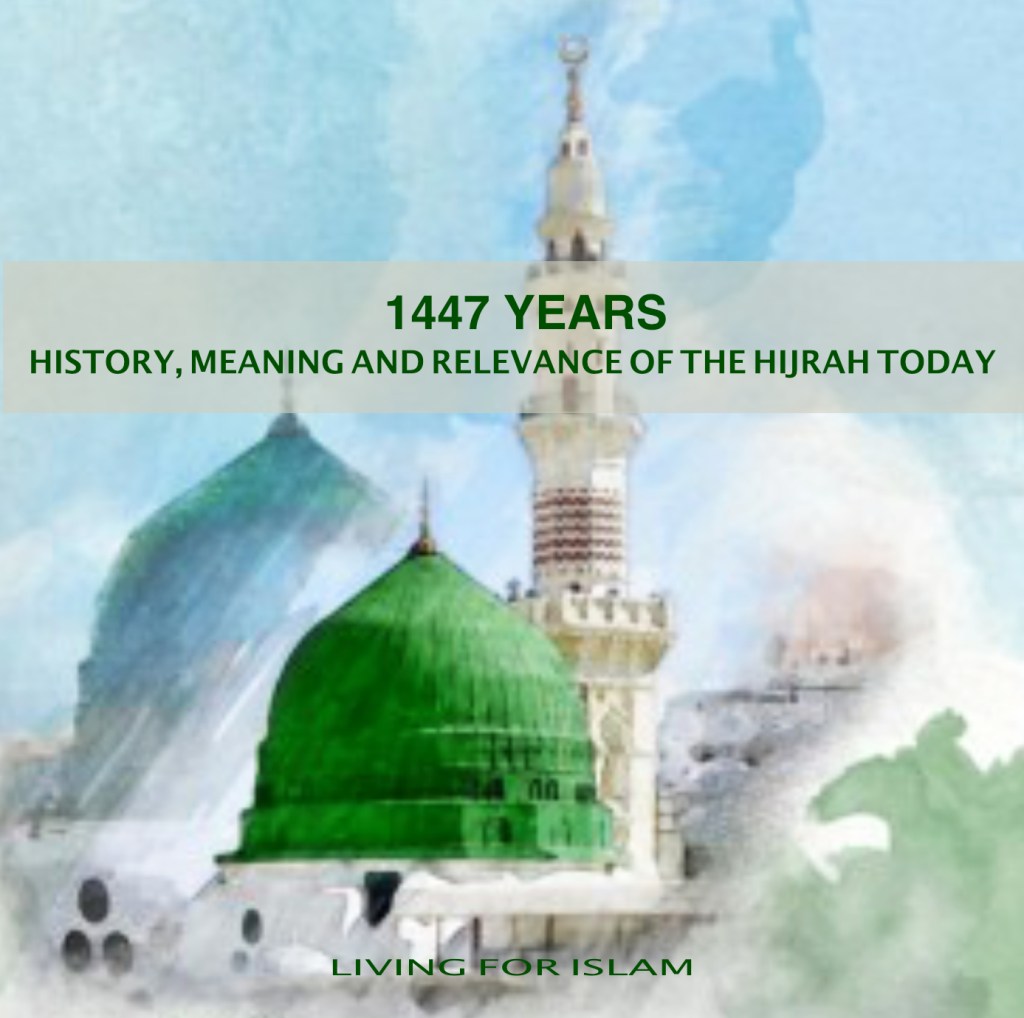
Today, the 1st of Muharram marks not just the Islamic New Year 1447, but the event that redefined history — the Hijrah of the Prophet ﷺ.
Muslims did not always have a formal calendar. In the Prophet’s ﷺ time, years were named after significant events: the Year of the Elephant, the Year of Revelation, the Year of Sorrow, etc.
It wasn’t until 16 AH, during the caliphate of Umar ibn al-Khattab (ra), that a structured calendar became necessary. As the Muslim state expanded, administrative clarity was needed. Umar (ra) consulted the Companions. They were aware of the Persian, Roman and Jewish calendars. However, they were able to think independently and create a calendar that reflected their needs and aspirations rather than just imitate those nations.
What’s profound is what it didn’t start with. Not with the birth or death of the Prophet ﷺ. Not with the first revelation. Not even with the victories of Islam like Badr.
It began with Hijrah.
Why?
Because, as Umar (ra) said: “The Hijrah separated truth from falsehood. Let it mark the start of our era.”
The Hijrah was not a retreat. It was a transformation. From weakness to strength. From isolation to unity. From private faith to public practice. From a persecuted group to an established ummah.
Through Hijrah, Islam moved from hearts into the structure of a society — protected, practised, and spread.
An Annual Reminder
It is easy to reduce our connection to the Hijra calendar to just Ramadhan, Hajj and Eid. But it is so much more.
Zakah is calculated on the lunar calendar. The iddah of a widow is four lunar months and ten days. The iddah of a menopausal woman is three lunar months. If the signs of bulugh (puberty) are absent, the age of puberty is calculated according to the Hijri calendar. The kaffarah (expiation) for certain sins is fasting for two Islamic months consecutively. Fasting on Ashura in Muharram and Arafah in the month before, are all linked to the Islamic calendar.
But our calendar is much more than religious activities. The Hijri calendar connects us to our roots.
Knowing about the Hijrah and its significance is all the more important as we have lost what the Prophet ﷺ established in his Madinah, 1447 years ago. Wherever we look in the world we see the suffering that has arisen from the absence of that Islamic model.
We don’t mark the new year with fireworks, festivals, or resolutions we don’t intend to keep. For us, it is a call to awareness. A reminder that real change comes through struggle and perseverance. Through studying the life of the Prophet ﷺ, we see the steps toward lasting transformation — and we are invited to walk that path today.
يَا أَيُّهَا الَّذِينَ آمَنُوا كُونُوا أَنصَارَ اللَّهِ
“O you who have believed, be supporters of Allah…” (as-Saff, 14)
 Living For Islam
One thought on “1447 Years: History, Meaning and Relevance of the Hijrah Today”