

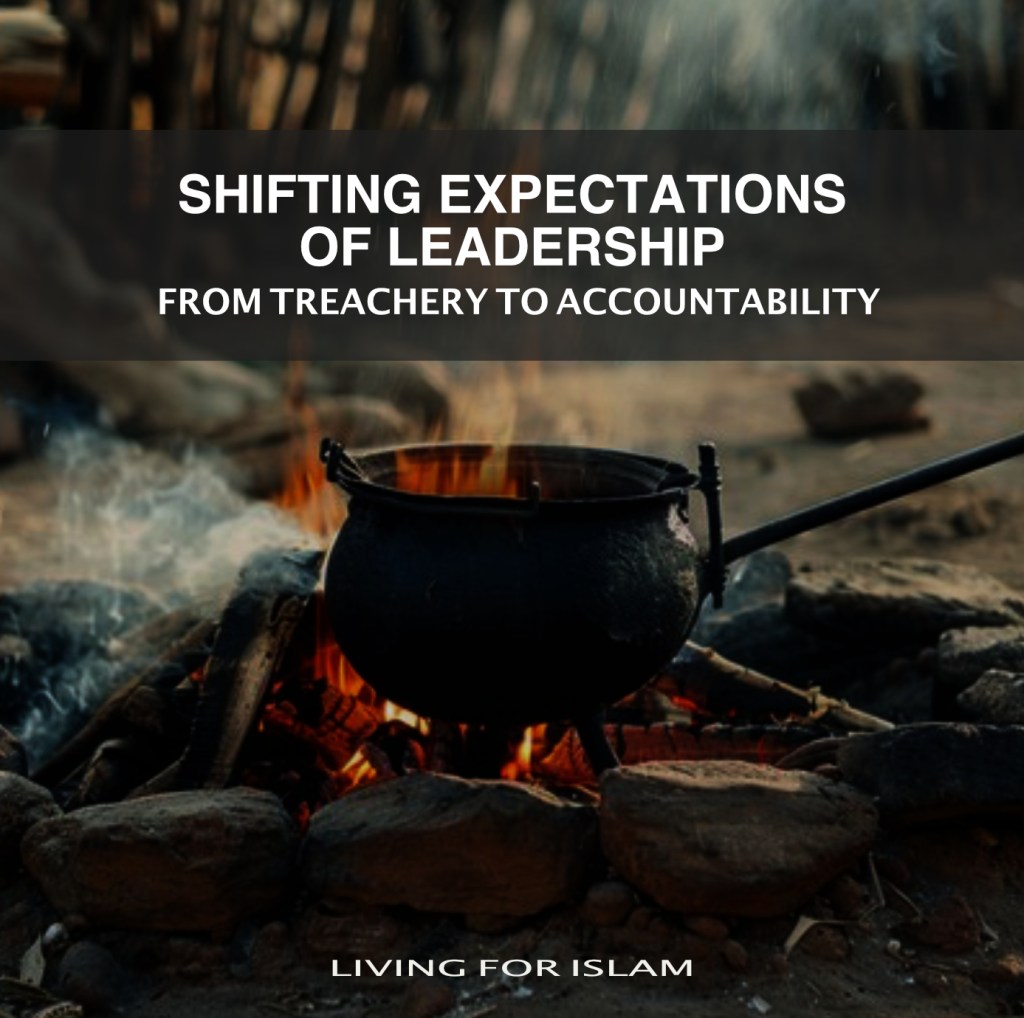
UMAR (ra), AMIRUL MUMINEEN, and his servant Aslam travelled far into the outskirts of Madinah one night.
From a distance, they saw a fire. Umar said: ‘I believe the darkness of the night and the cold have compelled some horsemen to stop there. Let us go and see.’
They hurried along and found a woman sitting there with some children around her, a pot boiling on the fire, and the children crying. Umar greeted her and asked the woman about her condition and also what was going on there. The woman told him that the darkness and cold had forced her to stay there for the night.
Umar asked her: ‘Why are these children crying?’
The woman answered: ‘They are hungry.’
Umar asked her: ‘What is there in that pot on the fire?’
The woman said: ‘Only water to console the children so that they may remain quiet and go to sleep. And Allah alone shall judge between us and Umar.’
Umar said to her: ‘My good woman, what does Umar know about your state of affairs?’
To which she replied:’Why then should he hold the high position of the Khalifah when he is unaware of our condition?’
Umar said to Aslam: ‘Let us go now.’ So they left quickly and reached the Bait-al-mal (state treasury). Umar took a bag of flour and a container of fat and asked Aslam to load the bag on his back. Aslam offered his services but Umar angrily brushed him aside saying: ‘Can you relieve me of my burden on the Day of Reckoning also?’
They rushed back with the provisions to the woman and asked her to make the dough whilst Umar himself fanned the flames of the pot so that smoke billowed out from beneath his beard. He served them all and waited until they had eaten to their fill.
The woman said: ‘May Allah bless you. You are more deserving of that high office than the Amir of the believers.’
Umar said to her: ‘Say only a good word. When tomorrow you come to see the Amir of the believers, you will find me there, in-sha-Allah.’
Umar’s (ra) night visits as Khalifah highlight the responsibility that comes with true leadership. He didn’t care for publicity stunts or making flashy promises he couldn’t keep. He didn’t make excuses or rely on state-sponsored scholars to defend him, telling people to focus on their own purification instead of holding him accountable. Instead, he took action to resolve issues himself.
He understood that authority wasn’t a privilege but a service according to the hadith of the Prophet ﷺ: ‘No servant is given authority by Allah and he does not fulfil its duties sincerely but that he will never smell the fragrance of Paradise.’ (Bukhārī)
What struck me was the attitude of the people back then. This woman, whose husband had died, was just an ordinary person. She wasn’t a scholar or wealthy, and she didn’t even know she had met Umar (ra). Yet, she told a stranger that she felt her and her children’s treatment by the ruler was unfair.
Look at her expectations of her rulers. She expected those who ruled her to make it their business to know her needs.
Ruling is about serving the people and ensuring that justice is implemented through Islam. No ruler is above accountability, and there should be no fear in holding them accountable.
As an Ummah, we have come far. Once, we expected a lot from our rulers. Now, we have no hopes and even fear to hope. This is because all we have witnessed from them is betrayal and mistreatment.
Take the recent summoning of the Jordanian King Abdullah to meet Trump. Here was a man quivering in anxiety, an embarrassment to his people and the ummah. He is caught between a rock and a hard place- obey his colonialist masters who created Jordan and have kept his family in power or betray his people and the ummah. His predicament is the same as all those other tyrants like Sisi, ibn Salman and ibn Zayed who have been propped by the colonialists to serve their agendas and not of the ummah.
The Prophet ﷺ said: ‘Every one of you is a shepherd and is responsible for his flock. The leader of the people is a guardian and is responsible for his subjects. A man is the guardian of his family and he is responsible for them. A woman is the guardian of her husband’s home and his children and she is responsible for them. The servant of a man is a guardian of the property of his master and he is responsible for it. No doubt, every one of you is a shepherd and is responsible for his flock.’ (Bukhārī)
Note the order. The ruler comes first and he has the greatest responsibility.
But what has happened to us now? We have flipped the situation. The average person feels accountable while the leaders escape responsibility. The common man is urged to boycott, donate, and dua, yet those in power, who could make a difference, profit from the suffering of our people. 2 billion Muslims want to stop the killing in Gaza, but because of a few rulers, we couldn’t even send a bottle of water there! Not one leader took action. They prevented the ummah from helping while supporting the aggressors.
This is the sad reality of secularism that the ummah has been forced to accept.
The ironic thing is that we wouldn’t let an imam at a masjid continue praying if he made a mistake; we would correct him. Why? Because we know what a proper prayer should be and don’t want to stand before Allah with an invalid prayer.
So why do we not apply the same to the ruler who is the greater imam of the ummah? Why do we not correct him and expect from him like the woman expected of Umar?
If there has been one shortcoming of the ummah, it is that we have left our rulers off the hook for far too long. The consequence of that is the immense suffering that we are witnessing today.
To change our situation, we need to shift our mindset about leadership and align it with what Allah and His Messenger ﷺ require. We must build public support in the Muslim world to remove these traitors and restore authority back to the ummah and Islam by demanding nothing less than the return of the Islamic ruling system, the Khilafah Rashidah.
 Living For Islam
2 thoughts on “Shifting Expectations of Leadership: From Treachery to Accountability”