

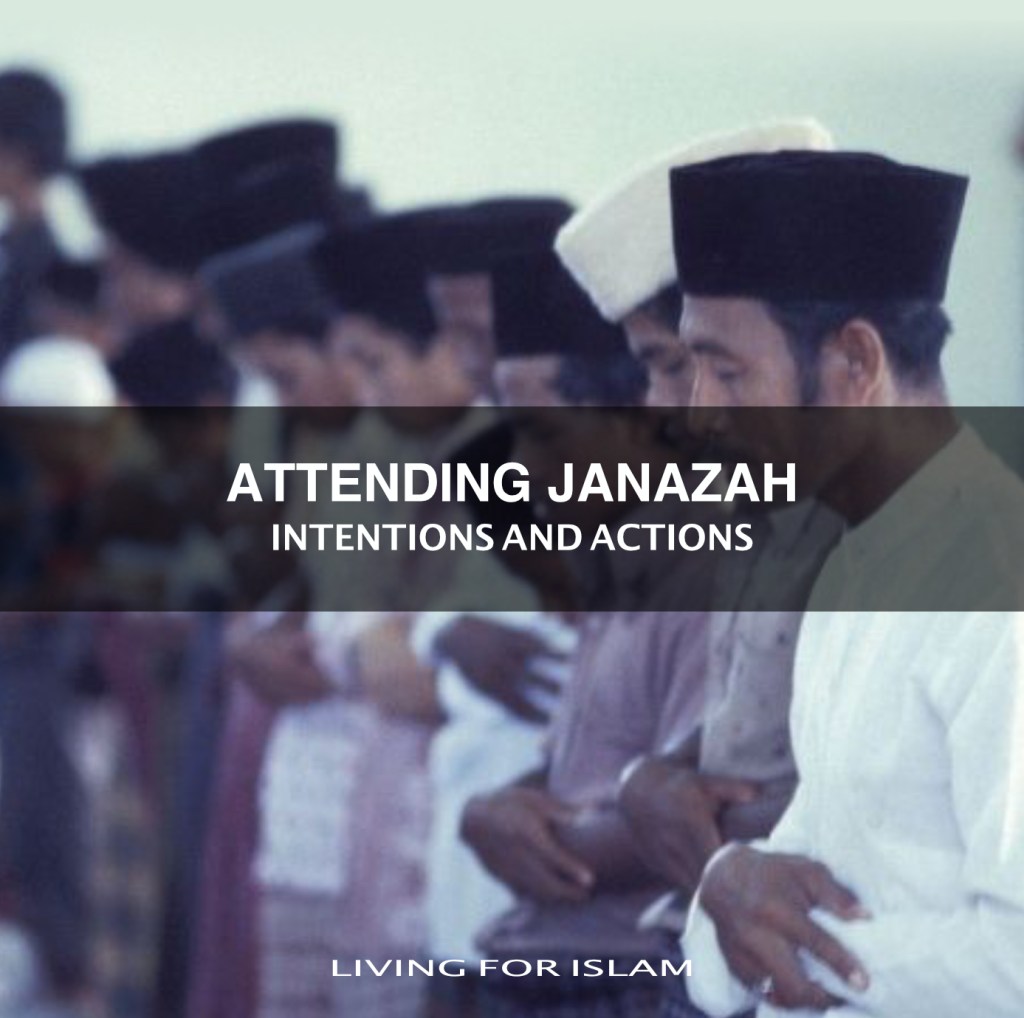
TODAY WE ATTENDED a janazah of a well-respected alim in our community. Whilst I personally hadn’t met him, he and his family were known to my wife.
On the way to the masjid, we discussed our purpose for going. As Muslims, it’s crucial to correct our intentions and actions to please Allah alone and avoid turning our worship into mindless rituals.
The Messenger ﷺ said: “A Muslim has six rights over another Muslim: to greet him with peace when he is met, to answer his invitation when invited, to advise him when he seeks counsel, to bless him when he sneezes and praises Allah, to visit him when he is sick, and to follow his funeral when he dies.” (Muslim)
So to attend the janazah is an action that fulfils the rights of the Muslim. It is a collective obligation on the Muslim community for another Muslim.
The Messenger ﷺ also said: “Whoever follows the funeral of a Muslim, in faith and seeking reward, and he remains with it until the prayer is offered and the burial ceremony is finished, then he will return with two great rewards. Each reward is like the size of Mount Uhud. Whoever offers the funeral prayer and returns before the burial, then he will return with one great reward.” (Bukhārī)
Often, we notice that many people attend the janazah of influential individuals, while few attend that of ordinary people. Attending a janazah offers great rewards and thus should motivate Muslims to attend, no matter who has passed away.
We see this attitude expressed by our Prophet ﷺ in the example of the dark-complexioned woman (or a youth) who used to sweep the masjid. The Messenger of Allah ﷺ missed her (or him) and inquired about her (or him). The people told him that she (or he) had died. He asked why they did not inform him, and it appears as if they had treated her (or him) or her (or his) affairs as of little account. He ﷺ said: “Lead me to her (or his) grave.” They led him to that place and he prayed over her (or him) and then remarked: “Verily, these graves are full of darkness for their dwellers. Verily, the Mighty and Glorious Allah illuminates them for their occupants because of my prayer over them.” (Muslim)
We then reviewed how to pray the janazah which is a unique shortened prayer with four takbirat. After the first takbir, we recite Suratul Fatiha. After the second takbir, we recite salawat on the Messenger ﷺ. The third takbir is followed by du’a for the deceased. After the fourth takbir we can make further dua and then (in the Hanafi madhab) a single taslim to the right.
The dua that has been commonly transmitted is truly meaningful:
اللَّهُمَّ اغْفِرْ لِحَيِّنَا وَمَيِّتِنَا وَشَاهِدِنَا وَغَائِبِنَا وَصَغِيرِنَا وَكَبِيرِنَا وَذَكَرِنَا وَأُنْثَانَا اللَّهُمَّ مَنْ أَحْيَيْتَهُ مِنَّا فَأَحْيِهِ عَلَى الإِسْلاَمِ وَمَنْ تَوَفَّيْتَهُ مِنَّا فَتَوَفَّهُ عَلَى الإِيمَانِ اللَّهُمَّ لاَ تَحْرِمْنَا أَجْرَهُ وَلاَ تُضِلَّنَا بَعْدَهُ
Oh Allah, forgive our living and our dead, those who are present and those who are absent, our young and our old, our males and our females. O Allah, whomever of us You cause to live, let him live in Islam, and whomever of us You cause to die, let him die in (a state of) faith. Oh Allah, do not deprive us of his reward, and do not let us go astray after him. (ibn Majah)
On the way back, we reflected on how short life is. You enter this world with the adhan and no salah, and you leave with salah and no adhan. As my daughter said, it’s like your entire life is the time between adhan and salah. SubhanAllah, so true.
 Living For Islam